
What Blu Honeycutt’s death can teach the Triangle about helping the homeless
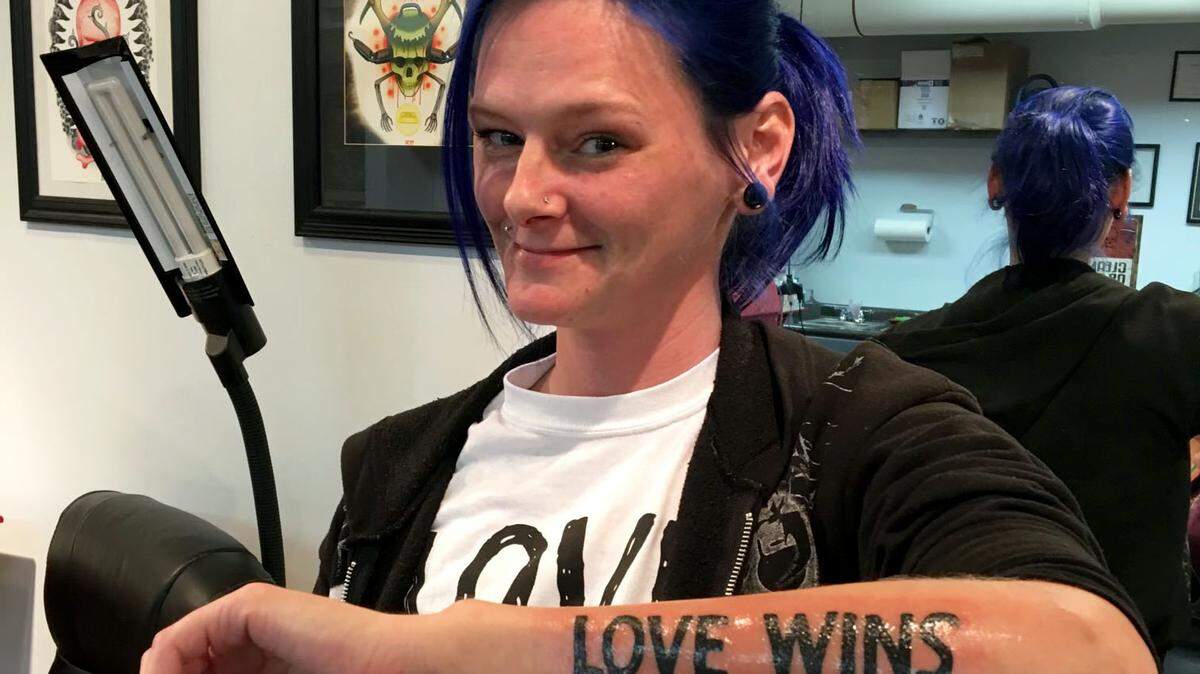
Jessica Blu Honeycutt, or simply “Blu” as everybody called her, was a fierce and dedicated advocate for Raleigh’s homeless community. Despite her trademark blue hair and the large tattoo of “LOVE WINS” in block letters on her left arm, it was her smile and contagious optimism that first caught the attention of anybody she met.
Blu died Nov. 30.
She had a stubborn and relentless determination to help those who needed it the most. She helped to run Love Wins, a day shelter on Morgan Street in Raleigh, for years as a peer support specialist. She also developed and coordinated different street outreach programs to ensure those who did not engage with homeless shelters and programs were not forgotten.
She had a calm about her as she helped her friends and guests through the chaos of homelessness. She spoke often about providing light, and hope, to those suffering through the nightmares of homelessness and trauma that she had known too well in her life.
Through her daily work, her talks and her writings, Blu begged everybody to take the time to listen to those suffering from homelessness — to start there.
She wrote: “We are firm believers in relationship building and one on one conversations. Everyone’s needs are different, so it takes a variety of different resources to try and help them navigate the crazy world of homelessness. We do all that we can. If we take just a few minutes out of the day to sit and talk to someone about what is going on in their life, then they don’t have to feel like they have just been passed by for the day.”
Society does not listen to those suffering from homelessness well. Instead, we typically depend on reflexive stereotypes to blame them for the severe social, mental health, and physical pathologies they suffer from. If it’s self-inflicted then it is not our problem.
One of the hardest aspects of working with homeless patients is getting to know incredible people, with incredible strength, dealing with unimaginable daily barriers and seeing them suffer and often die, expensively, misunderstood and unassisted by communities looking the other way. If we are honest, we often do not practice the theoretic ideals preached in our congregations, schools and mission statements. We are not great at listening to each other as a society, especially when it is hard — and we seem to be getting worse at it.
To listen is to better understand. To understand is to be able to better help. Listening is foundational to love — and it is an awesome public health strategy. Blu’s efforts to listen, understand and love led to success where our broken and expensive collection of community-based safety nets had often failed. Her approach was as brilliant as it was humanistic.
In the small, daily successes she had, one person at a time, were important lessons for our community on how to better address root causes of our growing issues around homelessness.
We desperately need to listen to Blu’s message and the mantra she believed in so strongly that she had it tattooed on her arm in big block letters. Ultimately, she was right , as she often finished her blog posts - “Love Always Win!” - but only if we help her prove it. That is how we will honor her memory, and help make sense out of the tragedy of her loss — to continue her work, with the same compassion, determination and love that she stubbornly exemplified to our community.