Black Student Movement had 13 demands for UNC. Has the school met them?
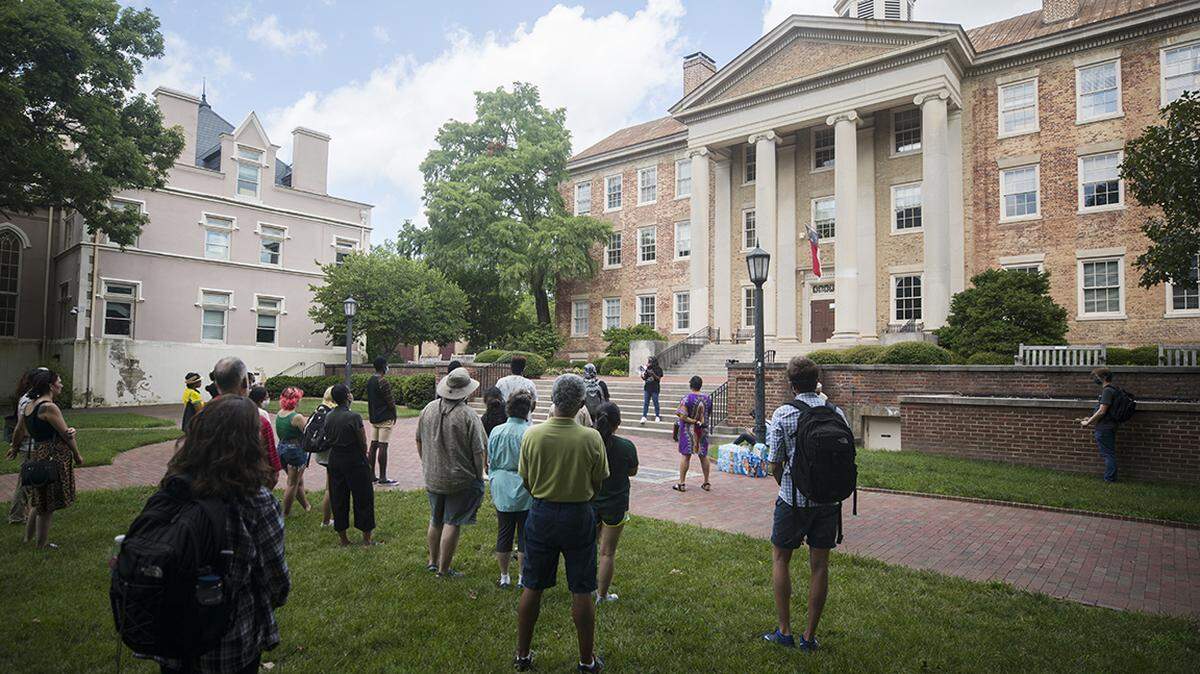
The story of Nikole Hannah-Jones’s tenureship at UNC-Chapel Hill, particularly the June 30 Board of Trustees meeting, was a flashpoint in the fraught relationship between the university and its Black students, faculty and staff.
Leadership from the university’s Black Student Movement presented a list of 13 demands at a press conference the day after the creator of The 1619 Project announced she would be taking her talents to Howard University. The demands were co-sponsored by the Carolina Black Caucus and Black Graduate and Professional School Association.
“We have chosen items we feel could be accomplished within the next six months if the university truly makes the commitment that they made to us publicly and behind closed doors in meetings that they’ve had with us,” Black Student Movement president Taliajah “Teddy” Vann said at the time.
Of the thirteen demands, five have been met (two of these have been communicated to students, but UNC would not confirm that it was written into school policy or written down in general.) Four have seen movement, but are either not permanent solutions or stalled by bureaucracy. It’s part of a larger conversation about how the university responds to the needs of Black students once the news vans leave campus.
“The treatment of Black students is the same as it’s been for such a long time,” Vann says, alluding to the lack of movement and excess of excuses she hears from administrators.
There are small victories. Staff members of color have been added to the Women’s Center to assist survivors of sexual violence. Some money has been given to the university’s mental health services; more Black therapists available to students. There have been food trucks sent to South Campus to mitigate the lack of food options on that part of campus, which houses a significant number of UNC-CH’s Black students — a temporary fix, but helpful if it’s working toward a long-term solution.
Vann is unsure of whether some improvements are permanent. The university told BSM leadership that they would no longer have campus police officers present on move-in day, and they are committed to having professors include information on the EOC office and the grade appeal process on syllabi.
Leah Cox, the recently-hired vice provost for equity and inclusion at UNC-CH, says the initiatives are moving faster than she’s seen at other schools. Her department has been working on a website detailing progress of each of BSM’s goals, and will allow additional requests to be considered and publicly available. She says it’ll be available next week.
“I have seen a commitment from multiple places, spaces and people across this campus who have that commitment to inclusivity and belonging, and are really working hard to make those things happen across our campus, and willing to work with my office in multiple ways,” says Cox.
But many of these 13 demands aren’t new, especially the ones in flux. James Cates was murdered in 1970 and has never been memorialized, as BSM wants. Agents of white supremacy have been coming to campus for years, and a community-run anti-racist alert system has been in place since 2019. The African, African American and Diaspora Studies department continues to be housed for years in a building named for a segregationist. Several of the victories still feel like bandages on wounds that should have been assessed years ago.
The final four demands — curbing sexual harassment from dining hall employees, recontextualizing the Unsung Founders memorial, improving sexual assault reporting procedure, and requiring more comprehensive sexual assault training — have yet to be addressed, according to Vann.
There are people who typecast Vann and other members of BSM as “angry Black women,” but doing so ignores the community care they continue to uplift in action and words. This week, Vann was elected student body president — several of her larger goals overlap with BSM’s demands.
“I wouldn’t be a student here if I didn’t love this place,” Vann says. “I wouldn’t be here if it wasn’t for the community, if it wasn’t for my passion to provide for the needs of other Tar Heels.”
The university has a responsibility to love their community too — which they can do by listening and acting.