
NC superintendent: North Carolina must fix its ‘diploma integrity problem’
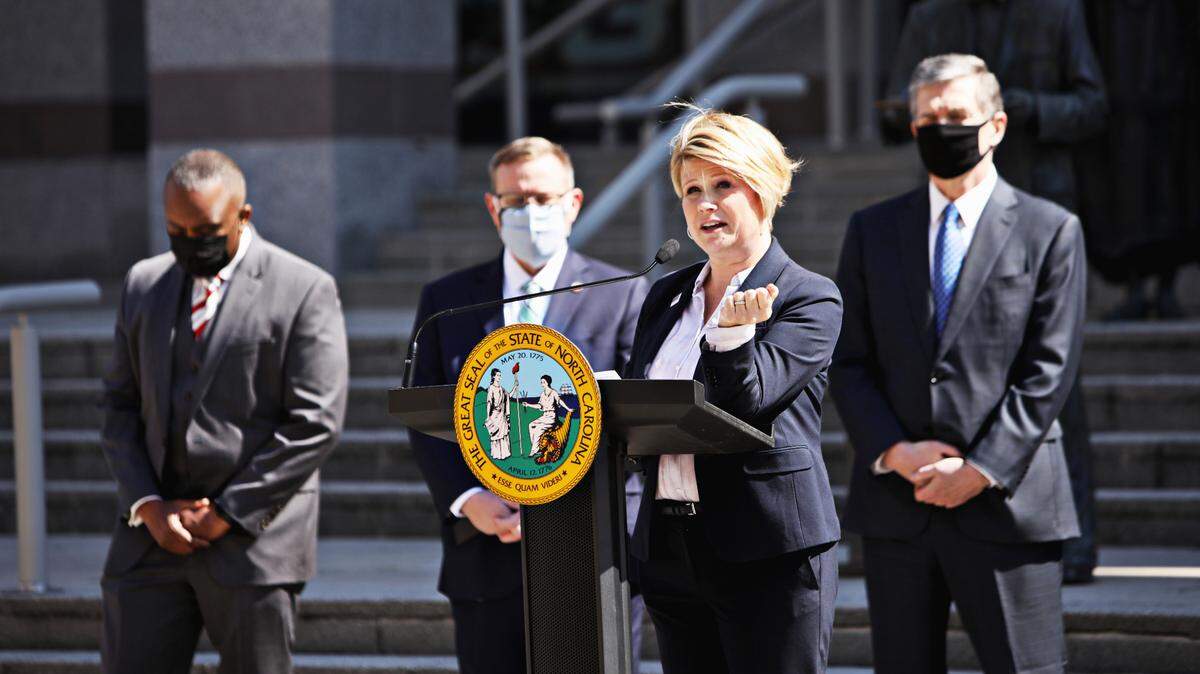
At a Feb. 3 meeting of the State Board of Education, State Superintendent Catherine Truitt told board members that North Carolina has a “diploma integrity problem.” During the meeting she gave a report outlining a plan to better align K-12 education with workforce requirements. We asked Truitt to share her thoughts about that here.
Despite the noise over mask mandates, “wokism” in public schools, and lost learning time in the classroom, one thing holds true: The purpose of K-12 public education is to prepare students for the post-secondary plans of their choice.
Our students are our greatest hope for building strong communities and a vibrant North Carolina, but they need to be well-prepared to compete for high-wage, high-demand careers. Data shows us that right now in North Carolina, they are not.
Before and during the pandemic, North Carolina’s average high school graduation rate hovered around 87%. Yet, only 31% of students attain a credential of marketplace value by the time they are 24, including those who complete a four-year degree. Consequently, half of North Carolinians between the ages of 18 and 44 have the skills and education they need to fill open jobs.
Education remains the surest route to economic prosperity and is the best strategy for meeting the state’s workforce needs, yet the pandemic has underscored the system’s limitations. The short answer is that reform is needed. This is particularly true with education’s testing and accountability system.
Instead of prioritizing personalized, student-centered learning focused on real-world application, our system requires teachers to focus on teaching students to take a one-and-done, end-of-grade test. Instead, we should have a system that provides flexibility to educators and empowers them to teach project-based learning and provide work-based opportunities.
Now more than ever, K-12 education must evolve to meet the needs of students, as well as the 21st century economy.
One way the Department of Public Instruction is aligning K-12 to meet workforce demands is through the creation of four workforce goals which were built in tandem with leaders in economic development, business and education to ensure we are on the right track.
We spent the last year soliciting feedback designing these goals: To prepare students with skills and experience needed to be successful citizens; ensure all students have access to post-secondary pathways that align with growing, high-wage careers; assist all students and parents in making informed decisions about future opportunities; and ensure all students engage in career exploration and real-world learning experiences well before graduation.
The Department of Public Instruction is also working to ensure that graduates are ready for life beyond high school through the development of a Portrait of a Graduate. Regional focus groups are helping to establish a statewide model that defines what skills and traits all students should possess by the time they graduate high school.
This Portrait will help to measure durable skills like persistence, collaboration, and creativity — all of which are long-term skills we want employees and co-workers to have.
This approach to support and accelerate career and technical education in K-12 takes a shift in mindset and a shift in practice. It will require a new accountability system that measures more than grades, and one that instead prioritizes durable skills needed by employers, credentials earned, advanced learning opportunities, and participation in work-based learning.
Greater economic opportunity begins in K-12, and work is underway to ensure this happens.
This story was originally published February 13, 2022 at 5:00 AM with the headline "NC superintendent: North Carolina must fix its ‘diploma integrity problem’."