
At the two-year mark, five key players weigh the pros and cons of NC’s COVID response
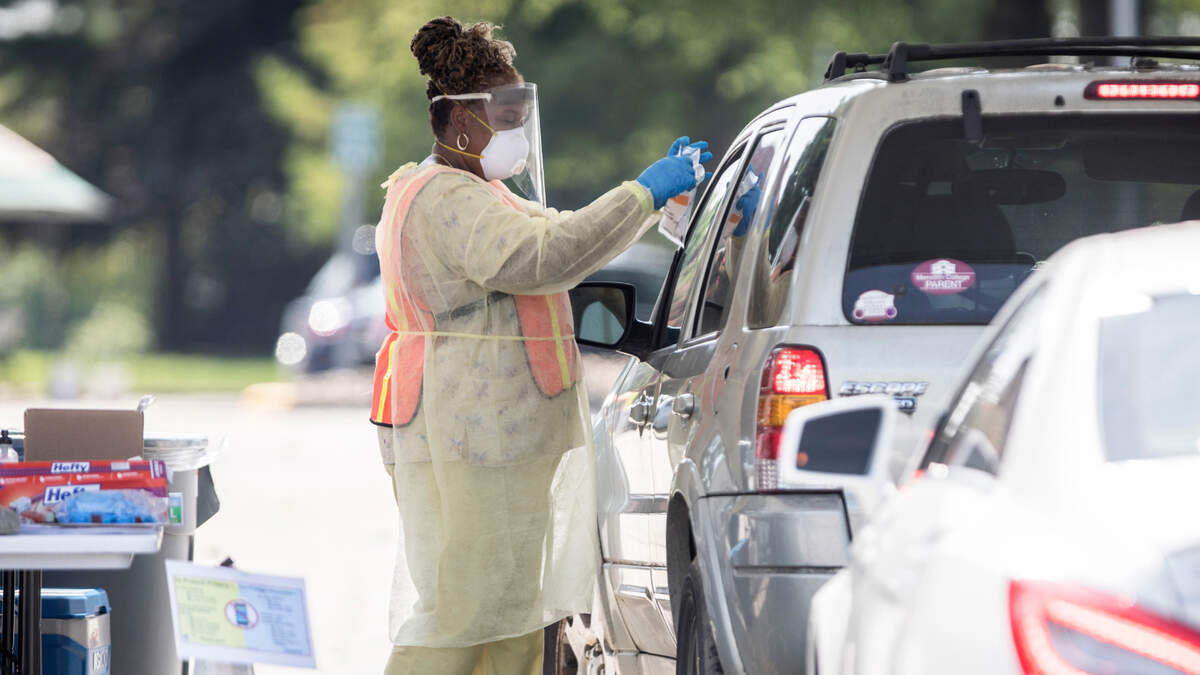
North Carolina officials confirmed the state’s first case of COVID-19 on March 3, 2020. In the nearly two years since, more than 2.5 million cases have been reported in the state and more than 22,000 people have died.
the state’s response, while hindered by mixed messaging and lack of preparation at the federal level, also had its successes. North Carolina has the second lowest age-adjusted COVID-19 death rate in the Southeast, behind only Virginia. Among states nationwide, North Carolina ranks 25th for per-capita cases and 39th for per-capita deaths.
But there were struggles over the governor’s executive orders and disputes over business shutdowns, school closings and mask and vaccine mandates. And North Carolina, like much of the South, faced a surprisingly high level of vaccine hesitancy and resistance.
As North Carolina enters a third year of the pandemic with infections from the omicron variant on the wane, this a natural time to assess the state’s response to the crisis from various leadership viewpoints.
‘We learned a lot’
Dr. David Wohl, a professor of infectious diseases at the UNC School of Medicine, emerged as a leading spokesman for health care workers fighting COVID-19. He urged the public to take the infection threat seriously and spoke with emotion about those suffering from the virus.
Wohl is aware that more people are second-guessing the stringent public health measures, but he said the past two years must be recalled as a period divided between no vaccine and widespread vaccinations.
“In hindsight, I think it was right to do what we’ve done,” he said. “It’s very easy for critics to say we should have done something different. If we had a much more laissez-faire attitude early on, I think there would have been many more deaths and many more critics asking why didn’t we do something.”
The response to COVID was not a fixed one, Wohl said. Tactics and advice changed as vaccines arrived, the virus changed and public sentiment shifted.
“We’ve learned a lot about what works and doesn’t work,” he said. “You don’t get it right every time in a crisis. We’ve applied what we’ve learned. I think that’s really the key.”
What he’s come to understand most, Wohl said, is don’t get caught flat-footed. Be prepared for another COVID variant or another virus that could be a new “nightmare scenario.”
“Now is not the time to let down our guard. Now is the time to redouble while we have some breathing space to do so,” he said. “That’s one thing I think we’ve learned — you can’t be complacent.”
Guideline ’whiplash’
Republican state Senate leader Phil Berger supported the early response, but eventually objected to Gov. Roy Cooper’s ability to declare an open-ended state of emergency and the effects of prolonged restrictions on businesses and the loss of in-person school instruction.
Berger said in a statement: “One of the most glaring mistakes made during the pandemic was shutting down schools and forcing students into ‘virtual learning.’ Despite the science proving that young children were at a lower risk for serious illness, students were ripped from their classrooms. Students are now facing monumental learning loss, and some may never recover.
“When the pandemic began, we were told that we needed two weeks to flatten the curve. Now, nearly two years later, the confidence in our public health officials has tanked because of the whiplash brought on by changing guidelines for political, not scientific reasons.”
Businesses left out
The North Carolina Chamber of Commerce wanted more say in shaping policies that had sweeping effects on business owners and their employees. It is conducting a review that will seek how to be better prepared in the future. The report is expected in August.
“This pandemic was and is bigger than political designations—yet it was continually politicized, which is what caused the most uncertainty and unrest for businesses. Attempting to assert any sort of perspective into the discussion typically resulted in being summed up as joining a camp on one side or the other and then being dismissed by the other side,” Chamber officials said in a statement.
They added, “Businesses were not given a decision-making role in this pandemic—when they very much needed and deserved one. They are the lifeline of our economy, so not including them was a significant misstep.”
‘Guided by science’
Gov. Cooper formed a task force to coordinate the state’s COVID response. In the early stage, he issued a stay-at-home order and limited some retail businesses’ hours and openings. He later added a statewide mask mandate and required about 55,000 state employees to be vaccinated or get tested weekly. The governor engaged in regular COVID briefings and eased restrictions as vaccines arrived and the Centers for Disease Control and Prevention changed its guidance.
The governor’s office assessed the state’s response with a statement quoted here in part:
“Throughout the pandemic, the state’s response has been guided by science and data with the goal of protecting the health and safety of our people and economy. As a result of the administration’s decisive actions, North Carolina has ranked among the states with both the fewest deaths and job losses per capita.
“The Governor deeply appreciates the tireless efforts of so many in combating this virus, particularly our state’s medical professionals. ... Going forward, we know vaccines and boosters are the way out of this pandemic and the state continues to work to get as many shots in arms as possible.”
‘Learn on the go’
State Department of Health and Human Services Secretary Kody Kinsley worked intently as senior deputy secretary as then-Secretary Mandy Cohen took center stage in the state’s public health response. Cohen resigned at the end of 2021 and Gov. Cooper named Kinsley as her successor. The department issued a report in December on its response during the first 20 months of the pandemic.
Kinsley, who unlike Cohen is not a medical doctor, is praised for his command of logistics. He is credited with accelerating the rollout of vaccines after early snarls in the process.
The state’s push to get more people vaccinated was slowed at first by vague definitions of who was qualified to be at the front of the line. “Those decision points on the margins slowed everything down. That’s why in January of last year we rapidly shifted our approach,” he said. “We have learned to adapt very quickly and learn on the go.”
In the longer run, vaccinations were hindered by the lack of Medicaid expansion, Kinsley said.
“We started, unfortunately, behind the eight ball in responding to this pandemic because we have been living with over a million people without health insurance in North Carolina,” he said. “That is over a million people who do not have routine interactions with the health system, who have decreased levels of trust in the health system ... and who never would assume that anything in the health system is free.”
Kinsley added, “That gap in coverage continues to haunt us.”
After two years of COVID, the emphasis has shifted from stamping it out to coping with it.
KInsley said, “We are going to be living with this virus just as we live with other respiratory illnesses, the flu and others. Now we have to take another step forward in helping the public understand what that is going to look like and being able to use vaccines as a way for most of us to get back to life as we know it.”
This story was originally published February 20, 2022 at 4:30 AM.