Despite Ahmaud Arbery case victory, hate crime law is still a mess
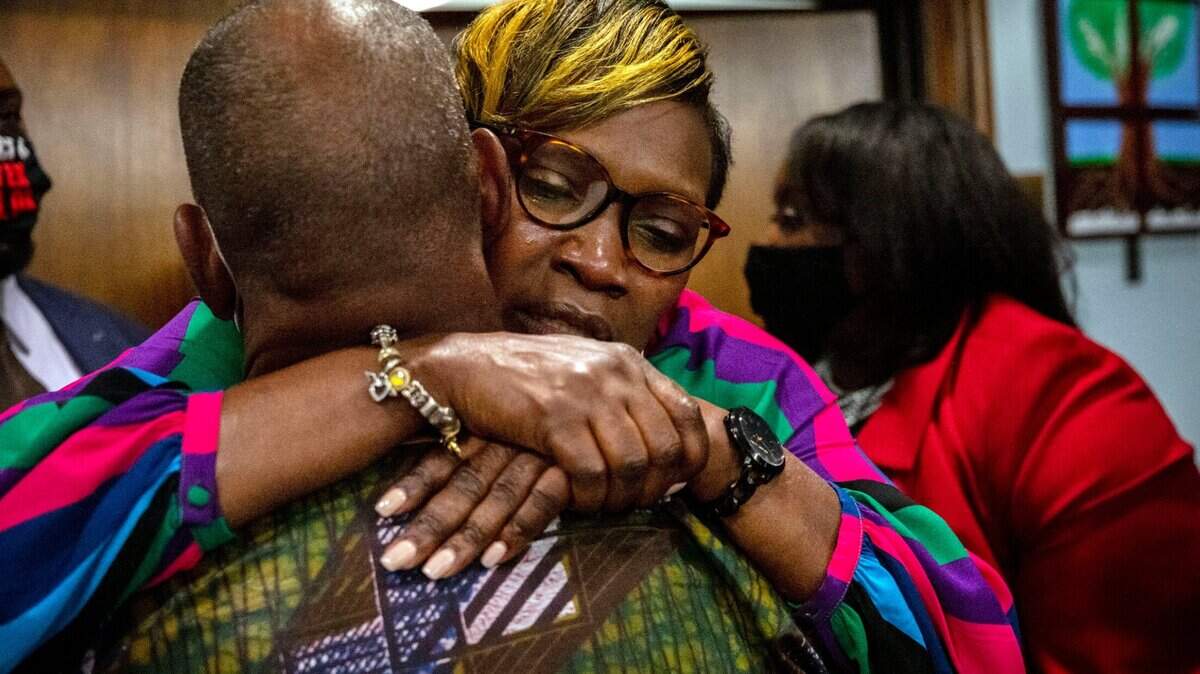
On Tuesday, the three men who murdered Amhaud Arbery were found guilty by the federal courts of acting out of racism and violating the 25-year-old Black man’s civil rights as he ran through a Georgia neighborhood.
They were previously tried, found guilty, and sentenced to life in prison by Georgia’s state courts, with only one having the possibility for parole. They now face potential life sentences at the federal level, too.
“No one should fear that if they go out for a run they will be targeted and killed because of the color of their skin,” U.S. Attorney General Merrick Garland told the press after the ruling.
Although the men had already received sentences from their state, there is symbolism in this conviction, an implication that the federal government is taking hate crimes seriously.
But if the federal government is sincere, they face a lot of work beyond a single case.
Hate crime cases are notoriously hard to prosecute. They require a clear intent, something that the accused may not give or even acknowledge consciously. The man who killed eight people in Atlanta massage parlors in March 2021 claimed he wasn’t motivated by race or gender, even though six of the victims were Asian American women. The killings took place in two counties. One county is pressing hate crime charges. The other didn’t.
Federal courts are only involved in select cases, meaning most potential hate crimes are prosecuted at a state level. And states vary.
Georgia didn’t have a state-level hate crime law whatsoever until 2020, when it was finally passed in the wake of Arbery’s murder. South Carolina, Arkansas, and Wyoming still don’t have hate crime laws on the books. For the states where hate crime laws do exist, there’s more variation. North Carolina’s hate crime law is two sentences long, and fails to include crimes based on gender, sexual orientation, and disability. It’s a misdemeanor charge, and one that offers a maximum sentence of 120 days in jail. We live in one of seventeen states that have a law but don’t require data collection on these hate crimes at the state level.
There have been attempts by Democrats in the General Assembly to strengthen the state’s hate crime law, particularly after the 2015 killings of three Muslim students in Chapel Hill. Every iteration gets stalled in committee.
The federal law is flawed, too. Reporting to the Department of Justice is voluntary, and it’s estimated that close to 250,000 hate crimes occur annually in the United States, compared to a little over 8,000 reported in 2020 and 7,300 in 2019.
Alongside all these failures, some legal scholars question whether hate crime law is useful in the first place. Legal professor Avlana Eisenberg wrote in The Atlantic that prosecutors are hesitant to consider hate crime charges because they may not be able to win, and it could complicate the feelings of the jury. When they do use them, it can be as a bargaining chip. Two of Arbery’s killers attempted to work out plea deals where they’d accept the hate crime charges but be moved to federal prisons, where the conditions are less crowded and better-funded. Arbery’s mother begged the Justice Department not to accept the deal, saying that giving in to their requests “gives them one last chance to spit in my face after murdering my son.”
An occasional win in favor of the marginalized does not defeat the larger fight against the criminal justice system’s unfair treatment of Black and Brown Americans. For every hate crime convicted in the courts, there are countless that fit the definition in theory but don’t even make it to trial, let alone conclude with criminal charges.
The U.S. Justice Department needs to consider these discrepancies. If we want solutions in the justice system, we must have consistency. If we want to keep people from marginalized groups alive, we need to examine the roots of their deaths.
This story was originally published February 22, 2022 at 4:53 PM.