
NC Congressman: Trying to control the history taught in our classrooms does great harm
I distinctly remember how it struck me when I first heard it from the pew: “What does a country require of its patriots?,” William Sloane Coffin asked.
Our country needs neither “uncritical lovers” nor “loveless critics,” he said. Rather, it needs the kind of patriots who “carry on a lover’s quarrel with their country, a reflection of God’s lover’s quarrel with all the world.”
I have often thought of that definition of patriotism and what it requires of us since George Floyd’s murder and the reckoning with racism it inspired.
In transportation and housing, the main areas of Congress where I have a leadership role, I have tried to come to terms with the ways past policy has reflected or worsened racial disparities and to make racial and economic equity a more explicit focus going forward. Our physical landscape has been altered as well, as some 230 Confederate monuments and memorials across the country have been dismantled, including at least 18 in North Carolina.
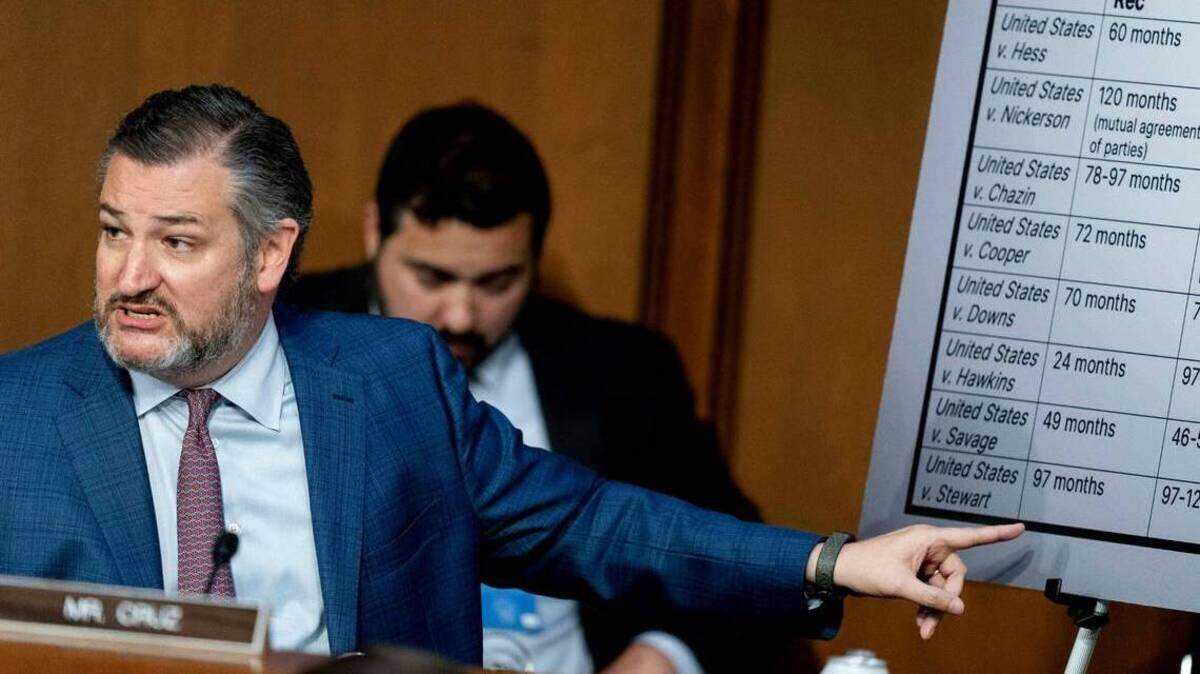
The backlash was not slow in coming and was on full display in the confirmation hearings for Supreme Court nominee Ketanji Brown Jackson. Sen. Marsha Blackburn, (R-Tenn.) accused Jackson of praising “the 1619 Project, which argues that the U.S. is a fundamentally racist country” and of relying on critical race theory in sentencing criminal defendants. Sen. Ted Cruz (R-Texas) charged Jackson with championing CRT, which teaches that “babies are racist” in K-12 school curricula.
The senators managed to distort the 1619 Project, CRT and Jackson’s views simultaneously. In doing so, they faithfully reflected nationwide Republican efforts to make how we understand, teach and learn from our history a wedge issue.
Two N.C. examples: Johnston County now requires that “no student or staff member shall be subjected to the notion that racism is a permanent component of American life” and dictates that “all people who contributed to American Society will be recognized and promoted as reformers, innovators, and heroes to our culture.” And Lt. Gov. Mark Robinson created a task force that produced a report naming individual teachers accused by parents of indoctrinating students.
Such requirements strike at the heart of our faith traditions and the kind of patriotism they inspire. Rev. Kate Murphy of Charlotte took this on in an insightful Nov. 16, 2021 op-ed: “It’s critical to me that the things my children read about American history make them uncomfortable.” She noted that Hebrew prophets didn’t write “to make the people proud, but to make them faithful — to God and to...the Covenant.”
It was in that spirit that many Americans of my generation rediscovered the prophets in the context of the civil rights movement — an inspiration to the kind of patriotism that combines love of country with a determination to mend its flaws.
Donald Shriver, the late president of Union Seminary, wrote a masterful account of how countries remember and memorialize their negative pasts. In “Honest Patriots: Loving a Country Enough to Remember Its Misdeeds,” he suggests that collectively understood and expressed contrition is critical to social reconciliation and forging a better future. Shriver wrote: “We can listen to stories of how we or our representatives have been responsible for unjust suffering. We can do what we can to convey the stories to another generation. And, so far as possible, we can let our memories prompt us to new commitments to change.”
Much of our political rhetoric nowadays is of little lasting consequence, including the supercharged culture wars. But that is not true of the whitewashing of American history, the denigrating of those who tell and teach the truth, and ideological controls on what can be discussed in our classrooms. Such measures do us great harm. They strike at the heart of the honest patriotism we owe to each other and the country we love.
We have a huge collective stake in recapturing and preserving the freedom to explore our history fully and truthfully and place ourselves within it. And we need a new generation of patriots who are willing to face that history, learn from it, and chart a more just and inclusive course for the future.
This story was originally published March 26, 2022 at 4:30 AM.