
Under Chief Justice Newby, NC courts grow more partisan
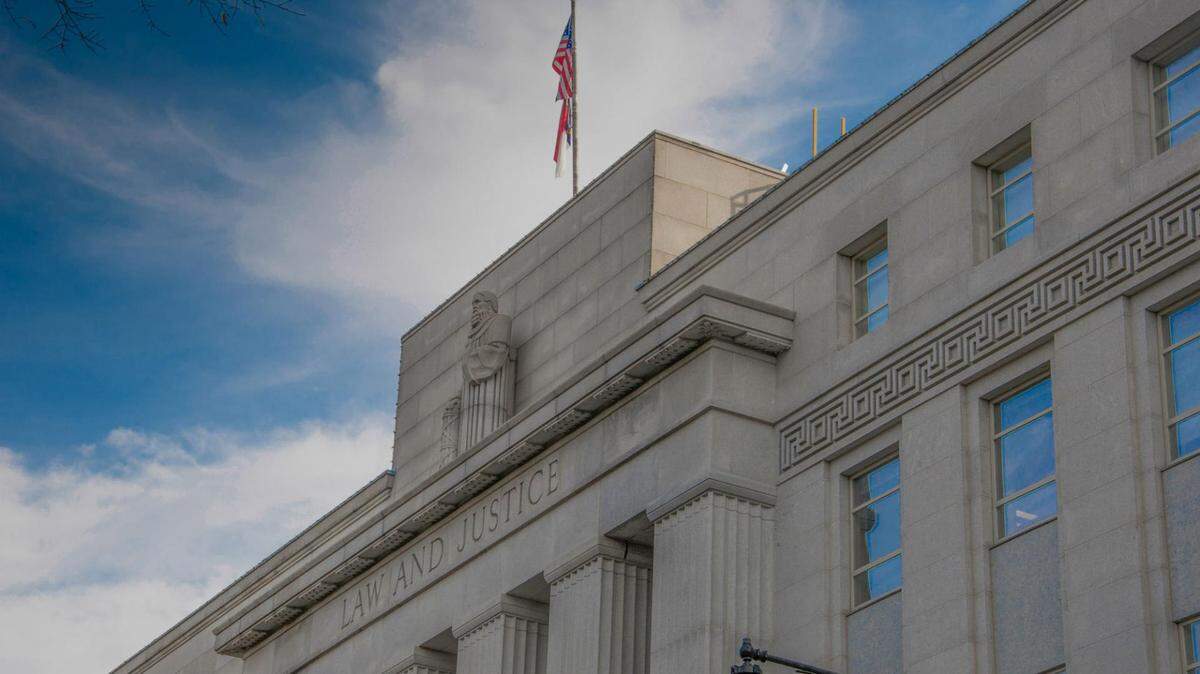
There’s a growing crisis of confidence in the legitimacy of the courts.
North Carolina’s courts are supposed to be above politics, but they are getting tainted by the same partisanship that is threatening public faith in the federal courts, particularly the U.S. Supreme Court.
Last November, Republican Paul Newby won election as chief justice of the state Supreme Court by 401 votes – out of 5.4 million cast – but he’s taken that razor-thin victory as a mandate to turn the state’s court system into one in which partisanship increasingly colors hiring, appointments and judgment.
As chief justice, Newby oversees the state court system through the Administrative Office of the Courts.
Now we’ve learned that a top state courts official may have been ousted for the offense of publicly reminding judges - perhaps including at least one prominent Republican - that they shouldn’t be politicking when they’re not up for election.
Carolyn Dubay, executive director of the Judicial Standards Commission for the past six years, abruptly left her position just days after a memo on the North Carolina Judicial Code of Conduct was posted on the commission’s website. The March 11 memo advised judges to avoid involvement in campaigns in years when they are not going before the voters. It was pulled from the website days later and replaced by a looser interpretation.
The memo was issued by Appeals Court Judge Chris Dillon, a Republican who chairs the Judicial Standards Commission, but it was prepared by staff. It was unclear if Dillon had read it. Dubay could not be reached for comment, but others familiar with the situation said she was pushed to resign over it.
A tighter interpretation of the code would inhibit politically active judges, including, say, Justice Phil Berger Jr., who supports Republican candidates even though he’s still early in his eight-year term. On Twitter, he recently endorsed Republican state Supreme Court candidate Trey Allen, calling him “a true conservative.” In another post, he said he was “thrilled to be on hand” as District Court Judge Beth Freshwater filed for a Republican primary challenge to Donna Stroud, the chief judge of the North Carolina Court of Appeals.
In a commission podcast posted just days before her resignation, Dubay said, “(Judges) really do need to remember, in this very politically charged environment particularly, that maintaining that independence and professionalism is important and that their constituent is justice and fairness and not a political base.” She added, “We might have partisan elections for judges, but we don’t have partisan justice.”
Well, maybe we do.
Dubay’s departure came the same week that Newby also removed Superior Court Judge David Lee, a Democrat, who was overseeing the long-running Leandro school funding case. Newby replaced Lee with special Superior Court Judge Michael Robinson, a conservative Republican who attended UNC Law School with Newby. Lee angered leaders of the Republican-controlled General Assembly by ordering the state to provide $1.75 billion more for public schools.
The state judicial system has faced a series of personnel changes under Newby’s leadership. After he appointed Superior Judge Andrew Heath to head the Administrative Office of the Courts, several of the office’s senior employees were let go. Newby appointed Allen, his former law clerk and Supreme Court candidate, as general counsel for the office.
As chief justice, Newby is free to use his power of appointment. But his moves rewarding Republican insiders have cost the court system expertise, continuity and public confidence. Fostering partisanship at the state level is adding to an already growing national crisis in the courts.
Unfortunately, the politicizing of North Carolina’s courts is only going to get worse in this election year as Republicans seek to take control of the state Supreme Court. If that last check on Republican legislative power is lost, democracy may be, too.
This story was originally published March 27, 2022 at 4:00 AM.