Thom Tillis worried workplace protections for pregnancy will lead to abortion on demand
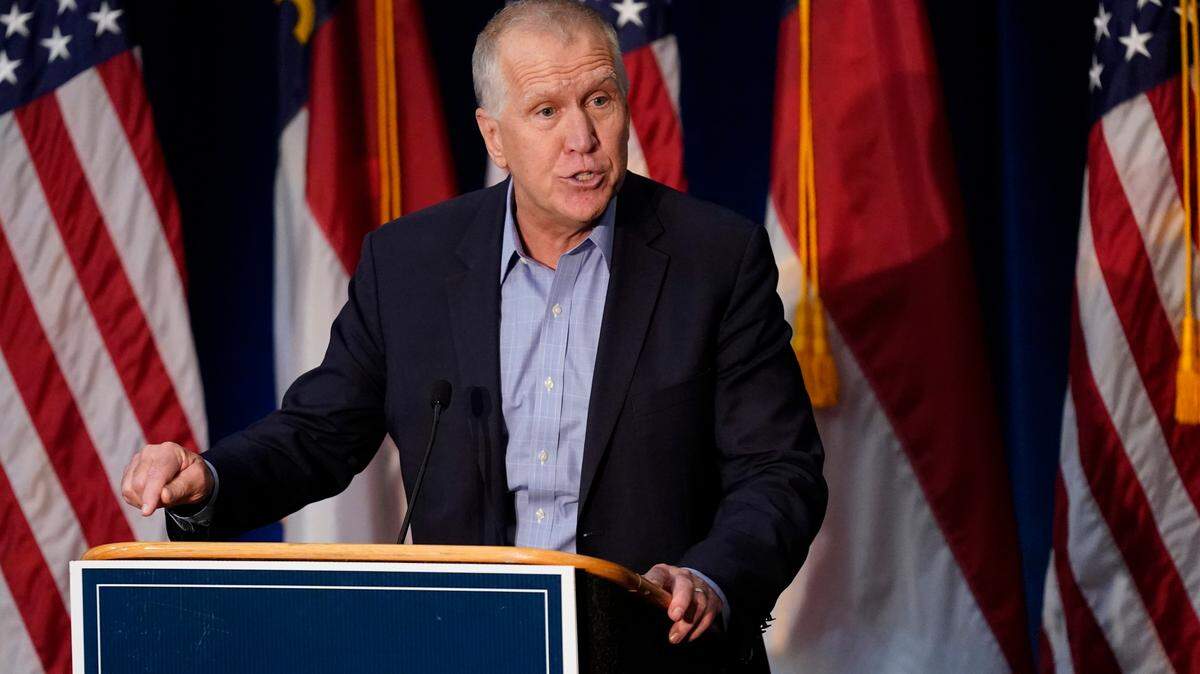
As an anti-abortion legislator, Thom Tillis should want to take care of pregnant people. But last week, the North Carolina senator went to the chamber floor to argue against the Pregnant Workers Fairness Act.
The bill is modeled after the Americans with Disabilities Act, and pregnant workers “reasonable accommodations,” such as extra bathroom breaks, places to sit for jobs that generally demand a lot of standing, and not having to lift heavy objects. Its purpose is to close a loophole in the Pregnancy Discrimination Act of 1978 that prevents discrimination against pregnant people, but does not use the “reasonable accommodations” language that allows them to ask for things to make their jobs manageable during pregnancy.
Tillis does not see it this way. On the Senate floor, he said that the PWFA “would give federal bureaucrats at the EEOC (Equal Employment Opportunity Commission) authority to mandate that employers nationwide provide accommodations such as leave to obtain abortions on demand.”
It isn’t clear how Tillis got “abortion on demand” out of a bill that simply helps pregnant people get the accommodations they need. Rep. Virginia Foxx (R-NC) shared similar remarks in the House of Representatives, and was quoted by anti-abortion CatholicVote as saying the House version of the bill would “require” a religious organization to comply with the request for time off to receive an abortion — something that, again, doesn’t come up in the bill.
Even for those who believe abortion is health care, it’s clear that isn’t what the bill is about. The bill is specifically for “reasonable accommodations” during the workday. It’s up to the employer and employee to decide what is or isn’t reasonable. Even if it wasn’t, there are legal protections in place that keep employers from asking about why you went to the doctor. They are not required to pay for abortion care.
At the most extreme interpretation of this bill, an employee could ask for time off to have an abortion, but employers would have to determine if that is a “reasonable accommodation” — and they’re allowed to say no. But even that seems like a stretch — the vast majority of abortions take place in the first 13 weeks of pregnancy. If you are someone who knows your employer is not going to support abortion, you wouldn’t tell them you’re pregnant unless you wanted to continue the pregnancy — and in that case, an abortion would likely be a deeply painful choice related to health complications.
Sen. Bob Casey (D-PA) submitted the bill for a unanimous consent agreement on Thursday, noting that he and Sen. Bill Cassidy (R-LA) have been working on this bill for years. If they reached unanimous agreement, they would have been able to expedite the process for passage during the current session, instead of having to go through the entire process in 2023.
Casey specified that the EEOC would not be able to require abortion leave, and that the EEOC makes the calls it does based on what is considered “reasonable” — just like they do under the Americans with Disabilities Act. Now, it’s looking like the bill won’t be voted on before the next session, and will have to go through the filing process once again.
Casey also noted that the bill is, again, bipartisan — it was crafted by two Democrats and two Republicans, and more than 75% of their colleagues in the House support the bill. Richard Burr, North Carolina’s outgoing senator, is one of the co-sponsors.
It’s particularly strange to see this from Tillis, considering Burr’s role in crafting the bill and Tillis’ own bipartisanship work in recent months. Just last week, he and former Democratic Sen. Kyrsten Sinema announced they had created a framework to address immigration and the path to citizenship. He voted for marriage equality legislation. He helped broker a gun control bill with Democrats.
At best, this is Tillis being uninformed. At its worst, this is a bad-faith argument meant to pour gasoline onto culture war issues. Tillis should be embarrassed, and maybe even consider taking over Burr’s spot as co-sponsor next session.