
After two years, NC’s schools chief deserves a letter grade | Opinion
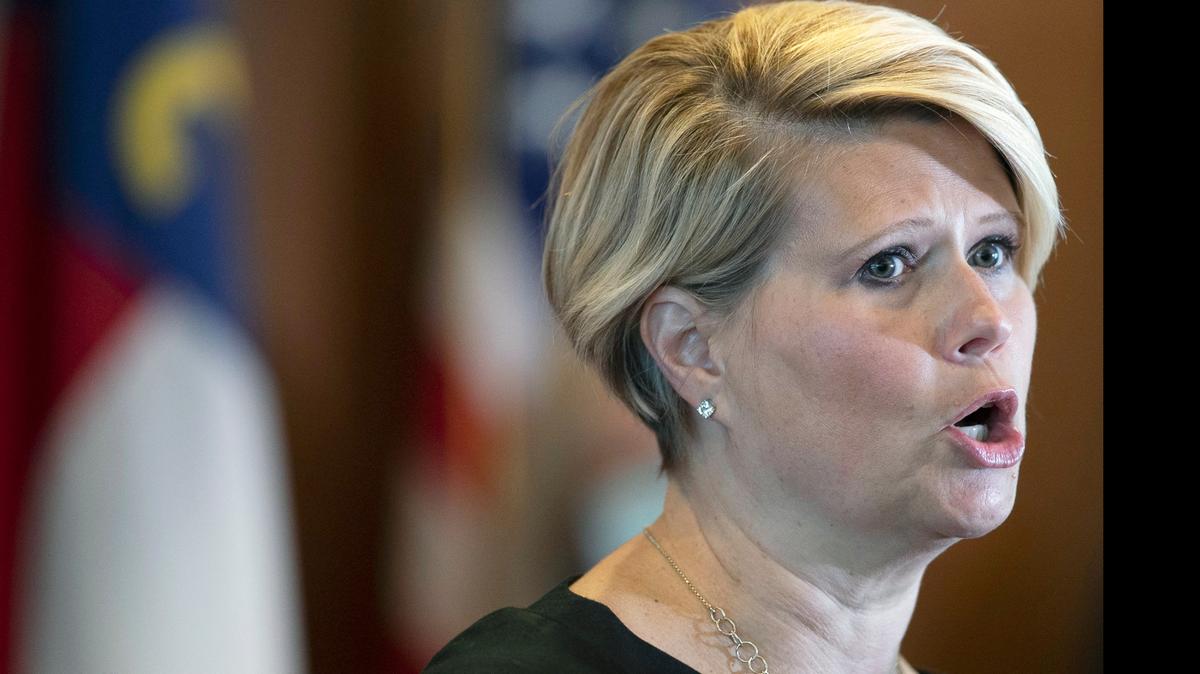
At the halfway point in her four-year term, it’s a good time to give the Republican state Superintendent of Public Instruction what Republican lawmakers are so fond of giving public schools – a letter grade.
Catherine Truitt gets a C.
It could be lower, except Truitt is being graded on a curve. Her predecessor, Republican Mark Johnson, was so combative and all around atrocious as superintendent that any reasonably capable person succeeding him gets a passing grade.
Still, Truitt needs to do better. North Carolina’s public schools need a champion and public school teachers need a friend. She isn’t fulfilling either role.
Regarding public schools, she caters to those pushing options to traditional public schools and has not pushed the legislature to increase public school funding under the Leandro plan. As for teachers, she helped draft a bill – vetoed by Democratic Gov. Roy Cooper – that restricted what teachers can say about systemic racism.
Cooper’s veto message to lawmakers also applies to Truitt. He said, “The legislature should be focused on supporting teachers, helping students recover lost learning, and investing in our public schools. Instead, this bill pushes calculated, conspiracy-laden politics into public education.”
As Republican lawmakers meddle in the classroom and refuse to give teachers a decent pay raise, North Carolina is facing a serious teacher shortage and a broken pipeline to bring in new teachers. In response, Truitt, a former high school teacher and education adviser to former Gov. Pat McCrory, is backing a complex plan to link teacher pay increases to higher accountability based on test scores and evaluations.
Teachers themselves were largely left out of the plan’s development. Many object to the proposed standards as overly complicated and subjective. Given the shortage of teachers, this hardly seems the time to give them another reason to leave.
Truitt’s tenure has had positive notes. She has pushed to make the state’s letter grading of schools based less on test scores and more on broader measures of progress. She has pushed to have all high school graduates ready for college or a career and she supports training teachers in the state’s new approach to teaching reading, a phonics-based program known as the “science of reading.”
Even Truitt’s critics concede that she has ended the chaos of the Johnson era and made the Department of Public Instruction more transparent and responsive. (Though Truitt declined to be interviewed for this column.)
But Truitt’s positives are outweighed by her reluctance to advocate for the advancement of the charge in her title: “public instruction.” She appears more interested in appeasing GOP lawmakers who are skeptical about traditional public schools. Instead, they want more charter schools and more taxpayer money spent to enable children to attend private schools.
How much of Truitt’s tenure reflects her own beliefs and how much reflects her eagerness to stay in the good graces of people who don’t support public schools is hard to measure. But the role of the state Superintendent of Public Instruction is clear.
The superintendent isn’t a mere administrator or a water carrier for legislative leaders. The post is filled by a statewide election and its constituency includes all the state’s parents, students and employers. No superintendent can contest every political or legislative move against public schools and teachers, but likewise no superintendent can ignore the most serious threats to the vitality of schools and the roles of teachers.
Truitt needs to stop appeasing and start using her bully pulpit to defend public schools. If not, she’s heading for a failing grade. The post-Johnson boost can last only so long.