
Why Josh Stein’s office isn’t prosecuting Mark Meadows for voter fraud | Opinion
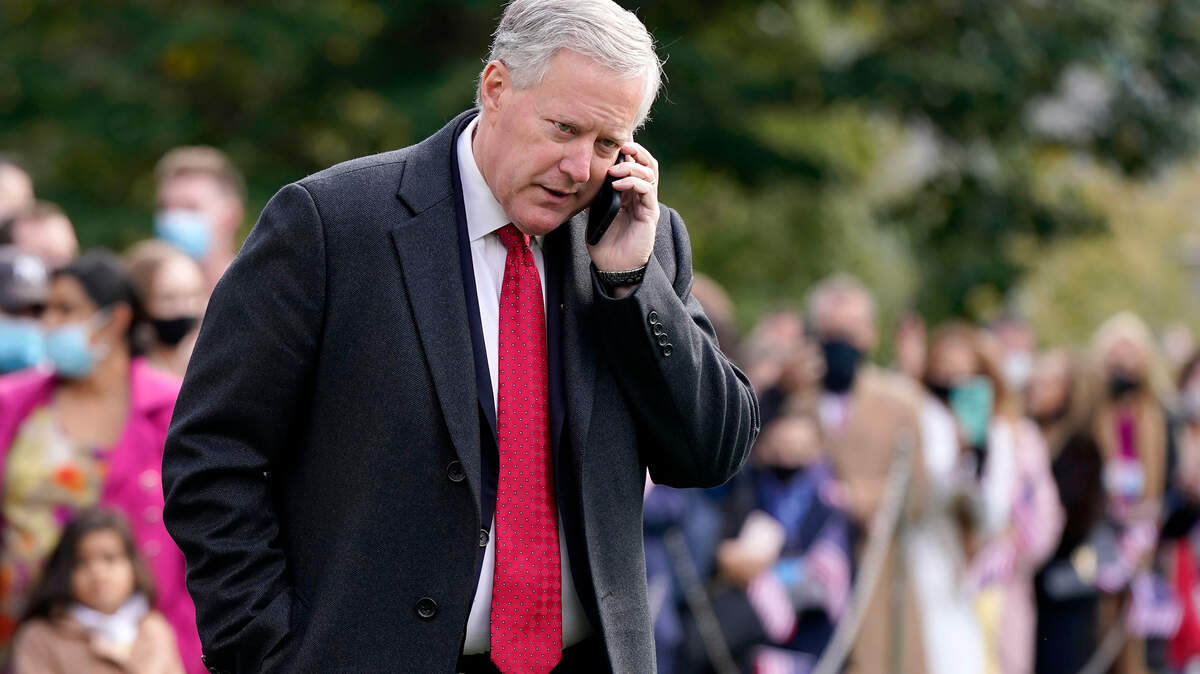
North Carolina Attorney General Josh Stein announced last week that his office would not be pressing charges against former White House Chief of Staff Mark Meadows or his wife, Debra, for allegedly registering to vote at an address they did not reside at.
In March 2022, The New Yorker published a story insinuating that Meadows did not and had never resided in the mobile home his registration was under. By April, The Washington Post reported that Meadows was also a registered voter in Virginia 2021, and was a registered voter in South Carolina after buying a house there in July 2021.
While the case seems straightforward, it wasn’t. Stein and his office listed reasons that they would not prosecute Meadows. The Department of Justice decided that he and Debra likely made the mistake with good faith. The Meadows did, in fact, lease the property for a year, and had a P.O. Box for receiving mail in North Carolina. They paid North Carolina taxes, and Meadows, as an employee of the federal government, was allowed to maintain residence in North Carolina. The registrations in Virginia and South Carolina came after Meadows was no longer a federal employee.
“My personal beliefs about Mr. Meadows and his lack of commitment to our democracy simply have no bearing on the facts and law of this case,” Stein said in a phone interview, “and I would never allow my personal feelings to influence a decision that this office makes.”
Stein is referring to Meadows’s involvement in the January 6, 2021 attack on the U.S. Capitol, and his prior efforts to stoke fears of voter fraud. Stein is providing a counterpoint to Meadows’s narrative about widespread voter fraud — that when cases of fraud do come up, the priority should be that every eligible North Carolinian is able to cast a ballot.
North Carolina law that allows federal employees to maintain residency in the state. It’s a provision that allows our elected officials to continue voting here, despite spending the majority of their time in Washington. Similar laws are in place for state representatives who come to Raleigh for the legislative session.
It seems that Meadows’s multiple voter registrations were the result of his not telling each state when he moved. He moved to Virginia when his time at the White House was over. He bought his home in South Carolina in July 2021, and now calls himself a South Carolina resident. While the whole thing looks suspicious, it is comparable to any person who moves during an election year. As long as you have lived somewhere long enough to establish residency in that state, you can move as many times as you want.
On the other hand, not prosecuting Meadows seems unfair, especially to the people who are charged with voter fraud for small mistakes. Take Lanisha Bratcher Jones, a woman who spent two years in court because she was unaware that people on felony probation in North Carolina aren’t allowed to vote (although the state court system has halted that statute). Meadows will not have to go through that process, because the charges never existed.
“If we’re not going to go after Mark Meadows, we’re not going to prosecute this person who’s so knowledgeable and make him go to court over this, why would we drag anyone into court for their single unknowing vote?” said John Carella, the lawyer on Jones’ case and several other felony voting cases in North Carolina. “It’s unjust.”
That’s the issue at the heart of Stein’s decision. He is making a fair call, and a call we would want others to make when it comes to individual voter fraud cases. It’d be better for all voters if all district attorneys were willing to give people the benefit of the doubt. The reality is that some don’t see it that way.
Stein can’t control what district attorneys do when the State Board of Elections sends them voter fraud cases. The majority of offices never prosecute these cases, but some do. Stein, for his part, is keeping in line with previous stances he’s taken on voting. He opposed a bill during his time as a state senator that would have kept people who showed up at the wrong precinct from receiving provisional ballots.
Everyone deserves equal treatment — even when they wouldn’t necessarily extend the same grace.
BEHIND THE STORY
MOREWhat is the Editorial Board?
The Charlotte Observer and Raleigh News & Observer editorial boards combined in 2019 to provide fuller and more diverse North Carolina opinion content to our readers. The editorial board operates independently from the newsrooms in Charlotte and Raleigh and does not influence the work of the reporting and editing staffs. The combined board is led by N.C. Opinion Editor Peter St. Onge, who is joined in Raleigh by deputy Opinion editor Ned Barnett and in Charlotte by deputy Opinion editor Paige Masten. Board members also include Observer editor Rana Cash and News & Observer editor Nicole Stockdale. For questions about the board or our editorials, email pstonge@charlotteobserver.com.