
Thom Tillis, ‘bipartisan dealmaker’? He should embrace, not resist, that label | Opinion
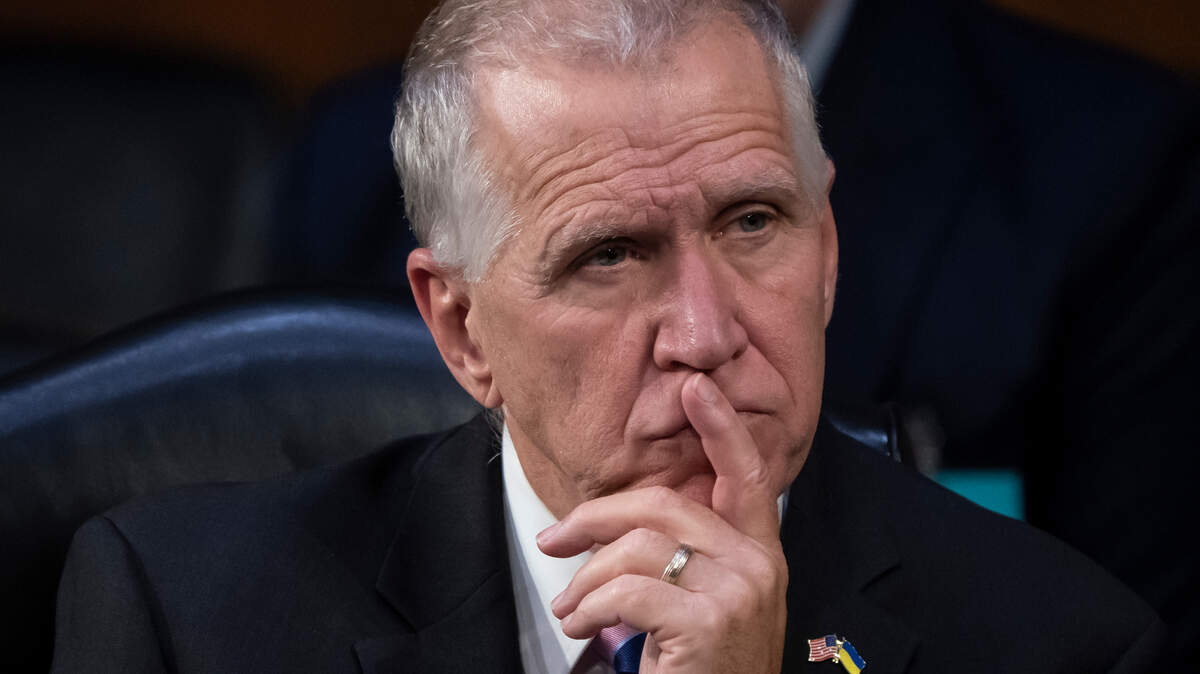
Thom Tillis has long touted his efforts to work across the aisle for legislation that benefits North Carolinians. Those efforts might now being paying off for Tillis — and that could be good news for his party and his state.
On Tuesday, Mitch McConnell (R-KY) announced that Tillis would be a new advisor for the Senate Republican leadership team, just one day after a Washington Post profile of the senator declared Tillis a “bipartisan dealmaker.”
“North Carolina and the whole country benefit from his service and I’m glad he’s taking on this new leadership role,” McConnell said in a statement to the Post. Sen. Susan Collins (R-Maine) and former Sen. Rob Portman complimented his work ethic. So did Sens. Chris Murphy (D-CT) and Kyrsten Sinema (I-AZ).
The announcement follows a run of meaningful bipartisan legislation that bore Tillis’ fingerprints. He helped get Republicans on board with the the first gun control bill to pass since the 1990s, the Safer Communities Act, which gives states money to run intervention programs and closes a loophole in domestic violence law. He helped craft the Respect for Marriage Act, which provides statutory authority for same-sex and interracial marriages in the wake of the Supreme Court’s reversal of Roe v. Wade. Even his failed immigration framework with Sinema was an effort at incremental change, just too close to the end of the legislative session.
Each was an example of a seemingly lost brand of legislating — working across the aisle to get some of what you want on issues critical to your constituents. That’s difficult to do in a harshly divided Congress, but it’s something Tillis has long said he was capable of delivering. Even so, he’s reluctant to embrace the “bipartisan dealmaker” label bestowed upon him, telling the Post “if you’re always bipartisan, then you’ve lost your mooring on your ideological worldview.”
Fair enough. We don’t expect Tillis to be someone other than the solid conservative twice elected by North Carolinians. What his constituents can hope for, however, is an official who continues to work with lawmakers to produce legislation that moves his state and country forward on critical issues. He should try again on immigration, although a now-Republican U.S. House will make such an effort. We also would like to see his hand in a farm bill that protects agricultural interests yet allows forward movement on critical climate issues. (Tillis did not respond to an email sent to his office this week asking what his legislative priorities will be in 2023.)
We also would like to see him be the leader for North Carolina — not only one who represents a diverse constituency with the legislation he pursues, but one who will set an example and stand up against officials and hateful rhetoric that move our state backward. That includes Republicans like Lt. Gov. and future gubernatorial candidate Mark Robinson, who like Tillis is among the most public faces of the NC Republican Party. North Carolina needs all its leaders — and especially those with Tillis’ heft — to stand up for decency.
Tillis has mostly avoided such confrontation and the political cost it might bring. He famously he wrote a 2019 op-ed in The Hill opposing then-president Donald Trump declaring a national emergency to build a border wall, only to fall in line with Trump then and moving forward.
Such attempts at calculated deftness — he also called Supreme Court nominee Kentanji Brown Jackson “well qualified” and her nomination “historic” before voting against her — have earned him the ire of both Democrats and Republicans. There’s little doubt his bipartisan brokering will invite new criticism in this no-giving-in political climate. In the Washington Post article, Tillis expressed that the desire for bipartisan deals arose out of frustration with lawmakers not working together.
We agree, and we don’t even mind if Tillis is driven more by politics than progress. If he’s getting meaningful things done, it’s a compromise North Carolinians should live with.
BEHIND THE STORY
MOREWhat is the Editorial Board?
The Charlotte Observer and Raleigh News & Observer editorial boards combined in 2019 to provide fuller and more diverse North Carolina opinion content to our readers. The editorial board operates independently from the newsrooms in Charlotte and Raleigh and does not influence the work of the reporting and editing staffs. The combined board is led by N.C. Opinion Editor Peter St. Onge, who is joined in Raleigh by deputy Opinion editor Ned Barnett and in Charlotte by deputy Opinion editor Paige Masten. Board members also include Observer editor Rana Cash and News & Observer editor Nicole Stockdale. For questions about the board or our editorials, email pstonge@charlotteobserver.com.
This story was originally published January 19, 2023 at 11:20 AM.