
These nurses serve NC’s neediest for low pay. The legislature should give them a raise | Opinion
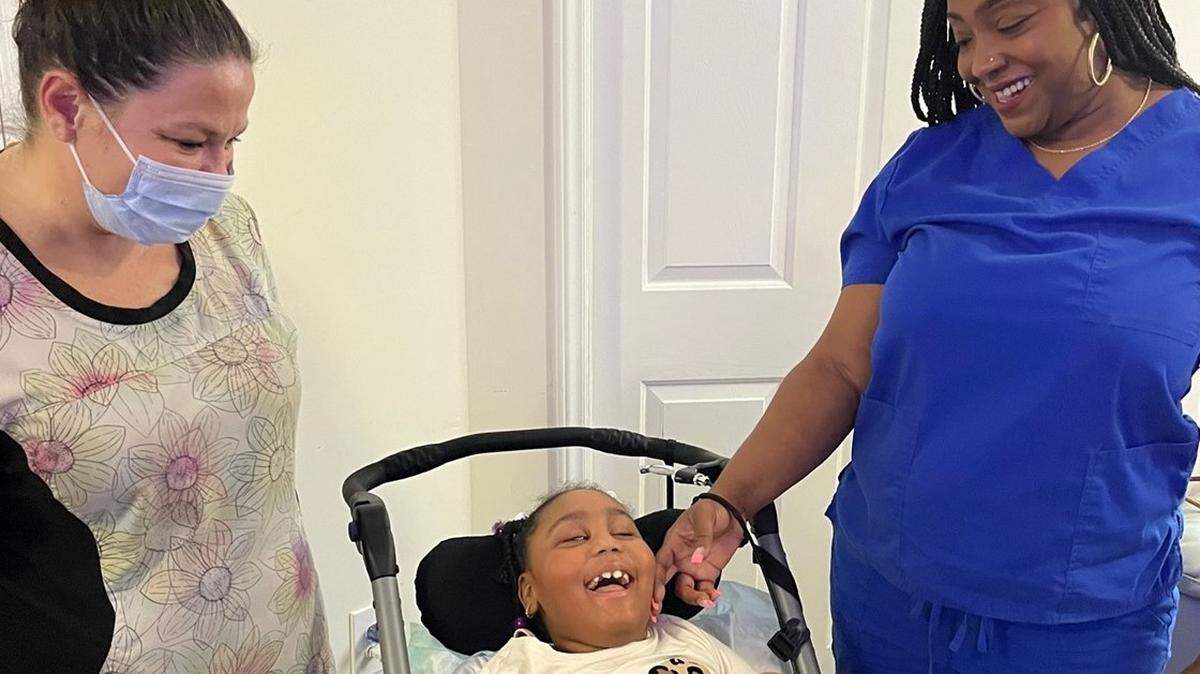
Jessica Britton’s son was born with a hole in his heart. She spent months at Duke Medical Center during his treatment and saw many children with disabilities. As a licensed practical nurse, she looked at them being cared for and thought, “Wow, that’s what I want to do.”
And that’s what she does now. Britton is a home health care nurse. She cares for Salana Woodley, a 7-year-old born prematurely at 24 weeks who has cerebral palsy, is nourished via a feeding tube, has a seizure disorder and cannot verbally communicate. But she does smile.
“You’re not supposed to get attached to the children, but you do,” Britton said.
That attachment keeps her in a job many leave. Turnover for home health care nurses is 50 percent annually. More than a quarter of open shifts go unfilled. The hours are long, some shifts as long as 12 hours. The pay is less than what a nurse could earn at a nursing home or a hospital, and the pandemic and a statewide shortage of nurses has only widened the gap. Hospitals raised nurses’ pay and offer bonuses of $10,000 or more to those who join the staff.
“It’s hard to see a $10,000 sign-up bonus,” Britton said. “But, at the same time, it’s hard to leave.”
An employee of the nonprofit BAYADA Home Health Care, Britton’s pay is based on Medicaid reimbursement rates in North Carolina. She receives $25.50 an hour. At a hospital she could earn $40 an hour or more. But she likes providing one-on-one care.
If she left, she might not be replaced. Without her, Salana’s mother might have to leave her job as a home health care aide to care fulltime for her daughter. Or Salana might have to be placed in a medical facility or nursing home at a much higher cost to taxpayers. She would be without daily contact with her mother or her two siblings.
“She does better at home because of me,” said her mother, Shalara Woodley. “Her being separated from me, I don’t think that would be a good thing. I don’t think she would thrive.”
Home health care nurses work with people with medically complex conditions. Many of the patients are ventilator dependent or rely on feeding tubes or both. They are often incapacitated because of spinal or brain injuries, degenerative diseases, strokes or birth abnormalities. There are about 1,800 such patients receiving Medicaid private duty nursing in North Carolina. Half of them are children.
It’s hard to think of a more worthy government expense than providing care for such people. The best way to help them is to support the nurses who take on this difficult work for less pay. That’s why advocates for home health care asked members of the Republican-controlled state House to include $30 million in recurring funding in the proposed House budget to raise nurses pay.
The money would boost the state’s hourly Medicaid rate for home health care billing from $45 an hour to $65 an hour to cover overhead costs, administration and wages. The increase would get North Carolina’s rate to a level compatible with the rates paid in neighboring Tennessee and Virginia and raise the hourly pay of many home health care nurses to be more competitive.
The state has a $3.25 billion budget surplus and billions more stashed in reserve funds. It’s so flush that Republican legislative leaders are pushing for yet another round of personal and corporate income tax cuts. Yet when the House approved its proposed $29.8 billion budget last week, there was not a dollar extra for home health care nurses.
“We were disappointed about that. We have some strong support in the House, but it just didn’t make it. We are going to shift our focus to the Senate,” said Lee Dobson, who oversees government relations in North Carolina for BAYADA.
There’s hope for a better outcome in the state Senate. Republican Sens. Ralph Hise, Jim Burgin and Joyce Krawiec are strong supporters of home health care. Democratic Sen. Gale Adcock, a nurse, will help push the cause.
Britton hopes the need is addressed. “Nurses in home health care are overlooked,” she said, “When people think of nurses, they think of hospitals. But we’re doing important work also.”