
North Carolina Supreme Court delivers three sweeping blows to voting rights | Opinion
We thought they might. We hoped they wouldn’t. Now they have.
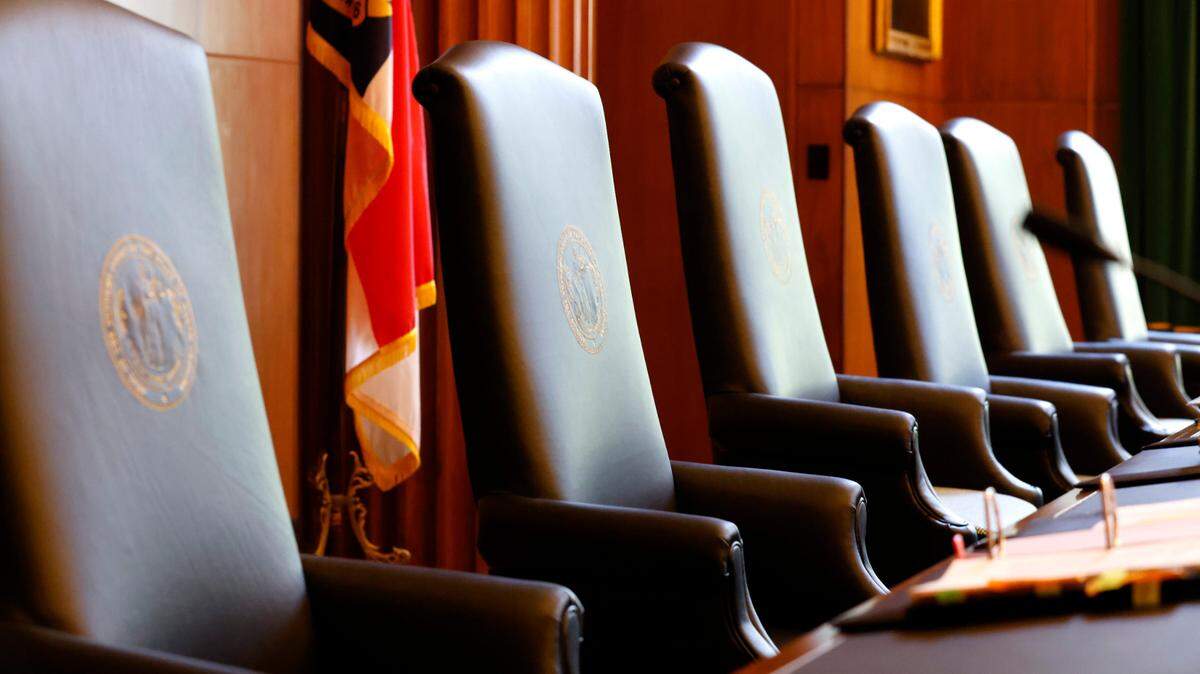
In sweeping blows to democracy in North Carolina, the state Supreme Court’s new Republican majority reversed two rulings by the previous, Democratic-leaning court that upheld fair elections. The majority threw out rulings that had rejected gerrymandered election district maps and found a voter ID law discriminatory against Black voters.
The state Supreme Court also reversed a lower court ruling that restored the right to vote for those convicted of felonies once they leave prison or jail. Now they must complete any period of probation or parole and pay all fines, a change that will affect the ability of tens of thousands of people to vote.
The previous rulings strengthened the ability of the people of North Carolina to express their will through their votes. The reversals — exceedingly rare actions by the state’s highest court — will limit the ability of North Carolinians to affect how their state is governed. The most serious of the reversals — one that effectively sanctions extreme partisan gerrymandering — may well affect how the nation is governed by adding to the Republicans’ thin majority in the U.S. House.
The state Supreme Court’s Republican members, led by Chief Justice Paul Newby, claim the reversals correct political overreach by the previous Democratic majority. The truth is exactly the opposite. These actions by the majority are raw politics.
After the November election gave Republicans a 5-2 majority on the court, Republican legislative leaders all but announced that their legal defeats would be reversed by the new court.
Even if the court’s actions were expected, it is stunning to see the reversals come to pass. The damage goes beyond the curtailment of free and fair elections. The Republican justices have demolished the court’s standing as an independent check on the excesses of the other two branches of state government.
In his opinion reversing the court’s ruling against gerrymandered maps, Newby claims the court is simply staying in its lane by not interfering with the redistricting process that belongs exclusively to the legislature.
“Our constitution expressly assigns the redistricting authority to the General Assembly subject to explicit limitations in the text,” his opinion states. “Those limitations do not address partisan gerrymandering.”
That reasoning is not a deference to the state constitution. It is a rejection of it. The constitution requires free elections. Elections are not free if the results are predetermined by the drawing of election lines.
Now the Republican-led General Assembly has a green light to draw districts any way they want. The results will be horrendous not only for Democrats, but for democracy.
Newby compounds his misreading of the law and its effects by adding that, “Furthermore, were this Court to create such a limitation [on partisan gerrymandering], there is no judicially discoverable or manageable standard for adjudicating such claims.”
That’s simply not true. The power of gerrymandering has been greatly enhanced by computer programs. The same technology can readily show the difference between fair and unfair maps.
The state Supreme Court’s action may have one positive effect. It could render moot a case North Carolina Republicans brought to the U.S. Supreme Court that seeks to have courts in all states barred from passing judgment on redistricting maps. There’s even an outside chance the U.S. Supreme Court could assert that state supreme courts can review redistricting laws.
But that potential effect offers small comfort. North Carolina has seen an independent branch of government subsumed into the Republican legislative caucus.
The court’s Republican members have shown their willingness to reverse the court’s rulings to protect Republicans’ political power. They cannot, however, reverse the damage they have done to the court’s standing as a fair and independent interpreter of the law.
BEHIND THE STORY
MOREWhat is the Editorial Board?
The Charlotte Observer and Raleigh News & Observer editorial boards combined in 2019 to provide fuller and more diverse North Carolina opinion content to our readers. The editorial board operates independently from the newsrooms in Charlotte and Raleigh and does not influence the work of the reporting and editing staffs. The combined board is led by N.C. Opinion Editor Peter St. Onge, who is joined in Raleigh by deputy Opinion editor Ned Barnett and in Charlotte by deputy Opinion editor Paige Masten. Board members also include Observer editor Rana Cash and News & Observer editor Nicole Stockdale. For questions about the board or our editorials, email pstonge@charlotteobserver.com.
This story was originally published April 28, 2023 at 3:10 PM.