
What happened in Hawaii is happening to too many people in too many places | Opinion
As I stood in Hawaii looking out at the Pacific Ocean during a long-planned 25th wedding anniversary trip with my wife, I felt myself longing for Myrtle Beach. And a tinge of fear.
It wasn’t that I didn’t fall in love with Hawaii the way most first-time visitors do. Because I did.
It wasn’t that I hadn’t been captivated by its unmatched beauty. Because I was. The mighty Pacific, lava and black sand beaches and mountains and volcanoes created a landscape unlike any I had experienced. The greenery of the Hilo rainforest on the Big Island felt majestic.
I longed for Myrtle Beach, where I live, because it, too, is beautiful. Its white sand beaches feel more inviting, easier to plop down a beach chair and hang out all day or jog for miles in the sand. Maybe that’s because I’m just an old country bumpkin from South Carolina who’s grown to prefer our beaches to all others.
I think it’s more than that, though. It was a reminder of the precious gift we’ve been given, not just in Myrtle Beach or elsewhere in the Carolinas or 2,400 miles off the coast of California in the middle of the Pacific, and how much we have to lose if we don’t become better stewards, and soon.
Climate change is real. Man has contributed to that change. Those changes are revealing themselves by the day. It’s good that most of us finally believe that, with at least 70% of those polled in the Carolinas saying so. What’s not so good is that we remain politically paralyzed and aren’t doing enough about it. The Biden administration recently made a big new investment on the climate front but that, like most everything else, has been overshadowed by politics.
North Carolina Lt. Gov. Mark Robinson, the frontrunner for the Republican nomination to become his state’s next governor, has said climate change is based on “pseudoscience, junk science.”
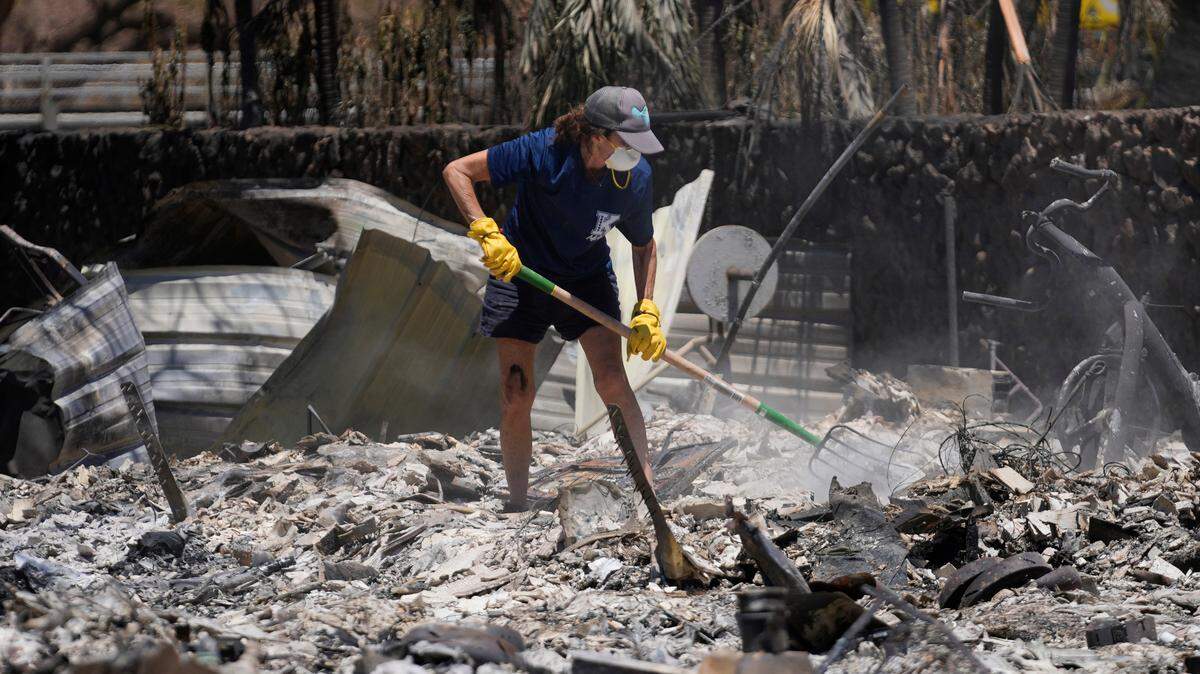
Just days after my wife and I flew out of Hawaii, wildfires began devastating Maui, the island known for more accessible white-sand beaches like the ones we enjoy along the coast of the Carolinas. More than 2,200 structures were destroyed and roughly 2,100 acres burned. The state’s governor, Josh Green, said it’s the largest natural disaster in Hawaii’s history, and that 80% of Lahaina is “gone.”
The latest death toll is 110, with officials expecting it to rise in the coming days.
We must always be cautious before declaring that any singular weather event was definitively caused by climate change. But our summers are getting hotter and what used to be extreme weather events are becoming more common and more extreme. What happened to the people of Hawaii is happening to too many people in too many places.
The Carolinas are familiar with natural disasters. My family and I held on for dear life when Hurricane Hugo swept through in 1989 and nearly wiped tiny St. Stephen, S.C., off the map. I’ve watched plenty of people cry after their homes were washed away by storms such as Hurricane Floyd, or burned to the ground in North Myrtle Beach from wildfires. That’s why it’s not hard for us to empathize with those elsewhere suffering from destructive tornadoes, blizzards, or even volcanoes like those in Hawaii.
That’s why it’s been sad to see us have so much trouble coming together to demand serious action from those we’ve elected to represent us, politics be damned.
If on no other issue, on climate change, we are in this together. Myrtle Beach attracts millions of visitors every year and is the heart of South Carolina’s tourism, the state’s economic engine. Visitors to North Carolina spent more than $33 billion in the state last year, according to a study by North Carolina State University.
Climate change compromises our ability to live the kinds of lives for which we’ve grown accustomed, and our very livelihoods. If preserving the enormous beauty we’ve been handed, from the Atlantic to the Pacific, isn’t enough to move us to action, naked self-interest should be.
This story was originally published August 17, 2023 at 12:58 PM.