
In a school choice era, Taylor wants Wake schools to be the first choice | Opinion
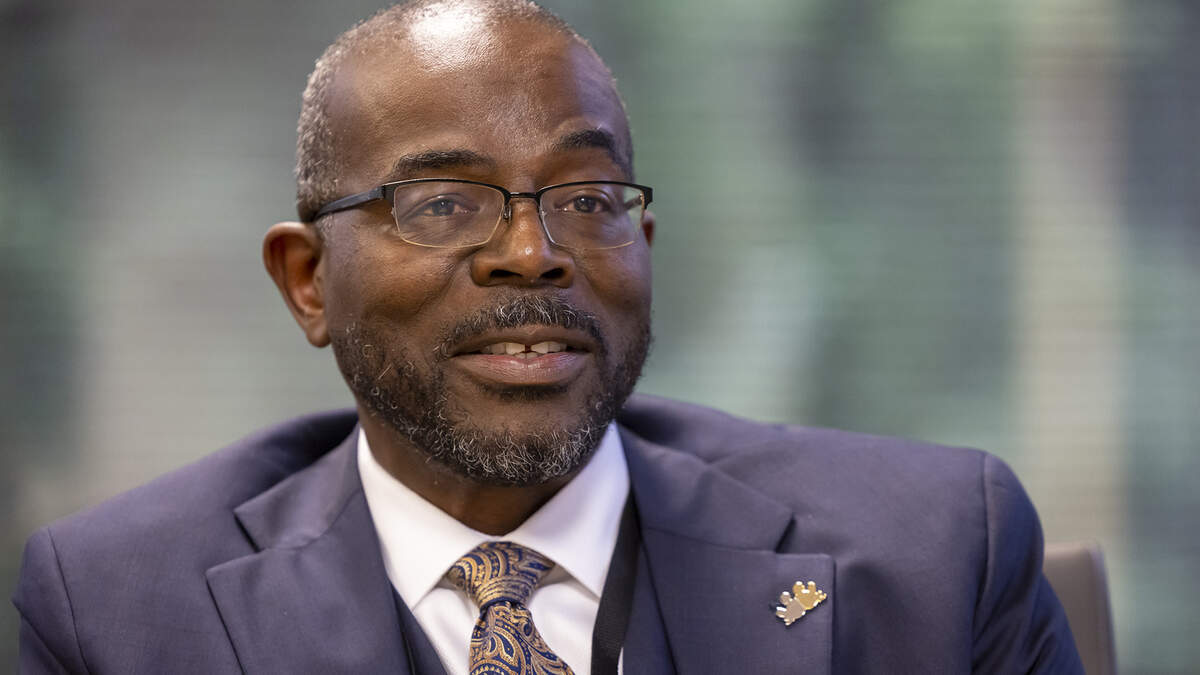
Robert Taylor, Wake County’s new superintendent of schools, is doing what he wants the system’s 160,000 students to do: listen, question and learn.
Taylor is touring schools, talking with teachers, students, staff and parents to determine what’s working and what needs attention.
“I want people to say Rob Taylor is asking the right questions,” he said.
That’s a sensible way to start. But as it regards the challenges facing public schools, Taylor already has heard enough. He’s served 10 years as superintendent of Bladen County schools, a low-wealth eastern North Carolina district of 4,000 students that knows well the neglect of Republican state lawmakers who will not adequately fund public schools.
Taylor next spent two years as North Carolina’s deputy state superintendent, where he had a front-row seat in Raleigh as the Republicans refused to give teachers decent pay, accused them of indoctrinating children and expanded private school vouchers. He also saw Lt. Gov. Mark Robinson, now a GOP candidate for governor, set up a task force to intimate teachers who might say something contrary to the right-wing whitewashing of history.
Early this year, Taylor, a Mississippi native, was unanimously nominated by the State Board of Education as Mississippi’s next state superintendent only to have his Senate confirmation denied after objections were raised by Republican state Sen. Chris McDaniel, a candidate for lieutenant governor.
The senator found Taylor to be too “woke”. But what really bothered the senator and his colleagues was that 35 years ago Taylor, as a college student, wrote in a student publication that Mississippi was “the most racist state in the Union.”
In a recent interview with The News & Observer, Taylor said the senator “had to have an issue and I was it.”
After that battering by conservatives, Taylor, 56, comes to the helm of North Carolina’s largest school district. He’s now overseeing a system that’s well funded thanks to the support of county commissioners and county taxpayers. And a system with a strong reputation for innovation and quality.
Taylor’s job will be to protect Wake Schools from those who storm school board meetings calling for book bans and those who interfere with the ability of the system and its schools to continue providing instruction to all children despite differences in race and family income.
Taylor has reason to be bitter about what happened in Mississippi, the inequities he saw in Bladen County and the badgering of teachers he witnessed while he served at the state Department of Public Instruction. He chooses not to be.
He has a genial manner and an understanding that challenging extremists only encourages them. Instead he will listen to their concerns and carry out their laws.
Public schools, he said, are “not in a position where we are shielded from politics like we’ve been for a very long time. We’ve got to think about how we deal with political issues that impact what we do in the classroom every day.”
The most powerful political trend facing traditional public schools is the push for school choice. North Carolina has lifted the cap on charter schools and has approved spending hundreds of millions of public dollars to subsidize the cost of attending private school.
Taylor said the way to respond to school choice is to become the best one. “It’s not our job to agree or disagree with the choices that are created. Our job is to put the best product on the table and hope that parents choose us,” he said.
“Wake County has always been one of the flagship districts in North Carolina. I think we are uniquely positioned to be the national model of how you provide education for kids across the spectrum,” he said.
But even if one large, wealthy school district holds its own against a movement that undermines traditional public schools, Taylor knows a broader challenge remains.
In leading the state’s largest school system, he will have the platform to show and speak up for the value of all public schools.