
Tricia Cotham reshaped NC politics, but maybe not how the GOP wanted | Opinion
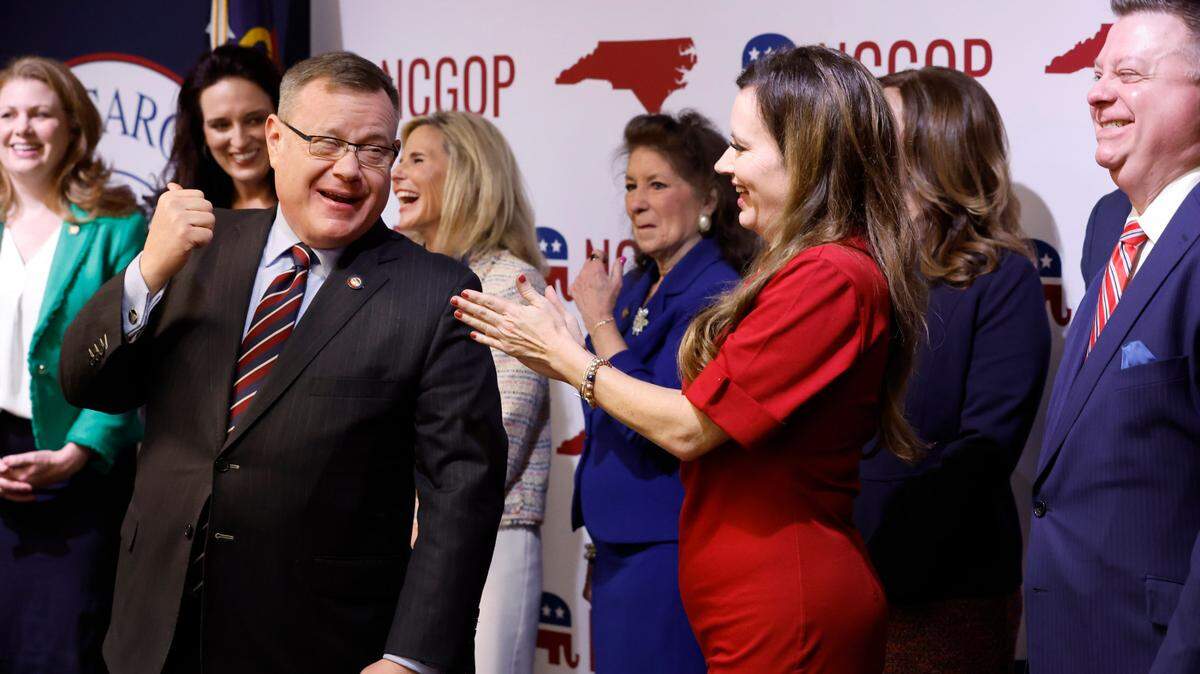
North Carolina state Rep. Tricia Cotham rocked state politics in April when she announced that she was changing from the Democratic Party to the Republican Party, a move that gave the GOP a veto-proof majority in the General Assembly.
The change by the Charlotte-area lawmaker – notorious for its audacity and its impact – drew national attention. A New York Times report on what led to it was headlined “Inside the party switch that blew up North Carolina politics.”
But did it?
Republicans have overridden 19 of Democratic Gov. Roy Cooper’s vetoes this year – 18 of them since Cotham gave them a supermajority. But her vote was decisive in only one instance – the override vote that prohibited abortions after 12 weeks of pregnancy. That vote, with all 120 members of the state House present, was 72-48, exactly the three-fifths necessary.
In the 17 other override votes, the newly minted Republican’s single vote didn’t matter. A successful override vote requires only three-fifths of those present. In some cases, absent members lowered the number of votes needed. In others, a few Democrats sided with Republicans.
So was the significance of Cotham’s defection overblown?
No, say veteran legislative observers. They note that while Cotham’s voting as a Republican was often not decisive in itself, it raises a “what if” question: What if she had voted with the party whose banner she was elected under?
With Cotham’s vote in hand, Democratic House leaders would have worked harder to ensure that all Democrats attended override votes. Or they would have pressed those Democrats who were inclined to vote for an override to hold the party line.
On the other hand, Democrats who might have sided with Republicans on an override could safely vote with their party, knowing the override would pass anyway.
House Minority Leader Robert Reives said Cotham’s switch changed North Carolina. His office noted that seven override votes passed with no Democratic support.
Those included bills that ended the three-day grace period for mail-in ballots; split the state and local election boards into equal, partisan numbers, which invites deadlocks that the legislature will decide; prohibited discussion of race during hiring for state jobs, and adopted a “Parents’ Bill of Rights,” which opponents labeled the “Don’t Say Gay” bill.
“North Carolinians voted for divided government but because of Rep. Cotham’s party switch, they received one-party rule,” Reives said in a statement. “That has had obvious, negative effects on our state this year; it allowed the House to override the governor’s veto on dangerous legislation like the abortion ban, legislative power grabs, changes to elections processes and discrimination in the workplace.”
Cotham’s damage to Democrats is probably done for now. But some Democrats fear her post-election switch may be the start of a deceptive tactic in which Republicans run Trojan Horse candidates in Democratic districts.
In 2022, Cotham – a former Democratic state House member and daughter of a prominent local Democrat – filed at the deadline to run in a solidly Democratic district after being encouraged by Republican legislative leaders.
Rep. Marcia Morey, a Durham Democrat, said the Cotham affair raises the possibility of others running under false pretenses. She said, “Be aware in 2024 of who’s announcing for what seat and what party – are they plants or are they real?”
Democrats are not entirely victims of the Cotham switch. Yes, she betrayed those who voted for her and gerrymandering has made it harder for Democrats to win, but the Democratic leadership should also push for higher turnout in midterm elections and do more to galvanize a public response to Republican extremism.
Ironically, Cotham may have helped Democrats in that regard. Her switch tied Republicans to tighter restrictions on access to abortion. With that, she handed her former party an issue that may break the GOP’s supermajority in 2024.