
How many candidates are too many? US House District 13 is a problem | Opinion
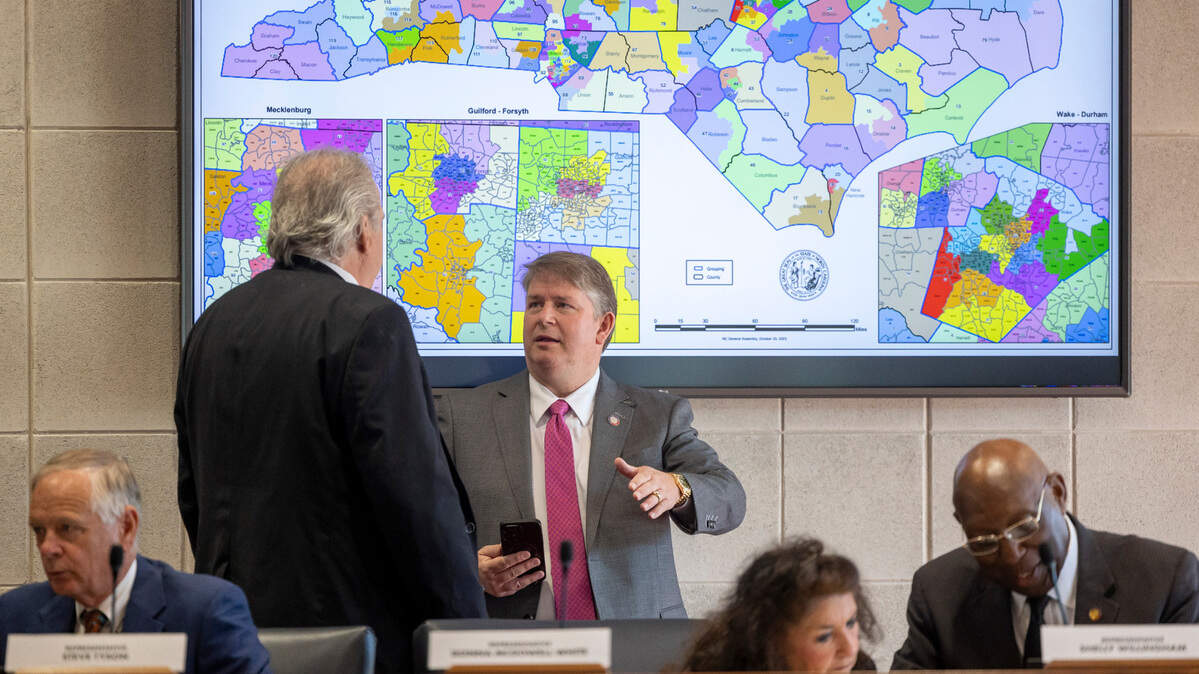
That the only cure for the ills of democracy is more democracy is being tested in North Carolina’s 13th Congressional District.
Republican and independent voters who participate in the district’s Republican primary in March will have to choose one of 14 candidates.
That crowd of candidates would appear to signify the vibrancy of the democracy in the district. It actually represents the opposite.
The crowded field will likely lead to a runoff election if no candidate receives at least 30 percent of the vote. That leads to a low-turnout “second primary” in which a tiny fraction of the district’s voters will select a GOP nominee, who, thanks to gerrymandering, will win the congressional seat in the general election.
Such a warped outcome is particularly unfortunate in the 13th District. Just two years ago the central North Carolina district encompassing southern Wake County, all of Johnston County and part of Wayne County was the epitome of democratic balance. A court-ordered redrawing of gerrymandered maps produced 14 districts for the 2022 election. Districts favoring Republicans and Democrats were equally balanced, with the 13th District standing as a genuine swing district.
Democrat Wiley Nickel, a former state senator from Cary, won the newly drawn district over Bo Hines, a far-right Republican. The result gave North Carolina a U.S. House delegation reflective of its political balance – seven Democrats and seven Republicans.
That balance, of course, was anathema to Republican lawmakers who control the General Assembly. After getting a go-ahead nod from the state Supreme Court’s new Republican majority, those lawmakers went to work redrawing district lines for the November election. Their handiwork is expected to shift the state’s U.S. House delegation to a 10-4 or even an 11-3 Republican majority.
The map changes shifted the 13th District from a swing district to a Republican one. Nickel, after only one term, decided it was hopeless to seek reelection, creating an open seat in a Republican district that has drawn a flood of Republican candidates.
Chris Cooper, a Western Carolina University political scientist who studies state politics, said, “Open seats in a friendly district are rare. When they come along, candidates come out of the woodwork. After all, this could be the last chance at this seat for a generation.”
One solution could be to raise the bar for entering a congressional primary. Currently, the filing fee is $1,740, an amount set by law at one percent of the congressional salary of $174,000. Those who chose not to pay it can qualify by gathering signatures, but in this case, all 14 candidates paid.
Raising the bar is unappealing. It’s already hard enough – and costly enough – to seek election.
“Although 14 is an unwieldy number of candidates, these examples are rare and for the most part, I think more choice is better than the alternative,” Cooper said.
A better option would be using the ranked choice method. That allows voters to rank their selections and eliminates the need for expensive, low-turnout runoff elections.
Gary Bartlett, a former executive director of the State Board of Elections, is a proponent of ranked choice. After his state service, he served as executive director of the Ranked Choice Voting Resource Center. The method is now used in Alaska and Maine and 45 cities.
Bartlett said North Carolina should take up ranked choice voting in primaries instead of runoffs. “There should be some better method,” he said, noting that runoff election turnouts have gone as low as 2.5 percent.
When turnout gets so low, Bartlett said, “You just open yourself up for (electing candidates) who can be on the extreme side.”
Of course, the 13th District’s primary wouldn’t be so crowded and a minority of voters wouldn’t have such outsized influence if Republican lawmakers hadn’t decided to tilt a well-balanced district.
This story was originally published January 14, 2024 at 4:30 AM.