
As its fast-growing ‘cousin’ city sees a slowdown, Raleigh could be next | Opinion
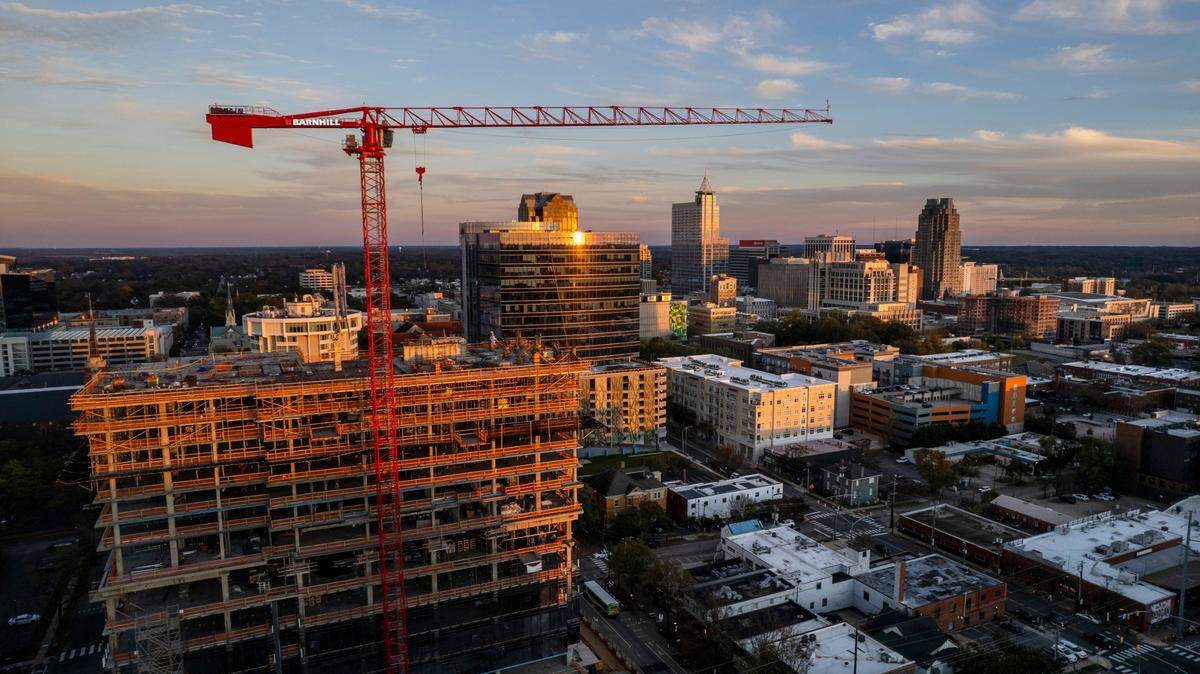
If Raleigh has a doppelganger, it may well be Austin, Texas, a fast-growing Sun Belt state capital with an economy driven by a major university and high-tech companies
But now the two are diverging. Austin’s housing market is slowing, while Raleigh’s remains relatively strong. Are Austin’s circumstances only its own, or is its experience an indicator where overbuilding driven by inflated pricing may soon take Raleigh?
If it’s the latter, the go-go economy of Raleigh and the Triangle may be heading for a slowdown, even a decline.
The Wall Street Journal this month reported that the Texas capital’s housing market, once the hottest in the nation, has gone cold.
Austin had been growing at double the national rate, but, the newspaper said, “Now it is contending with a glut of luxury apartment buildings. Landlords are offering weeks of free rent and other concessions to fill empty units. More single-family homes are selling at a loss. Empty office space is also piling up downtown.”
The slowdown is being blamed on “overbuilding, slowing population growth and a lack of affordability.” That sounds familiar in Raleigh, where luxury apartments are being built at a rapid rate and some townhomes are selling for more than $1 million.
For the Raleigh-area economy, is Austin a canary in the coal mine?
“Good question,” said Gerald Cohen, chief economist with UNC’s Kenan Institute of Private Enterprise.
As for the answer, Cohen thinks Raleigh and the Triangle need not worry that Austin’s softening economy is a warning about where Raleigh and the Triangle are heading.
“Our activity is slowing, but to much less of an extent than in Austin,” Cohen said. “You are seeing some softening, but you are still seeing some pretty strong plans for investment in the Triangle.”
Austin and the Triangle are both similar and distinct, according to data compiled by the Kenan Institute’s American Growth Project, which tracks, analyzes and forecasts local economies across the nation.
Over the past five years, Austin’s economy topped the nation with a 6% annual growth rate. The Triangle’s annual growth rate was 3.7%. The national average was 1.8%.
“Austin has grown faster than we have and I think that has created more strain on their housing market and on their services than on us,” Cohen said.
But a softening of Raleigh’s housing prices is likely, said Shandor Whitcher, an economist with Moody’s Analytics who studies housing prices. Given the gap between salaries and housing prices, he said, Raleigh’s home values are currently inflated by 30%.
“We are expecting Raleigh to experience gain into 2024 followed by a decline,” he said.
Moody’s Analytics projects a decline in Raleigh home prices of 8% over the next several years as the housing supply expands and prices fall more in line with incomes.
Raleigh real estate agents are more optimistic.
“Unlike Austin, Raleigh is far from being overbuilt. We are on the opposite end of the spectrum. We don’t have enough housing inventory and at this pace it may be years before we catch up,“ said Maya Galletta, a Realtor at RE/Max United.
Sharon Gupton, president-elect of the Raleigh Regional Association of Realtors, said the Raleigh region, for all its common qualities with Austin, has a different housing market.
“Raleigh and Austin seem to be more like ‘cousins’ than ‘identical twins.’ ” she said. “They have some things in common, though not everything, including residential real estate.”
Gupton recalled a News & Observer article from years ago that discussed the similarities between Austin and Raleigh. She said, “The article was a bit of a warning: ‘Careful or Raleigh will end up like Austin.’ And that hasn’t happened here.”
Not yet.