
Gaza’s wounds shake a NC surgeon who went to help: ‘It’s mostly the children’ | Opinion
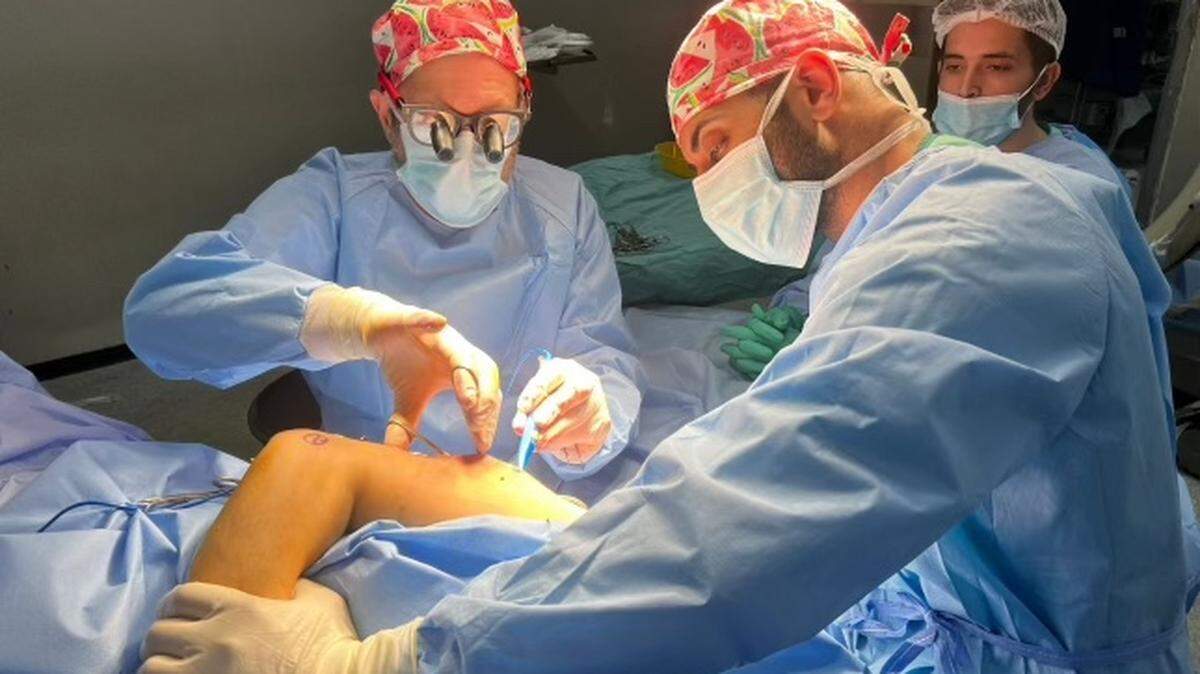
Dr. Mark Perlmutter, a Rocky Mount orthopedic surgeon, is home from his recent medical mission to Gaza, but when he sleeps nightmares take him back.
“It’s much worse than I expected,” he told me. “A thousand times worse than what I expected.”
Perlmutter, 68, is a past president of the International College of Surgeons and current president of the World Surgical Foundation. He has gone on medical missions in the U.S., South and Central America and the Caribbean islands during his 36 years as a doctor, but nowhere like Gaza. That mission was sponsored by the Palestinian American Medical Association in collaboration with the World Health Organization.
“If you combine Ground Zero and you combine Katrina and what I saw on four trips to Haiti, combine to it all the carnage I saw from ugly accidents in all the countries I’ve ever been to, all that combined isn’t equal to what I saw in Gaza in the first week — just the first week — it doesn’t come close, not even close,” he said.
After a 15-hour bus ride from Cairo, he and others on his mission crossed into Gaza at Rafah, where hundreds of thousands of Palestinians fleeing the conflict between Hamas and Israel have gathered.
“The first thing you smell is sewage because it’s backed up. The second thing you smell is gunpowder through the air that leaves a taste on the side of your tongue that’s unforgettable because it’s pervasive. And then you see tent after tent after tent as far as your eye can see, nothing but tent cities, and that’s Rafah. So when they drop a bomb on a tent city, people die for thousands of yards around.”
The images that return to him most at night are of wounded children. Working 20-hour days at the European Hospital in Gaza at the end of April and into May, he said 80 percent of his surgeries were on children, most of them with fractures and deep lacerations from bombs dropped by the Israeli Defense Forces (IDF). Some children appeared to have been deliberately shot by snipers, he said.
“It’s the baby that has a bullet hole in its head that you can’t forget. That keeps me up at night. It’s the kids that are burnt to a crisp that keep me up at night. They would have been better off if they didn’t survive,” he said.
The wounded adults haunt him, too. “It’s a woman with a pelvis that was in 50,000 pieces that we knew we couldn’t fix. And we watched her die over my first couple of days there when I knew that in the United States I could have saved her life. It’s the brother of one of the physicians in town who got hit by a cluster bomb whose body had 74 holes in it – 74 that we could see – 74 holes in his body. We knew that we couldn’t tell his brother we could save his brother’s life. Even though we knew how to, we didn’t have the facilities to. But it’s mostly the children. There was no need for tens of thousands of children to die.”
Dr. Feroze Sidhwa, a trauma and critical care surgeon at San Joaquin General Hospital in Stockton, Calif., was among the group of 11 doctors and nurses who served with Perlmutter. He said Perlmutter took the experience especially hard. “He’s a very decent human being,” Sidhwa said. “He took it to heart.”
Both doctors are angry about what they saw. They say Israel has overreacted, and that U.S. tax dollars are funding the assault has made them complicit in the carnage.
“It’s my money that bought the bombs,” Perlmutter said.
Perlmutter, whose father was Jewish and whose siblings practice the faith, said criticism of what’s happening in Gaza is unfairly labeled as antisemitism. He said the war victims he saw were innocents.
Despite the psychological toll, Perlmutter plans to go back when Gaza is reopened to medical missions.
“When you make an oath to take care of people in your community, then the only thing that’s left is to define what your community is,” he said. “My community is not Rocky Mount, North Carolina. My community is every place where I could be of more help than if I wasn’t there.”