
Kamala Harris’ split heritage gives her a potent double appeal in North Carolina | Opinion
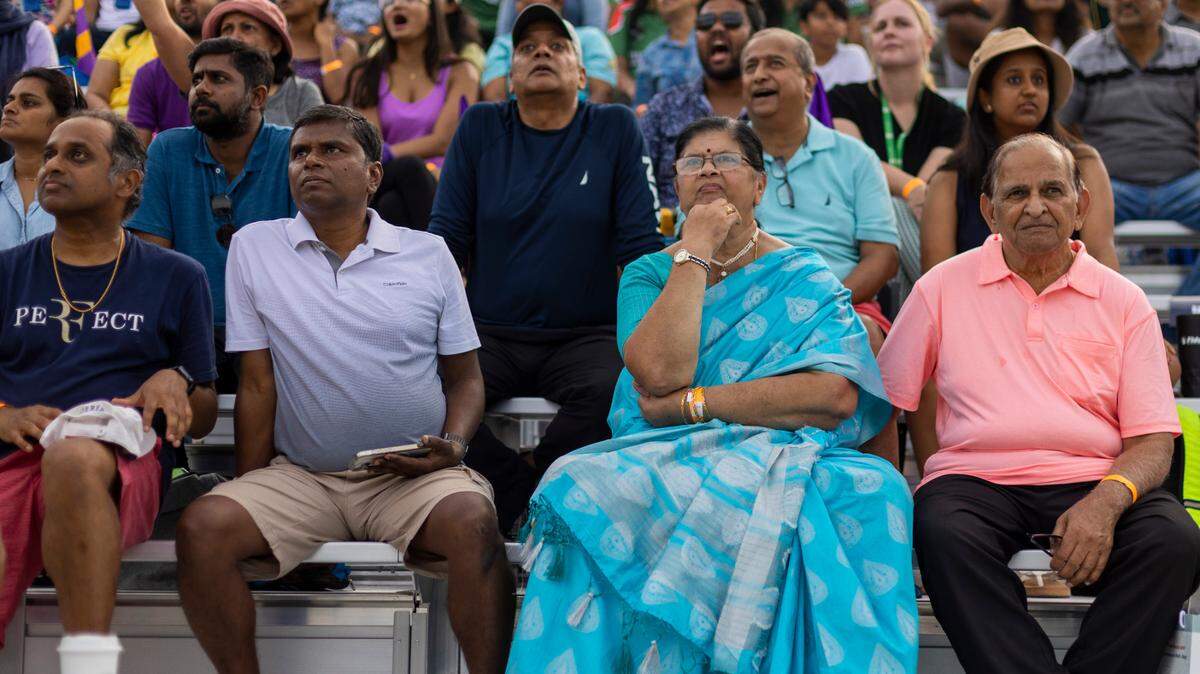
When the Democratic Party turned to Vice President Kamala Harris as its prospective nominee, it energized Black voters, especially Black women voters. But it also excited a smaller and overlooked group that could prove crucial to a Harris victory in North Carolina – Indian-American voters.
Harris, 59, has a connection to both groups as the daughter of a Jamaican father and an Indian mother.
North Carolina’s voting statistics do not break out Indian-Americans. The closest classification is Asian or Pacific Islander. But it’s clear that Indian-Americans are a growing presence in the state, largely drawn by the Research Triangle’s universities and the tech and bio sciences industries.
In Wake County alone, there are 32,000 active Asian voters, according to Nathan Dollar of Carolina Demography. Statewide the number is about 112,000. That’s a tiny fraction of the state’s 7.5 million voters, but they could be a factor in what’s expected to be a tight race for North Carolina’s 16 electoral votes. Former President Donald Trump won the state in 2020 by only 74,483 votes.
Steve Rao, an Indian-American town councilman in Morrisville, a South Asian stronghold that has a cricket pitch and hosts professional teams, said Harris’ presence atop the ticket will bring out Indian-American voters.
“The fact that her mother is from Tamil Nadu, India, is very emotional and inspiring for a growing Indian population. Younger voters and women will have more of a reason to turn out,” he said. “A few thousand more engaged Indian voters could very well put North Carolina in serious play for the Democrats.”
Harris is appealing to Asian-Americans generally, said Minu Lee, who heads the Asian American and Pacific Islanders Caucus of the North Carolina Democratic Party.
“There is a newfound energy, a sense of the Asian community coming together behind her,” said Lee, who is of Korean descent. “They never would have expected in their lifetime to see the first Asian-American candidate running for president.”
Meanwhile, it’s Harris’ connection to Black voters that could generate a turnout surge that would make the presidential race close enough that the Indian-American vote would really make a difference for the Democrats. Black voters turned out at a record 72 percent for Barack Obama in 2008, making him the only Democratic presidential candidate to win North Carolina since Jimmy Carter won in 1976.
Kimberly Hardy, second vice-chair of the North Carolina Democratic Party, said that history will repeat because of the energy Harris has stirred among the state’s 1.5 million Black voters.
“I think I could certainly say the ’08 Obama energy makes a lot of sense here as a comparison and I think we’ll see that reflected in the turnout in November as well,” Hardy said. “At the end of the day, I think she wins this state handily.”
In Durham, Walter Jackson, chairman of the Committee on the Affairs of Black People, a civic group, said Harris’ candidacy will drive up Black voter turnout. “I expect that it will be in the vicinity of the increase that was experienced when President Obama ran the first time,” he said.
While Black voters overwhelmingly vote Democratic, Indian-American voters usually move between parties. But in this race they may be closer to voting with one voice.
Vishal Ghadia of Cary is vice chairman of Desi Dems, an Indian-American advocacy group. He said the prospect of Harris on the top of the Democratic ticket has inspired his community.
“It’s historic, especially for Indian-Americans like me, who were born in India. It’s a sense of pride,” said Ghadia, who is now a U.S. citizen.
“The energy level has gone up significantly. I know a lot of people had given up because age was the only issue. Now the issues are the issue,” he said.
Ghadia noted that Kamala is a name drawn from Sanskrit, an ancient Indian language. It means lotus.
Many Indian-Americans, he said, now want Harris to gain another name: “We want to make sure she goes from lotus to POTUS.”