
More ‘granny flats’ could ease NC’s big housing problem | Opinion
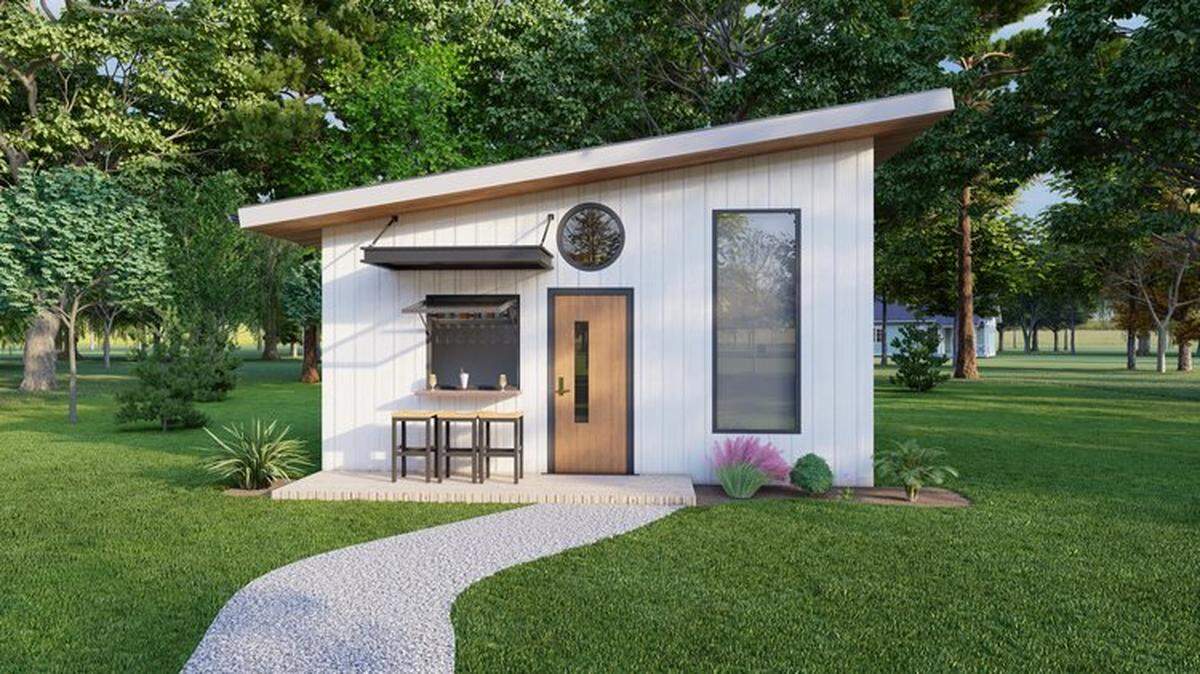
North Carolina’s fastest-growing city is showing one way to ease the state’s fastest-growing headache – the lack of affordable housing.
After years of disputes and false starts, Raleigh’s City Council moved in 2020 to streamline the process for permitting accessory dwelling units (ADUs). The city is now seeing strong growth in the small housing units, also known as “granny flats.”
The units, usually freestanding or built atop a garage, add a new wrinkle to neighborhoods of single-family homes as they often provide a living space for a family’s elderly relatives and renters of all ages. When there’s rental income, older homeowners can afford to stay in their homes despite tax hikes, or younger homeowners get help paying taxes and a mortgage.
Raleigh Mayor Mary-Ann Baldwin, who has long pushed to expand ADUs, said making the process simpler was a City Council priority. So far, the city has permitted 250 ADUs. “It’s a very encouraging sign,” she said.
Patrick Young, Raleigh’s city planning and development director, said 5% of new housing permits in the city are now for ADUs. “We’re thrilled where it’s at. The sky’s the limit,” he said. “We just need to keep showing success and it will build organically.”
Tiny housing units in backyards won’t solve the state’s lack of affordable housing, defined as when a household spends no more than 30% of income for costs such as rent, mortgage and utilities.
In North Carolina, nearly one in five homeowners and 43 percent of renters have housing costs above the 30 percent mark, according to the UNC School Government.
But if ADUs won’t eliminate the affordable housing shortage, they certainly can contribute to giving people more affordable options for a place to live, or the income to stay where they are.
Thomas Barrie, a professor of architecture and director of the Affordable Housing and Sustainable Communities Initiative at N.C. State University, is an advocate for ADUs and has built one at his own home in Raleigh.
Barrie said Raleigh is showing that easing restrictions on ADUs has added affordable housing. Meanwhile, concerns about the units causing problems with traffic, parking, rentals and neighborhood character have not been realized.
“It’s too early to measure the impact on affordable housing, but there’s an increase in permits every year. So it’s an upward tick,” he said. “And nobody is saying, ‘We told you so, these things are a disaster.’ That seems to have gone away.”
Even in Raleigh, Barrie said the ADU permit processes need more simplification. He noted that in Santa Cruz, Cailf., the city promises to complete the ADU permitting process in 60 days. “It took me five months,” he said.
For ADUs to have their fullest effect on expanding affordable housing, a state law would reduce red tape and clear opposition, especially from homeowner associations.
A bill aimed at overriding local objections easily passed the state House last year, but stalled in the state Senate. What’s keeping ADU legislation from becoming law are objections from local governments and wealthier enclaves who want ADUs controlled at the municipal level.
Scott Mooneyham, director of political communication and coordination for the North Carolina League of Municipalities, said many fast growing areas such as Charlotte and Durham already allow ADUs. “Our position is that cities should be making these decisions, rather than through any state mandates, because locally-elected officials understand where allowing ADUs by right is appropriate and where it is not.”
On the West Coast, California, Oregon and Washington have passed statewide laws to clear local obstacles to ADUs. Wealthy towns, concerned about any alterations to established neighborhoods, have still managed to slow the spread of ADUs, but the alternative housing has grown quickly in other areas, the Los Angeles Times reported last week.
Raleigh has given ADU’s a push. Other fast growing counties, towns and cities are also trying to encourage them. Now it’s time to open the door to ADUs everywhere.