
A warning for NC: School vouchers are harming students academically across the US | Opinion
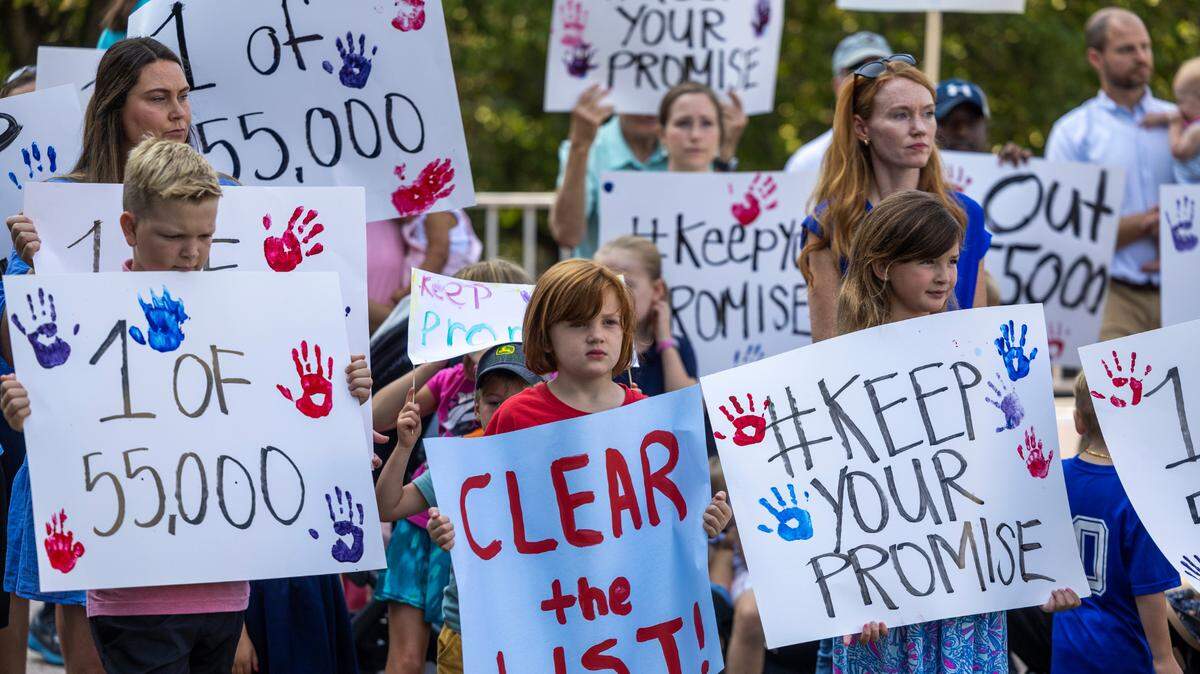
The definition of “vouch” is to promise that something is true, but in the realm of public education, school choice advocates have turned the related word “voucher” into a false promise.
Supporters of school vouchers – public dollars used to fund private school tuition – say they give parents an opportunity to improve their child’s education. But research shows the opposite is happening. Students in many schools subsidized by vouchers are losing ground academically.
The results are a warning to North Carolina and other states that are promoting vouchers as a better way to educate children. Instead, vouchers often put children into schools with few standards and little oversight that are impairing education.
“Private school voucher programs in other states are hurting students, communities and taxpayers,” Gov. Roy Cooper said in a news release. “Republican lawmakers in North Carolina need to read the writing on the wall and put a moratorium on private school vouchers until our public schools are fully funded.”
Cooper pointed to reports and research that show the academic fallout from vouchers.
An evaluation of Ohio’s EdChoice Scholarship program by the Fordham Institute in 2016 found that students who used vouchers to switch from public to private schools lost ground on test scores. The reports said:
“The students who use vouchers to attend private schools have fared worse academically compared to their closely matched peers attending public schools. The study finds negative effects that are greater in math than in English language arts. Such impacts also appear to persist over time, suggesting that the results are not driven simply by the setbacks that typically accompany any change of school.”
In Louisiana, a study by the Education Research Alliance for New Orleans found that students who switched from public to private schools using a voucher dropped from the 50th percentile in math to the 26th percentile in a single year.
A 2017 study of Washington, D.C.’s Opportunity Scholarship Program (OSP) by the Institute of Education Sciences found that “After one year, the OSP had a statistically significant negative impact on the mathematics achievement of students offered or using a scholarship.”
A 2018 study of Indiana’s voucher program found a similar result: “Although school vouchers aim to provide greater educational opportunities for students, the goal of improving the academic performance of low‐income students who use a voucher to move to a private school has not yet been realized in Indiana.”
In addition to having a negative effect on education, voucher programs can become a drain on state budgets.
According to ProPublica, Arizona faces a $1.4 billion budget shortfall after the cost of its universal voucher program far exceeded the projections.
In North Carolina, Republican leaders in the state House and Senate support spending an additional $460 million on vouchers known as Opportunity Scholarships, but approval of the increase has been stalled by disagreement over how much to boost teacher pay.
Applications for vouchers jumped by 72,000 once the legislature removed income limits on who qualifies for the tuition support. More than half of the new applications came from families with more than $115,400 in income. Eligibility for an Opportunity Scholarship varies from up to $7,468 for the lowest-income families to $3,360 for the highest income level.
If the legislature approves additional funding to provide vouchers to all applicants, North Carolina will get the same bitter results that vouchers are generating elsewhere. But the effects of budget strains and academic regression could be even worse for two reasons.
First, increased spending on vouchers will siphon funds from public schools that are already struggling from years of inadequate funding since Republicans took control of the General Assembly in 2011.
Second, unlike most states that provide vouchers, North Carolina requires virtually no oversight of academic quality at private schools that receive the payments. Many of the state’s top private schools don’t participate in the voucher program. The schools that do are overwhelmingly small, religious schools, some of which follow a faith-based curriculum that falls far short of state standards.
Why spend more on private schools that lack accountability when the need to meet the state’s first responsibility – providing a sound, basic education through public schools – is so apparent? North Carolina’s per-pupil spending ranks near the bottom nationally. Its average teacher pay ranks 38th.
North Carolina lawmakers need to halt their drive to expand vouchers in the face of the clear results elsewhere. Take care of public schools before risking public dollars on options that are already failing the test.
BEHIND THE STORY
MOREWhat is the Editorial Board?
The Charlotte Observer and Raleigh News & Observer editorial boards combined in 2019 to provide fuller and more diverse North Carolina opinion content to our readers. The editorial board operates independently from the newsrooms in Charlotte and Raleigh and does not influence the work of the reporting and editing staffs. The combined board is led by N.C. Opinion Editor Peter St. Onge, who is joined in Raleigh by deputy Opinion editor Ned Barnett and in Charlotte by deputy Opinion editor Paige Masten. Board members also include Observer editor Rana Cash and News & Observer editor Nicole Stockdale. For questions about the board or our editorials, email pstonge@charlotteobserver.com.