
Former staffer: In battle for control, NC legislature takes a step too far | Opinion
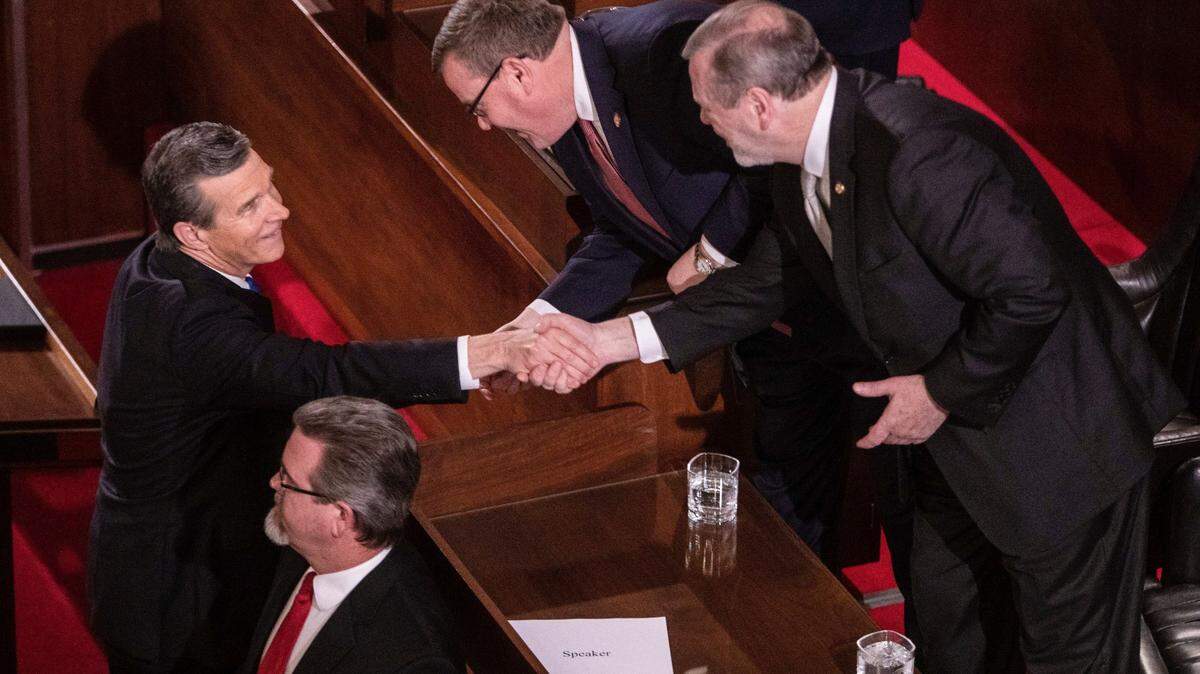
At the end of August, the North Carolina Supreme Court rejected Gov. Roy Cooper’s request for Justice Phil Berger, Jr., son of Senate President Pro Tempore Phil Berger, to recuse himself from two cases centering over whether the General Assembly should have appointment authority to various boards, one of which was the State Board of Elections. The recusal request came over the fact that, as Senate leader, the elder Berger is named as a defendant in the cases.
I agree with my colleague Dr. Andy Jackson’s conclusion that Justice Berger could hear both these cases since the elder Berger is named as a defendant only in his official capacity. Nevertheless, I do believe that the legislature has overreached in these cases and violated the separation of powers.
My work on election law and in the appointment process at the state legislature leads me to take issue with the changes made to the state and county board of elections appointments. The administration of elections is an inherently executive function. For that reason, the General Assembly appears to have violated the state constitution’s separation of powers clause by moving the appointments from the executive to the legislative branch.
In order to understand the existing law, one must be familiar with two court cases regarding appointment authorities: McCrory v. Berger (2016) and Cooper v. Berger (2018). The McCrory case established that for boards and commissions charged with the execution of law, appointments must be done by the executive branch. The McCrory case was the reason why a state superior court rejected the legislature’s initial proposal to combine the Board of Elections and State Ethics Commission.
The court rejected the proposed joint Board of Elections and Ethics because the legislature attempted to control the appointments, not because the change would make the Board of Elections evenly split between the two largest parties. While I question the constitutionality of the legislature controlling the appointments, I believe that an evenly split Board of Elections is not only constitutional but also a better system than our current one.
To support a balanced board, the court needs to reject the decision made in Cooper v. Berger (2018) that the governor’s party must retain a majority on the board to implement the “governor’s policy preferences.” That decision distorted the McCrory decision like “a funhouse mirror,” wrote Justice Mark Martin in his dissent. Martin, who had authored the McCrory decision, correctly discussed the separation of powers between the legislature and the governor.
When a board’s function is executing the law, “[the governor] must have an appropriate combination of appointment and removal powers, to ensure the laws are faithfully executed.” It does not mean that the governor’s party must also have the majority of members or that the governor himself has the final say on the execution of the law.
The best result of the latest appointments cases would be to apply the intent of McCrory v. Berger laid out by Justice Martin. This means rejecting some of the board changes made by the General Assembly in Senate Bill 512, such as to the Board of Transportation, which saw a majority of its appointments move from the governor to the legislature. In the State Board of Elections case, the court should meet the legislature halfway, keeping the appointment of its members within the executive branch while allowing an evenly divided Board of Elections so that no one party has a distinct advantage.
Jim Stirling is a Research Fellow at the John Locke Foundation’s Civitas Center for Public Integrity in Raleigh. He served in the General Assembly as an intern in Sen. Phil Berger’s office (2016-2019), a Research assistant (2020), and a Legislative assistant (2021).
This story was originally published September 7, 2024 at 4:00 AM.