
Griffin should give up his fight to reverse his Supreme Court election defeat | Opinion
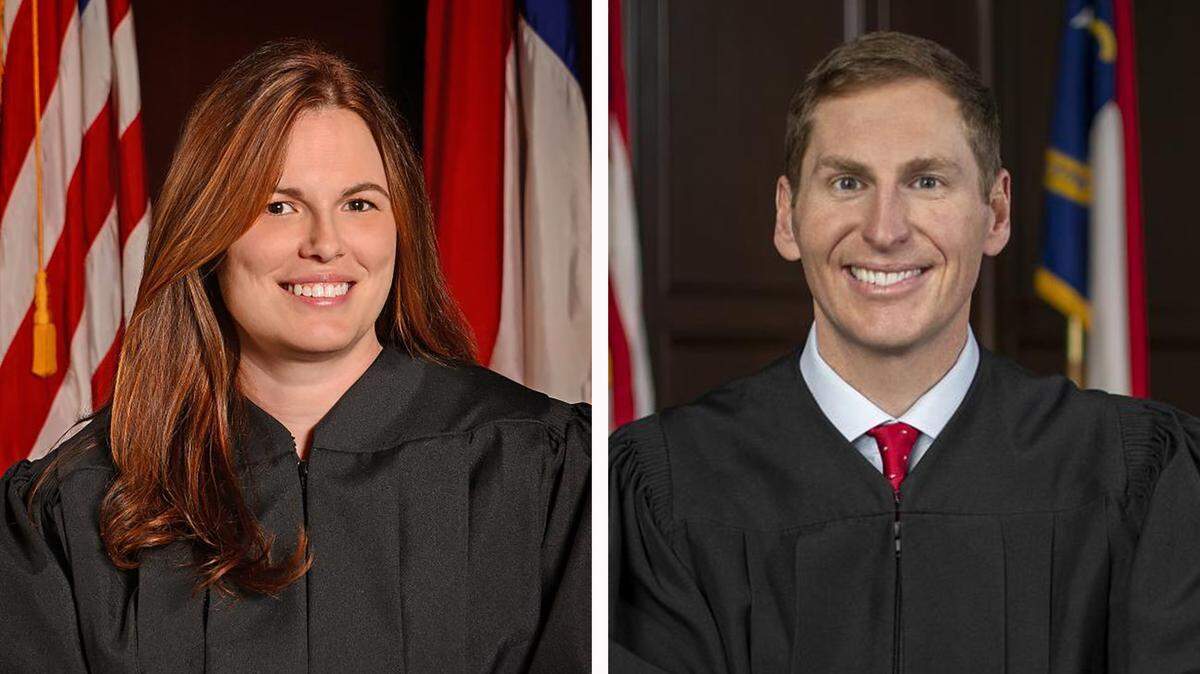
Jefferson Griffin, a judge on the North Carolina Court of Appeals, sought a promotion to the state Supreme Court in November, but voters said no.
Now Griffin, a Republican, wants to change the election’s outcome by altering the electorate. He is seeking to have more than 60,000 votes thrown out because of voter registration issues.
This is a ridiculous case that should embarrass the state Republican Party supporting it. Griffin should do himself and his party a favor by accepting the outcome of the election.
Most of the disputed votes were cast by voters who did not have a driver’s license number or Social Security number attached to their voter registration. Griffin is also raising objections about the registrations of some overseas and military voters.
The State Board of Elections, voting mostly along party lines, refused to invalidate the disputed votes. A recount of the election shows that Supreme Court Justice Allison Riggs, a Democrat, won by 734 votes out of more than 5 million cast.
Before the election, a federal judge denied a Republican push to eliminate 225,000 North Carolina voters based on claims about faulty registrations. The same judge is now weighing Griffin’s objections.
In the meantime, Griffin has filed lawsuits in Wake Superior Court and petitioned the state Supreme Court to rule that the vote be recounted without the disputed votes.
Griffin is within his rights to raise legal questions about the election, but he is straining the law beyond its purpose and seeking to disenfranchise thousands of voters over a speculative technicality.
Many of the challenged voters registered in good faith and have voted in elections for many years. If there was a glitch in their providing identification at the time of registration, it was resolved by their presenting a valid ID when voting.
State Attorney General and Governor-elect Josh Stein, a Democrat, aptly described the foolishness of Griffin’s targeting more than 60,000 voters.
“These voters, who are disproportionately African-American and young, include service members overseas, veterans, elected officials, and even Justice Riggs’ own parents and a member of my team who has lived and voted in North Carolina her entire life,” Stein said. “No one disputes that these people are North Carolinians who are registered to vote and complied with our voter ID law.”
For all his tortuous citing of legal issues, Griffin’s objections fail the test of sincerity. If he had won the election, he wouldn’t give a hoot about the alleged registration issues.
The state Supreme Court, now with a 5 to 2 Republican majority, may be tempted to take up Griffin’s request that it get involved. It shouldn’t.
State Republicans are divided about whether Griffin should continue to contest his narrow loss and whether the Republican justices should get involved. One side of that division was clear in a post on the blog NC Spin by Andrew Dunn, a former spokesman for former Lt. Gov. Dan Forest, a Republican.
“If the Supreme Court sides with Griffin, the fallout will be immediate and brutal,” Dunn wrote. “This isn’t just bad optics; it’s potentially a credibility-shattering disaster for the court, the party, and conservatism in North Carolina. Overnight, this becomes a national story about Republicans ‘stealing’ a Supreme Court seat. The allegation would be impossible to defend against.”
The legitimacy of the state Supreme Court and all courts relies on maintaining the public’s faith that judges rule based on the law and not on their personal or political views.
BEHIND THE STORY
MOREWhat is the Editorial Board?
The Charlotte Observer and Raleigh News & Observer editorial boards combined in 2019 to provide fuller and more diverse North Carolina opinion content to our readers. The editorial board operates independently from the newsrooms in Charlotte and Raleigh and does not influence the work of the reporting and editing staffs. The combined board is led by N.C. Opinion Editor Peter St. Onge, who is joined in Raleigh by deputy Opinion editor Ned Barnett and in Charlotte by deputy Opinion editor Paige Masten. Board members also include Observer editor Rana Cash and News & Observer editor Nicole Stockdale. For questions about the board or our editorials, email pstonge@charlotteobserver.com.