
Bus Rapid Transit woes are an ‘uh-oh’ moment for Raleigh | Opinion
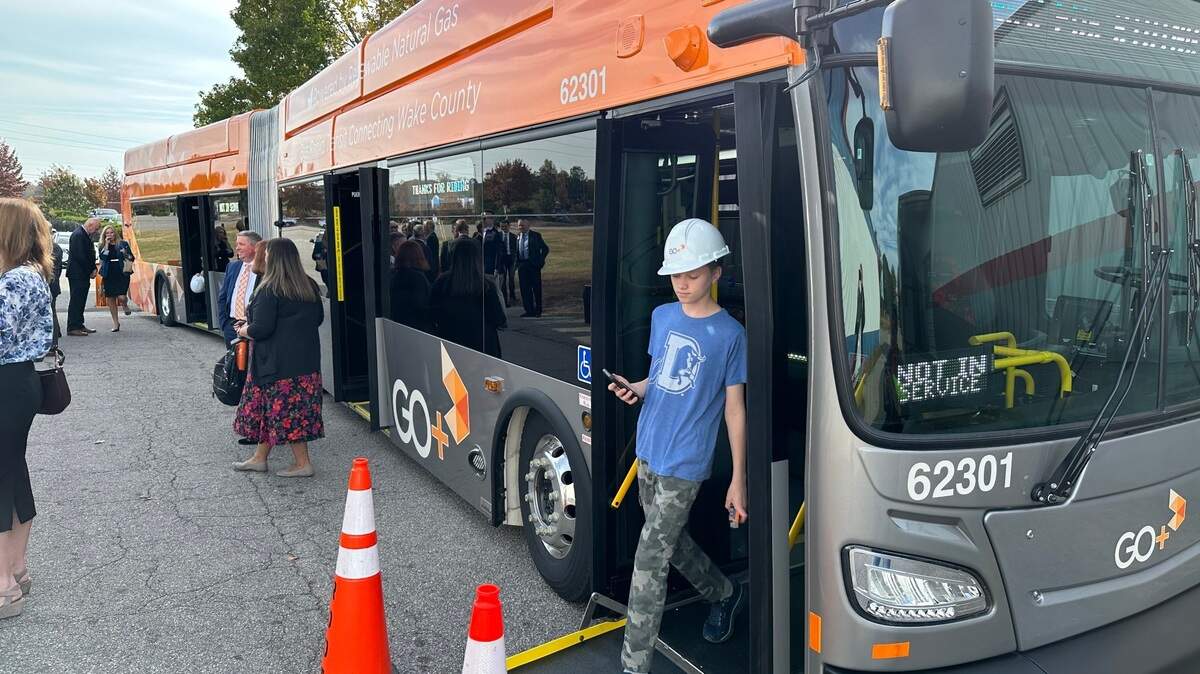
Raleigh’s proposed mass transit system has “rapid” in its name, but so far Bus Rapid Transit isn’t going anywhere.
The city hasn’t found an affordable contractor to build the first leg of the BRT system – a 5.4-mile line along New Bern Avenue – and the delay is adding to the cost. Now the city has broken the project into four parts hoping to entice more potential contractors. Completion of the line is now targeted for 2028 – three years later than the original plan.
For some, the delay may have an “uh-oh” effect. That’s because they can remember the ambitious plans for a light rail line that came to a dead end in 2005 and the proposed commuter rail line that was derailed last year.
Now it’s down to BRT, a lower-cost compromise that combines the dedicated pathway of light rail with the flexibility of buses. BRT will have extra-long buses, level boarding stations and traffic light controls to speed passage through intersections.
Plans for the BRT got rolling in 2016 when voters approved a 1/2 cent sales tax for transit as part of the Wake Transit Plan. The federal government has committed $47 million toward the projected $83 million cost of the New Bern Avenue line. Ultimately, plans call for three more BRT lines emanating from downtown along Western Boulevard, Capital Boulevard and Wilmington Street.
But the plans are unraveling. Delays and rising costs threaten to upend a third attempt to give Raleigh and Wake County the mass transit it sorely needs.
New Raleigh Mayor Janet Cowell knows about the false starts. She said she bought her first home near the State Fairgrounds thinking that it would be on the proposed light rail route. “And that was 20 years ago!” she said. “It’s definitely frustrating.”
Cowell noted that Raleigh’s is trying to build the first BRT system in North Carolina and there’s a learning curve, but the city must stick with it. “I don’t see an alternative,” she said.
Other mass transit advocates agree. Sig Hutchinson, a former Wake County commissioner and former board member of GoTriangle, the regional transit authority and provider, said completing the New Bern line will pave the way for BRT lines in all directions. “We are experiencing the growing pains of never having done this before,” he said. “Once we get one under our belt, it’s going to be easier to do the others.”
Eric Braun, a former Raleigh Planning Commission member and head of the advocacy group RaleighForward, said, “We have to put these (transit) pieces in place because it’s never going to be easier than today.” If the city doesn’t act now, he said, “We’re going to be Austin, or pick your community that has massive traffic problems.”
Surrendering on mass transit is not an option, but pushing forward with part one of a four-part plan may not be the best answer either. The incoming Trump administration may not support funding for the rest of the BRT lines. That could leave the city with an orphaned line along New Bern Avenue. And it’s clear from the 2019 collapse of the Orange-Durham light rail project that the Republican-controlled General Assembly is unlikely to significantly support any other local mass transit projects.
Ultimately, the Triangle should commit to mass transit as a region and be willing to pay the cost regardless of how much the state or federal government will help. That means setting big goals that the public and businesses will eagerly support, projects such as a direct line from Raleigh to Research Triangle Park, RDU airport and Durham.
BRT systems work well elsewhere in the nation and the world. Richmond’s popular Pulse BRT operates fare free and BRT systems in Cleveland, San Francisco and Hartford get high marks from transit experts. “The U.S. has been implementing BRT for decades now, but in the past 10 years, we have seen a rise in projects and quality,” said Aimee Gauthier of the Institute for Transportation & Development Policy.
But a successful BRT system requires that it be well funded, well designed and well operated.
So far in Raleigh, trying to build mass transit at a minimal local cost and with tepid public support has led down the road to frustration.