
Los Angeles wildfires send a warning signal to western North Carolina | Opinion
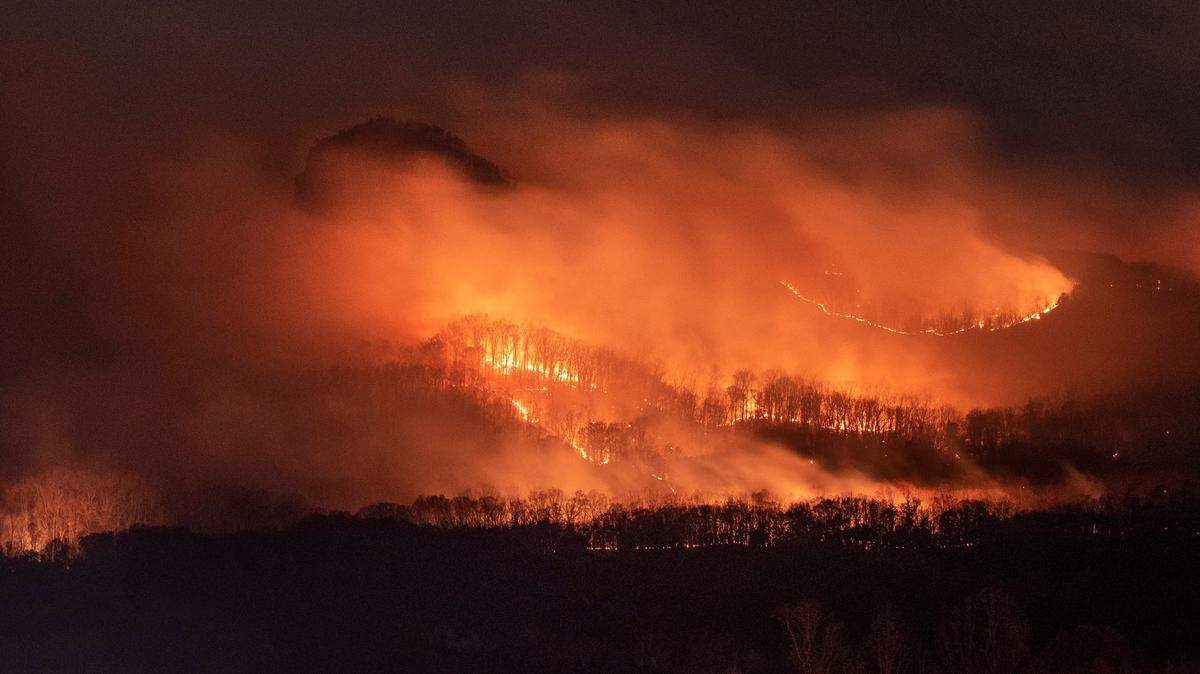
The devastating wildfires in Los Angeles carry a warning for western North Carolina: It could be next.
Ironically, it’s a hurricane that has raised the fire risk. Hurricane Helene toppled trees over 820,000 acres of forest in western North Carolina in September. Now that debris could dry into kindling.
“It has put a lot of fuel on the ground,” said Robert Scheller, a professor of landscape ecology at North Carolina State University. “The risk is that if we have a flash drought that dries up those fuels in the springtime, and if it coincides with high winds, those are incredibly risky fire conditions that could cause a lot of damage and lead to evacuations.”
Luckily, Western North Carolina doesn’t have the blow-torch effect of California’s Santa Ana winds and its housing density is far removed from that of Los Angeles.
Still, Scheller said, “There are certain parallels as far as challenging terrain, homes built really close into the wildlife-urban interface both in Asheville and around Los Angeles and a lot of single-lane roads that can make evacuation difficult.”
Scheller, who last year co-authored a research paper on how climate change may affect wildfire risk in the southern Appalachian Mountains, said widening variations in rainfall is a concern. Storms are delivering more precipitation, yet droughts are becoming more frequent.
“It’s clearly a climate change signature, in my opinion, that’s been increasing so distinctly over the last 20 years,” he said.
Along with the toppled trees and piled up brush caused by Helene, the increasing number of mountain homes adds to the potential toll from wildfires. Buncombe County, home to Asheville, is a fast growing county whose growth is fed by workers drawn by the tourist economy, retirees and people building second homes in the area, some of them choosing the mountains to escape the rising climate-change risks on the coast.
Wildfire risk can be reduced by taking some basic steps, Scheller said. Homes in or near forests should be clear of nearby vegetation, controlled burns can reduce wildfire fuel and homes should be built with fire-resistant materials.
The last step, he said, is hard to employ since an owner of a mountain home usually “wants it to feel like it’s inside the forest. They want natural wood material, but it does create a hazardous condition.”
There are other issues that increase wildfire dangers. The North Carolina home builders lobby pushed through a change in the state law that prevents local governments from enacting fire prevention regulations beyond what the state’s residential building code requires. That means towns and counties in western North Carolina can’t do anything extra with building codes to require new homes to be more fire resistant.
In addition, if there is a big wildfire, the state is short of firefighters. David Smith, chief deputy commissioner of the state Department of Agriculture, said low pay is making it hard for the department’s Fire Service division to hire and retain firefighters.
Smith said the starting salary for an assistant county ranger is $39,115. The Forest Service has a 15% vacancy rate and high turnover. “That’s an issue and it will remain an issue until those salaries are raised,” he said.
Smith said the current firefighter force can handle frequent smaller fires, but a big fire would require firefighters from other states, if they’re available. “We’re at their mercy,” he said.
Climate scientists and ecology experts are meeting Jan. 28 to discuss North Carolina’s wildfire risk. The meeting will be hosted by NC State University’s North Carolina Institute for Climate Studies in Asheville.
Western North Carolina is a long way from Los Angeles both in distance and its residential and geographic character. But the fuel created by Helene – and an unwillingness to take steps to lower fire risks and increase fire resistance – is bringing the two places too close for comfort.