
There’s a bill to restore fairness to NC elections, but it’s locked away | Opinion
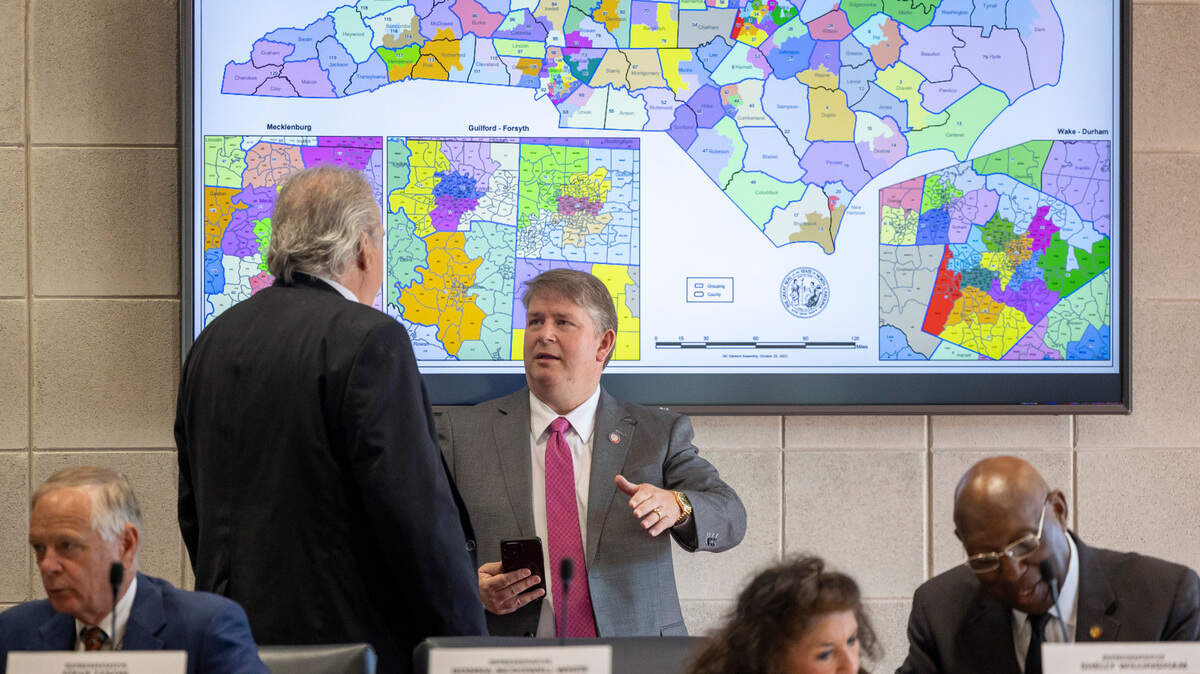
There’s a way to restore fairness to North Carolina’s elections, but it has been tossed deep into the Rules Committee of the North Carolina House and is almost certain to stay there.
It’s House Bill 20, the Fair Maps Act. It would amend the North Carolina Constitution to require that legislative and congressional districts be drawn by an independent commission.
This is at least the third version of legislation calling for an end to gerrymandering in the nation’s most gerrymandered state. Like those earlier versions, it’s not going anywhere in the Republican-controlled General Assembly, for if it were to become law, it could mean the end to Republican control.
As it is, Republicans in the majority draw the district lines so favorable to their party that Democrats have been in the legislative minority in the House and Senate for 15 years, despite being in a state evenly divided between the parties. For good measure, the lines also created a 10-4 split favoring Republicans in the state’s U.S. House delegation.
Rep. Pricey Harrison, a Greensboro Democrat and a primary sponsor of the bill, said she keeps pushing for the change because “It’s more consistent with our values, the whole defending democracy bit.”
The idea of drawing districts based on fairness rather than partisanship shouldn’t be that far-fetched. Senate leader Phil Berger and former House Speaker Tim Moore favored such a change when Republicans were in the minority. But now Republicans have consigned HB20 to the darkest depths of the Rules Committee.
“They will not touch it with a 10-foot pole,” said Rep. Marcia Morey, a Durham Democrat and one of the bill’s primary sponsors.
Still, it’s worth putting a spotlight on HB20 just to know it’s there and available to transform North Carolina into a democracy again.
“It’s an important enough issue that we will keep honking the horn on it and offer this bill until it comes to pass,“ Morey said.
The proposed commission is based on a similar commission approved by California voters in 2008. It would have 15 members, five Democrats, five Republicans and five voters not affiliated with either of the two major parties. It would hold at least 10 public hearings before drawing the district maps and at least 10 public hearings before the plan is finalized.
Approval of the final maps would require at least nine votes, with at least three from each subgroup. If the commission can’t reach that threshold, a special master would take over the work.
It’s natural that members of the minority party want to change the way districts are drawn, but this reform is about more than partisan self-interest. Polls show broad opposition to allowing lawmakers to draw district lines.
When Harrison attended public meetings on the last round of redistricting maps, she said speakers often called for a nonpartisan way to draw districts. “It’s what we heard the most about,” she said.
An abundance of safe districts for the majority party turns the attention of lawmakers from the general election to the primaries. That means lawmakers or candidates must appeal to their party’s base rather than a cross section-of voters. The result is extremism, polarization and no incentive to compromise.
Ending gerrymandering would end a lot of what’s wrong with how North Carolina and the nation are governed. Other states have taken action. Commissions draw congressional district lines in 11 states and 16 states use a commission for state legislative redistricting.
It’s not happening in North Carolina under Republican rule. And it’s not assured that Democrats, should they regain the majority, wouldn’t embrace the gerrymandering they now condemn.
House Democratic leader Robert Reives says there will be no backsliding if Democrats get a chance to take redistricting out of the hands of lawmakers.
“One of the fundamental principles we have as North Carolina Democrats is that fair maps lead to fair representation, and that fair representation leads to better outcomes for North Carolinians,” he said. “When House Democrats take the majority back, independent redistricting will be a day one priority for me and I have no doubt that every House Democrat will support it.”
Let’s hope that this time the minority party means what it says.