
As a housing shortage threatens N.C.’s growth, cutting construction red tape could help | Opinion
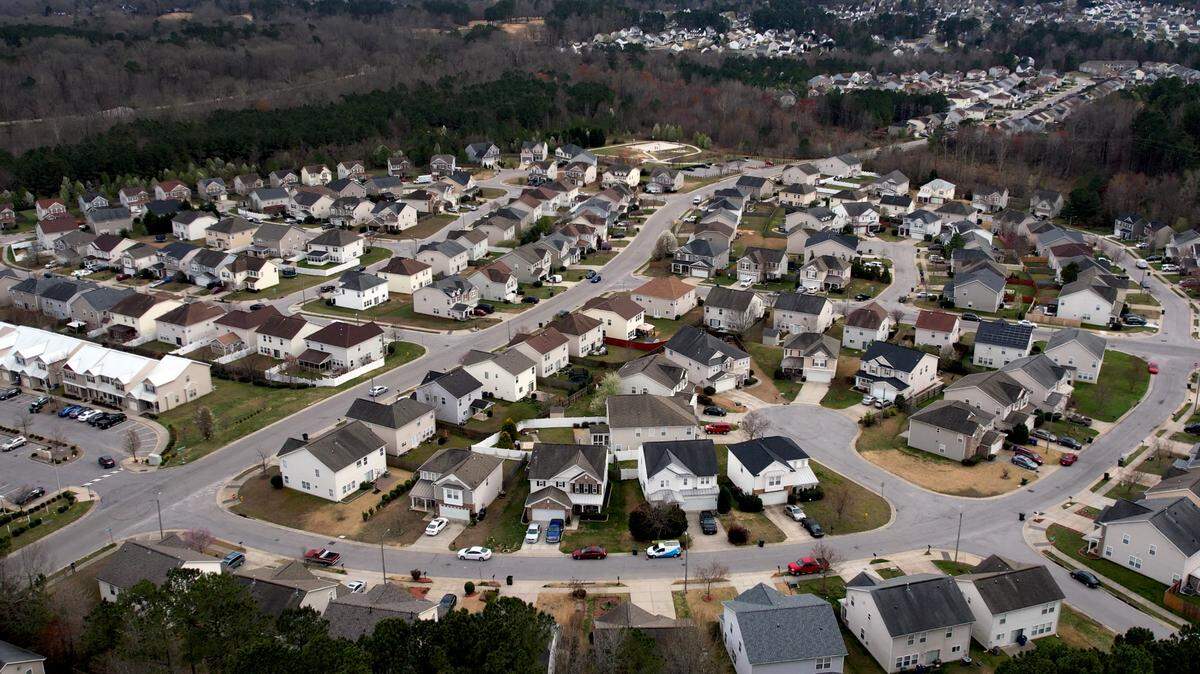
A new book about how people relocate in the U.S. – or don’t – holds good news for North Carolina as a magnet for newcomers, but the author also warns that the state’s attractiveness could be undercut by soaring housing prices.
The book is Stuck: How the Privileged and the Propertied Broke the Engine of American Opportunity. The author is Yoni Appelbaum, deputy executive editor at The Atlantic magazine.
Appelbaum argues that communities with many people who have come from elsewhere are more prosperous and have more civic-minded residents and better schools. North Carolina, particularly the Research Triangle and Mecklenburg County, has a wealth of newcomers. In 2023, the state was third in net migration, behind Texas and Florida.
But Appelbaum says the high cost of housing in desirable areas is limiting Americans’ mobility. In his bookhe writes: “In the 1960s, about one out of every five Americans moved in any given year — down from one in three in the 19th century, but a frenetic rate nonetheless. In 2023, however, only one in 13 Americans moved.”
As growth drives up housing costs, Appelbaum warns that North Carolina could lose its appeal. According to the N.C. Chamber, the state’s average home price rose from $251,859 in 2020 to $419,000 in 2024.
“So far, people are still coming to North Carolina,” he told me last week, “but I would say the state is sliding into the danger zone of where escalating housing prices are putting at risk things that residents have come to take for granted in the last few decades. Some real change is probably necessary to continue the trajectory that the state has been on.”
Appelbaum’s book focuses on how regulations increase housing costs in high-demand areas. That makes it hard for many people to move to desirable areas, so they stay put. That has created a divide between people who have found opportunity in a new location and those who feel trapped and left out.
The declining mobility helped Donald Trump regain the White House, Appelbaum said.
“There is a divide between people who’ve been able to live in the places that give them and their families a chance to rise and those who, because of the way we’ve changed housing in this country, have been frozen out of those places,” he said. “(Trump) exploited that.”
It’s not that there isn’t low-cost housing in many parts of the U.S., Appelbaum said, it’s that appealing places become unaffordable because excessive housing regulations limit the housing supply. “Our problem is very specific,” he said. “For 200 years when places thrived we built new housing and people flowed in. These days, when places are really prospering, we throw up new barriers to the construction of housing.”
That change is increasingly at work in North Carolina, said Tim Minton, executive vice president of the North Carolina Home Builders Association. “I’m not aware of a local government in the state that has lessened requirements. Most have increased them,” he said.
Minton said variations in local housing codes, local aesthetic standards, tree ordinances, open space requirements and slow approval times add to housing costs. Meanwhile, many neighborhoods resist the construction of townhomes and multi-family housing.
The Home Builders Association will make a presentation to a state House committee on Tuesday illustrating the many and costly regulatory steps involved in building homes.
Meanwhile, a new study by the N.C. Chamber estimates that North Carolina faces a five-year housing inventory gap of 322,360 rental units and 442,118 for-sale units.
“We have all the land we’re going to have. We have to build more in smaller spaces, especially going up,” Minton said. “The problem is communities don’t want to go up. Three hundred people in red T-shirts will show up (at a public hearing) and local officials are paralyzed.”
Thomas Barrie, an N.C. State University professor of architecture who heads the Affordable Housing and Sustainable Communities Initiative, agrees with Appelbaum’s contention that housing regulations backed by progressives – zoning rules, environmental requirements and historic designations – are blocking needed housing and driving up costs.
Barrie said. “Everyone needs to do their fair share and allow more diverse and more dense housing in their neighborhoods.”
North Carolina’s appeal is based on its mild climate, natural resources, urban amenities and relatively low taxes and housing costs. But all that will matter less if communities don’t allow more housing to be built at a lower cost.
As Appelbaum put it: “the only way out of a supply crisis is to increase the supply.”