
North Carolina’s ‘fiscal cliff’ is just a scare tactic from Democrats | Opinion
We often talk about running the government like a business, but it is definitively not one. A company facing a drop in revenue is in major trouble. A government in the same position might not be.
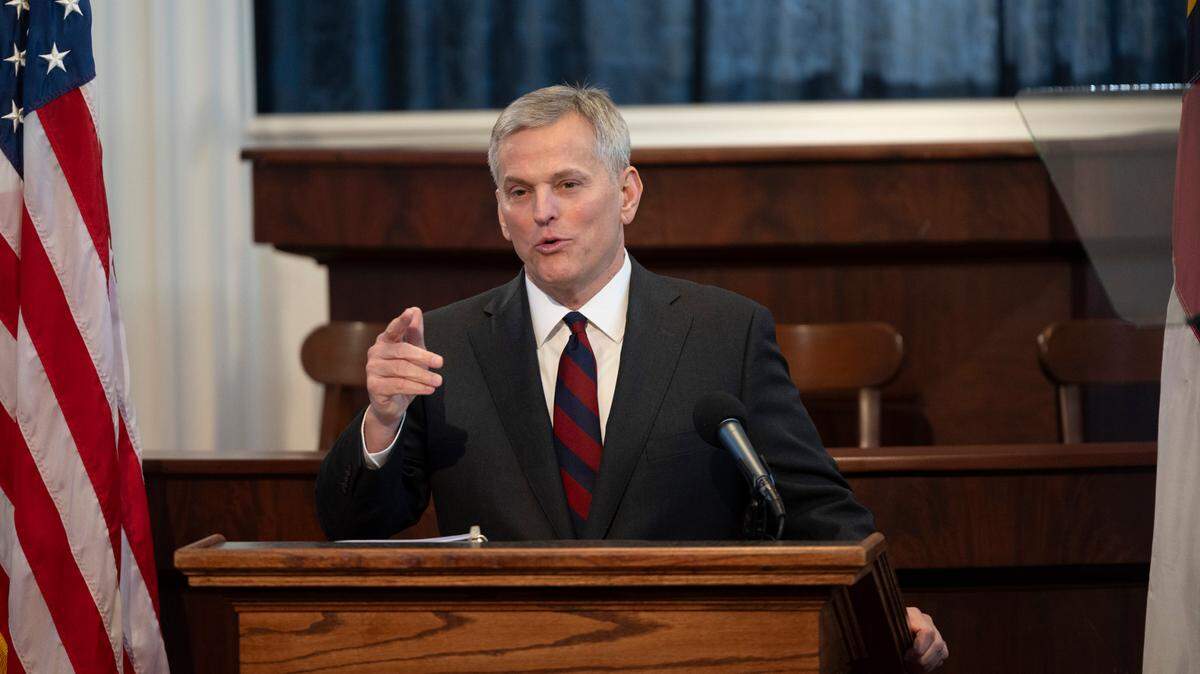
We mustn’t forget that as Gov. Josh Stein warns of a looming “fiscal cliff” in 2026. He’s painting a dire picture of revenue shortfalls and budget crises, but Senate President Pro Tem Phil Berger shrugs it off, saying North Carolina is “in good shape.”
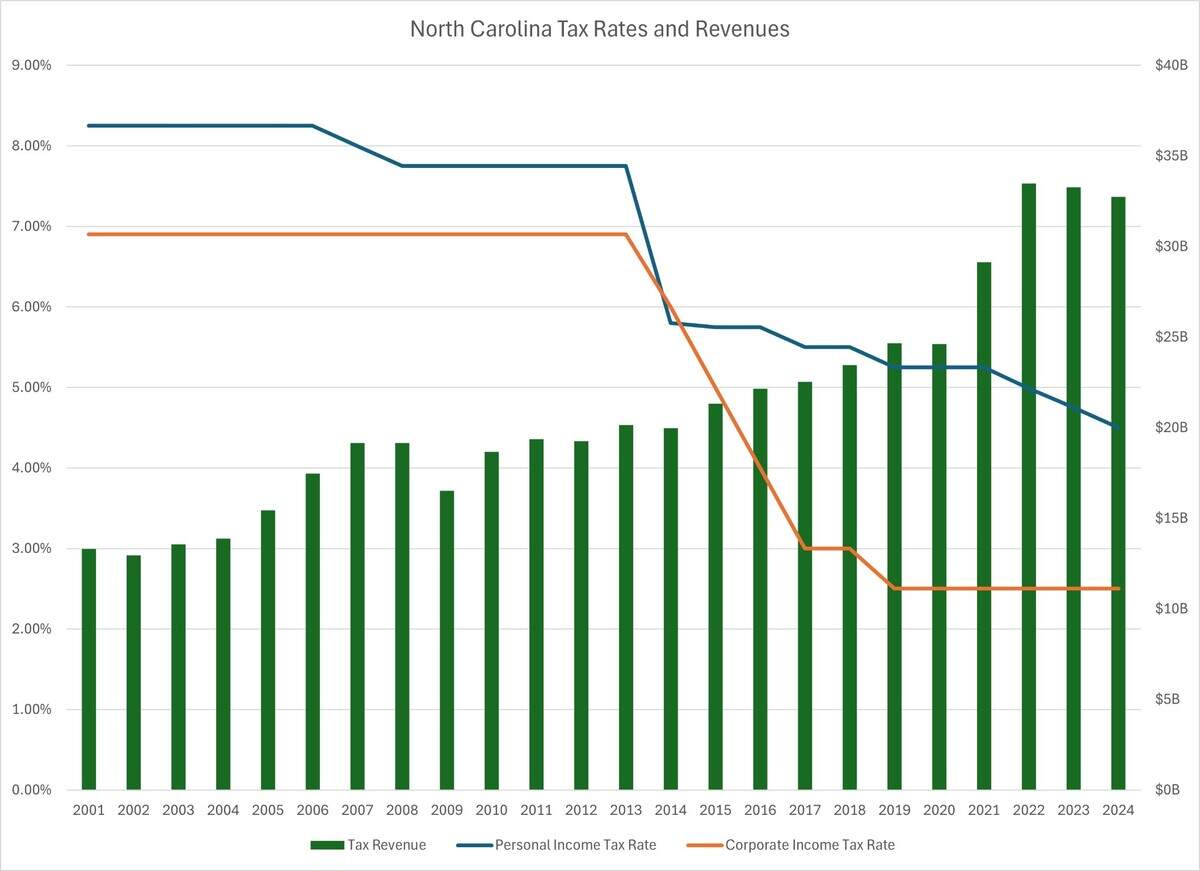
The truth is somewhere in between. The state’s budget has grown over 50% in the past decade while taxes have steadily fallen. There’s no reason to believe this time will be different.
But that doesn’t mean everything is fine. Amid skirmishes with the governor, North Carolina Republicans have nearly forgotten how to be strategic in investing in the state’s future. Momentum on priorities like increasing teacher pay has stalled.
This isn’t a budget crisis. It’s a spending debate.
How we got here
The debate stems from a new projection from the Office of State Budget and Management. It forecasts North Carolina will bring in $34.7 billion this fiscal year, a surplus of over half a billion dollars. Next year, it promises a slight increase to $34.9 billion. Then in 2026-27, it predicts revenue will dip slightly to $34.1 billion.
The projection is based on two things — one certain, one speculative. Tax rates are falling this year and next, which obviously affects revenue. But forecasters also assume a slowing economy will prevent growth from offsetting those cuts.
This isn’t a shortfall, and North Carolina isn’t running out of money. That budget hasn’t even been written yet. But Stein insists the General Assembly should halt tax cuts to pre-empt fiscal pain. “Just freeze it,” he told reporters earlier this week.
That would be a huge mistake — because history and the numbers tell a different story.
The history
In every budget cycle since Republicans took over in 2010, Democrats have warned that tax cuts would lead to disaster.
Tax reform in 2013 slashed rates while expanding the sales tax base. Critics predicted financial ruin. Instead, the economy boomed — unemployment dropped, investment surged, and the state ran consistent surpluses.
Why? Unlike Kansas, which slashed taxes without a fiscal strategy, North Carolina paired cuts with disciplined budgeting, with tax cuts triggered by hitting certain revenue targets. The result: Tax rates keep falling, but revenue keeps climbing.
Every time, the forecasts of disaster have failed to materialize. I sorted through the last decade’s worth of Office of State Budget and Management forecasts and paired them with the actual result. It showed that every early revenue forecast in the past decade has undershot actual tax collections — sometimes by as much as 18%.
Yet all along, the Democratic story has been the same. The same doomsday warnings were issued in 2013 when tax cuts were first implemented. The same fears were stoked when corporate taxes were lowered in 2017.
Former Gov. Roy Cooper spent his entire tenure demanding that North Carolina spend down its reserve funds, arguing that the state was hoarding too much money instead of pouring it into schools and services.
Yet here we are, a decade into the most successful economic stretch in the state’s history. Thank goodness Republicans didn’t listen — because now those reserves are funding Hurricane Helene relief, exactly the kind of emergency they were meant for.
What’s really at stake
The real disagreement here is about political philosophy. Democrats don’t seem to get this, but budget surpluses aren’t actually good. Sure, they’re a sign of a vibrant economy and a growing state. But they also mean that the state has taxed the people of North Carolina too much, taking more money out of each of our paychecks than it had a plan to spend.
Still, there’s room to debate over tax rates and spending levels.
No offense to libertarians, but there’s broad consensus in North Carolina that the government has an important role to play in our state. And there are plenty of needs we agree on.
North Carolina should have great public schools. Students should have access to both strong public education and school choice. The state should fix roads and bridges, rebuild western North Carolina stronger than before, and ensure people with disabilities receive excellent services.
None of that is in conflict with the state’s tax policy, but it has receded in importance in the last few General Assembly sessions. The issue isn’t a lack of money; it’s a matter of priorities.
A more strategic approach to spending
Instead of debating whether the state collects “enough,” the focus should be on whether the money is used strategically. Teacher pay, infrastructure, and court system backlogs are real challenges that need addressing.
This will be House Speaker Destin Hall’s first budget as a leader, and it’s an opportunity to set clear priorities for the next decade.
His challenge isn’t whether the state can afford to invest — it can. The “fiscal cliff” isn’t a crisis. It’s a political argument over how to spend North Carolina’s money.
The real test is whether lawmakers can maintain North Carolina’s economic strategy while making smart, targeted investments.
If history is any guide, that balance is entirely possible.
This story was originally published February 25, 2025 at 8:23 AM.