
Why Trump’s tariffs resonate in North Carolina | Opinion
We keep coming back to the same conversation about the jobs that left North Carolina and never came back. Each time, the conversation gets harder to have.
The stock market plunged after President Donald Trump announced sweeping new tariffs on most of the world — 10% on nearly all imports, with even higher rates for countries that the administration says don’t trade fairly.
Democrats have slammed the plan as a tax hike on American consumers, and a lot of Republicans seem uneasy about it, too. But in rural North Carolina, the news lands differently.
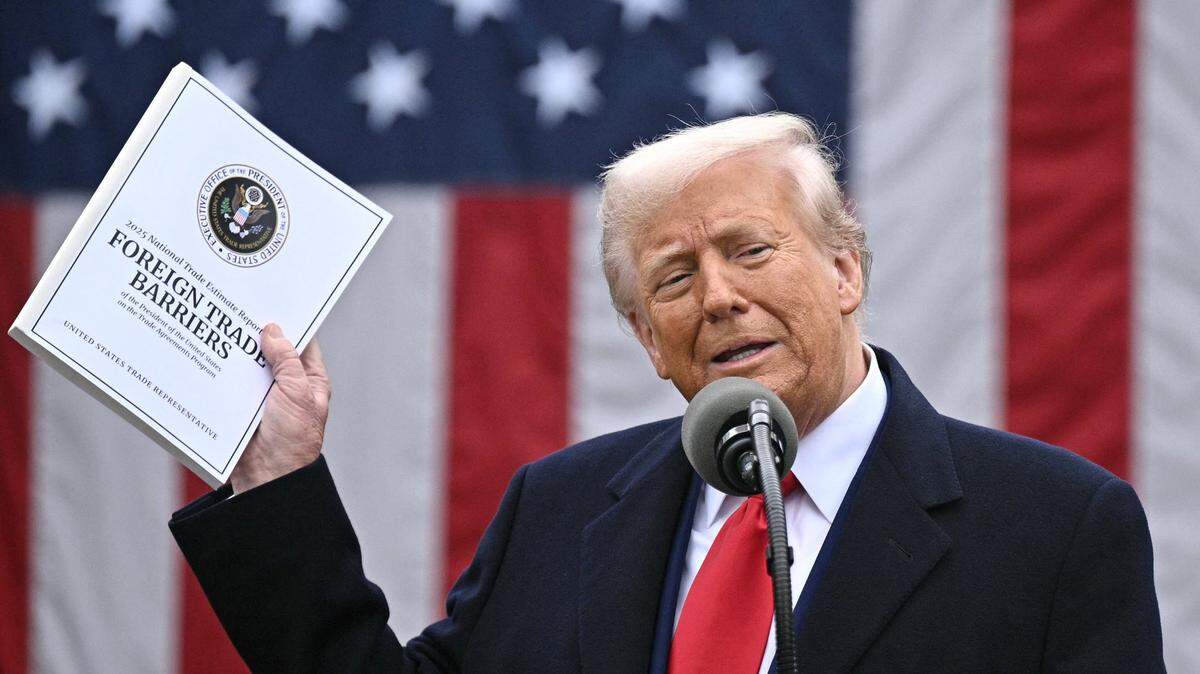
Trump framed the move as economic self-defense. “For decades,” he said from the Rose Garden, “our country has been looted, pillaged, raped and plundered by nations near and far, both friend and foe alike.”
Nobody does grievance politics better than Trump, and it’s blunt language that ignores the nuance of the global economy.
But this type of rhetoric taps into something real in this state. North Carolina rode the wave of the American manufacturing economy, with textiles, tobacco and furniture leading the way. Then it disappeared.
“It resonates in a visceral way,” House Speaker Destin Hall told me. He represents Caldwell County, a former furniture king that has been hit hard by job losses. “They’re more receptive than ever to the message that the United States is a country, not an economic zone.”
A bipartisan consensus
Free trade used to be a bipartisan ideal in North Carolina. Governors Jim Hunt and Jim Holshouser, a Democrat and a Republican, both saw it as North Carolina’s path to growth. They championed open markets, recruited foreign investment, and leaned into globalization.
In many ways, they were right. The state’s economy modernized, and new jobs came — but not everywhere. The jobs that replaced them came with college degrees and urban addresses. Textile and furniture towns got left behind.
”I don’t think there was a whole lot of thought about how it would affect middle class people,” Hall told me.
By 2002, the backlash had arrived. Erskine Bowles, running for Senate after serving in the Clinton White House, found himself carrying the baggage of NAFTA. His opponents didn’t let him forget it, and the seat went to Elizabeth Dole.
Since then, the trade debate has mostly gone quiet. The numbers were too good statewide, and GDP kept growing. The cities kept booming. There’s been plenty of lip service to the urban-rural divide, but little substantial policy.
That may be changing.
Former Lt. Gov. Mark Robinson tried to bring the issue back to the forefront. A former furniture manufacturer, he pointed to the offshoring of manufacturing as a failure of national policy in the early days of his campaign for governor. But his message was quickly drowned out by headlines about personal scandals, not trade imbalances.
Hall represents the first in a new generation of N.C. leaders too young to be fully immersed in Reaganism but old enough to have seen the impact of economic disruption first-hand. When Hall speaks of the issue, the tone is different.
”I am, as most conservatives are, a free-market capitalist,” Hall told me. “But world trade is not a free market.
”When you talk about free trade, basically to them it means we gave all our jobs to China and in exchange we got cheaper TVs at Walmart. But we lost our jobs and have less money now.”
A fundamental shift
The conversation is harder to have now. North Carolina is one of the fastest-growing states in the country — but most of it is concentrated in just a few booming metro counties. Half of the state’s counties have lost population over the last decade, all of them rural.
That’s created more than just an economic gap. It’s deepened the political one, too. Cities are getting bluer. Small towns are getting redder. And the farther apart these two North Carolinas grow, the harder it becomes to even talk about what went wrong — let alone what to do about it.
That’s the void Trump keeps stepping into, regardless of the ultimate outcome. This tariff plan seems designed more as a way to get other countries to change their policies than a long-term solution. The net result could be that world trade emerges freer than it was before. For his part, Hall said he hopes the net result is a free and fair economic system that American workers can compete in.
That’s likely the outcome Trump is hoping for as well. The tariff plan is as much a political document as an economic one. Trump does seem to be an earnest believer in tariffs as policy, despite its flaws, but he’s primarily concerned about the political message.
Regardless of the motivation, Wednesday’s announcement marks a fundamental shift in a familiar conversation. Maybe now, finally, we’re ready to do something with it.
This story was originally published April 5, 2025 at 7:00 AM with the headline "Why Trump’s tariffs resonate in North Carolina | Opinion."