
Griffin’s case demonstrates why it’s time to end partisan judicial elections in NC | Opinion
The long-running race between Jefferson Griffin and Allison Riggs took another turn on Friday. There has already been considerable commentary criticizing the decision. I fear we are at serious risk of a constitutional crisis.
As a scholar of state constitutions and the North Carolina Constitution, I don’t use those words lightly. So many Americans are already worried about constitutional crisis at the national level. However, constitutional crises have repeatedly happened at the state level historically, and they remain possible today. By “constitutional crisis,” I mean things like successful terrorist campaigns to overthrow governments or militias supporting rival candidates spilling blood in the street.
Disputed elections and politicized procedures to resolve them have frequently been at the root of constitutional crises in America. That is what worries me about how courts are handling Judge Griffin’s challenges. North Carolina uses contested partisan elections to select judges. It is only one of a handful of states to use this method for state supreme court races. Most other states use nonpartisan elections or merit selection plans, where nonpartisan nominating commissions present governors with a list of candidates to choose from.
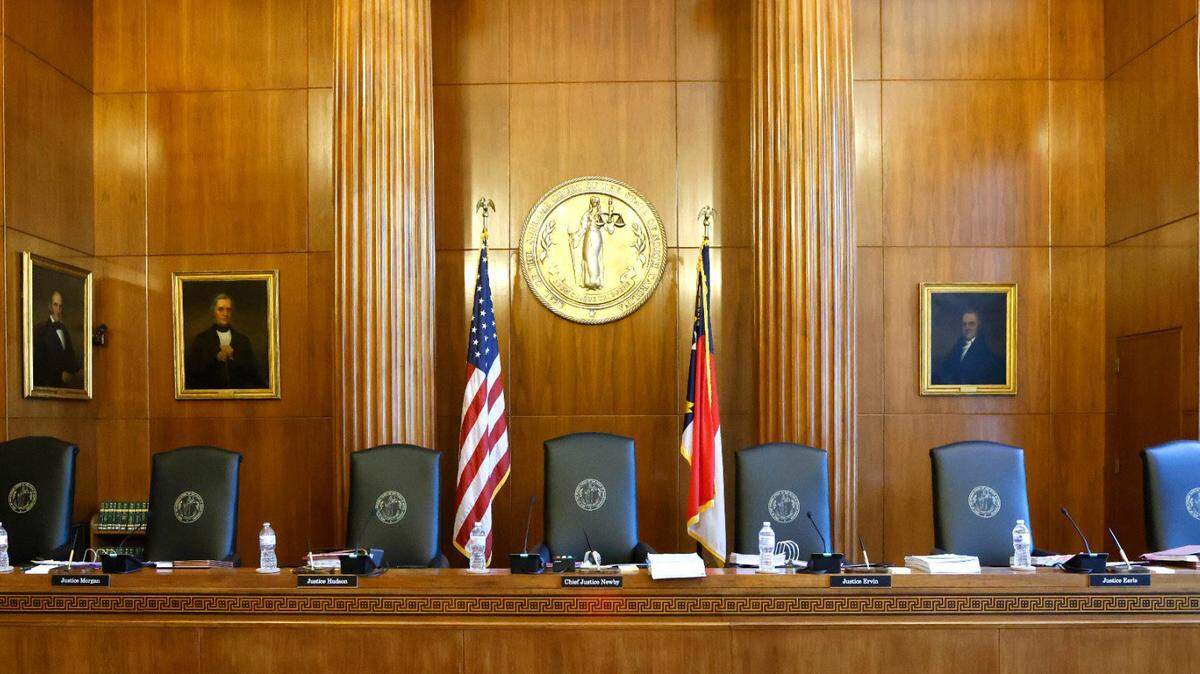
Those reviewing Judge Griffin’s challenges are all affiliated with a political party. They must remain in the good graces of highly engaged partisans to avoid primary challenges and consider how particular rulings affect their ability to raise money. I’m willing to assume that all involved have acted in good faith and their rulings have reflected their best understanding of the law.
However, there is a massive perception problem. Knowing that Republican judges have strong incentives to favor a fellow Republican in this election dispute, why should a Democrat trust that a decision made by a majority Republican court was fair? Suppose the situation were reversed and the North Carolina Supreme Court had a majority of Democratic justices and Justice Riggs were attempting to challenge her loss. Would Republicans trust a decision where all but one of the Democrats sided with her?
That North Carolinians have to ask questions like these creates a cloud of illegitimacy around our judiciary. In North Carolina, we agree to respect judicial rulings because we chose the judges and trust them to be fair. But partisan elections call this arrangement into question. If judges appear to be nothing more than politicians serving their party’s interests, then state residents will wonder why they should comply with court rulings. Courts without trust across the political spectrum cannot serve as the impartial umpires we need in an election contest.
Judge Griffin may eventually win a seat on the state supreme court. However, the partisan character of court decisions in his favor could create problems. As a swing state, North Carolina will continue to have close elections. Imagine Justice Griffin writing a decision rejecting a Democratic candidate’s lawsuit in a contested election. The Democrat may well argue that because Justice Griffin doesn’t have a rightful claim to office, the decision is null and void. That candidate may receive support from fellow partisans to disobey an unfavorable decision. “This is the same court that stole an election. They do whatever they think is right for their party, so we can do whatever we think is right for our party,” the candidate might say. As the candidate defies court orders and rallies supporters to force their way into office, we will have the type of constitutional crisis we should all want to avoid.
If we are headed along a perilous path, we also have an opportunity to protect true judicial independence. North Carolina should abandon partisan elections and reform campaign financing. Although that will require residents to do more research on the candidates beyond seeing if they are Republicans or Democrats, the benefits will be worth it. North Carolinians may wonder whether a decision in an election contest is correct. But with the changes I outline, they won’t have to wonder whether narrow partisan considerations drove the decision.
Just that fact may help them accept an outcome they dislike.
This story was originally published April 14, 2025 at 5:00 AM.