
Former NC Republican governor: Tariffs won’t work out how Trump thinks | Opinion
So how’s your IRA today?
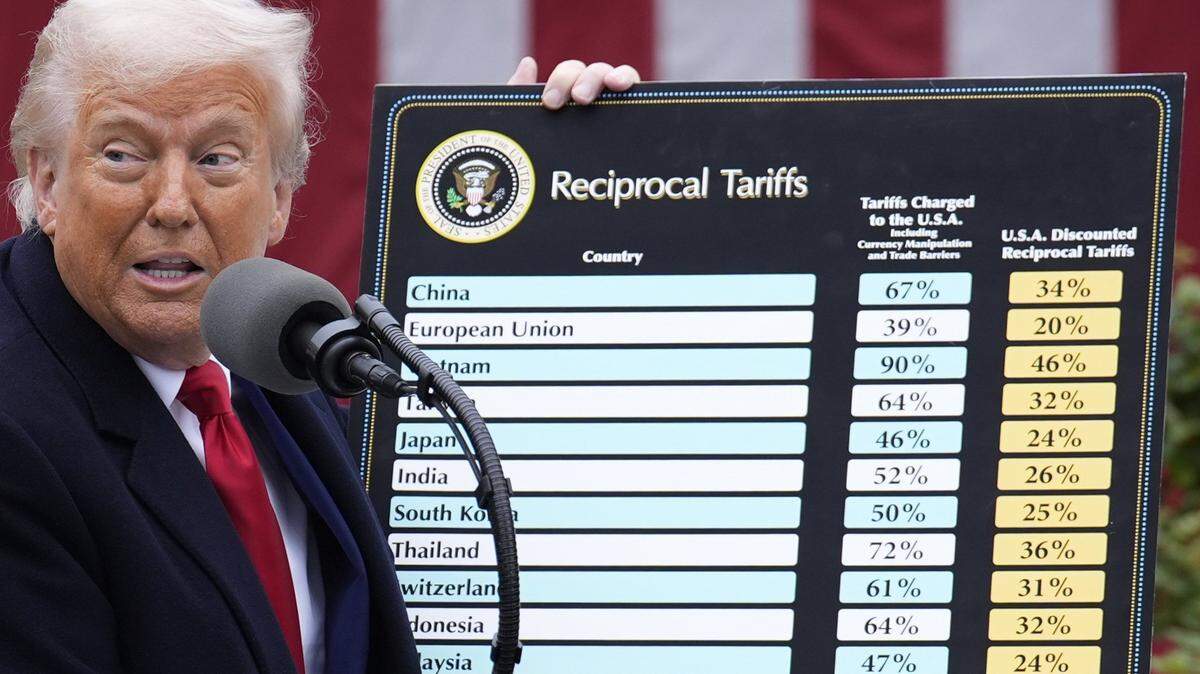
When President Donald Trump tried to justify his “Liberation Day” assault against foreign trading partners as “reciprocal tariffs,” it seemed his people had gathered factual data from American exporters for actual tariff rates on our various product lines.
No.
The administration lamely guesstimated our fiscal trade deficit with each country was the sum of its tariffs and “non-tariff barriers.” Trump ordered 25% import taxes on them, now paused until July to allow his “Art of the Deal” to work wonders.
Other factors also contribute to trade deficits. Countries with little industry and less disposable income have limited appetite for our high-tech phones, cars, robotics and entertainments. Trump’s tariff on them is 10%.
Tariffs do add tax revenue. Before President Woodrow Wilson signed the graduated income tax in 1913, 30-50% tariffs funded 85% of the relatively small federal budget. Tariffs fell to 5% for a decade. Shortly after the Great Depression struck in 1929, President Herbert Hoover tried to bail out the country with Smoot-Hawley Act tariffs rising to 60%, launching a global trade war that made it worse.
Republicans, once fond of protective tariffs for industry, disowned Hoover and converted to free traders. Tariffs faded and Democrats kept them below 5% and negotiated the General Agreement on Tariffs and Trade (GATT, 1947) under President Harry Truman. Republicans George H.W. Bush and George W. Bush shared credit with Democrats Bill Clinton and Barack Obama, respectively, for Free Trade Agreements with Canada and Mexico. Tariffs in the U.S. stayed below 2% until 2020 when Trump levied 14% on some items, which Joe Biden promptly took down after his election.
As a traditional Republican, free-trade advocate on the U.S. House Ways and Means Committee (1975-84), I still favor lower tariffs on exports and imports. I understand the bold notion that retaliatory tariffs might cause some countries to reduce tariffs on our products. Unless they retaliate in kind. Fear of Trump’s strategy starting the first trade war in 95 years exceeds my confidence that his administration can succeed with “reciprocal” tariffs.
My number one concern, though, is that the cumulative federal debt ($36.7 trillion and counting) outstrips the total American economy ($29.9 trillion GDP). Enjoy the shock of watching the count on www.usdebtclock.org. We’ve hamstrung ourselves in a vulnerable peacetime position, unable to deal with any looming, imaginable crisis.
What if there’s another pandemic just as this next recession takes hold? What if trade wars lead to catastrophic global distrust as in the 1930s? What if there’s no money to refinance Social Security? Government support programs will soar while tax revenues sink. What if interest rates become unaffordable? Would we default on our national debt?
Unable to borrow to cover each enormous added deficit, the U.S. Treasury’s only option will be to print more paper money faster. More dollars chasing the same or fewer goods and services equals inflation. That tax-like burden falls heaviest on those whose daily needs consume their limited incomes.
Few want tariffs high enough to replace only a small fraction of the income tax. It depends on one’s ideal tax policy: (a) graduated income taxes stacked against higher incomes, or (b) regressive levies (like sales taxes and tariffs) that weigh more heavily against lower incomes, or (c) a combination of both, sharing the burden. Then there’s that popular mantra, “See that fellow behind that tree? Go tax him. Don’t tax me.”
Maybe our trading partners are eager to negotiate continued access to our markets. Maybe they’re just buying time to form a vast coalition against our “half-vast” threats. It could depend on which ones actually have heavy tariffs to divest, or anything of value to offer in exchange. Will they meekly accept undiplomatic commands from our president? Or will they defy him, as we would treat them if the tables were turned?
Herbert Hoover would smirk.