
A North Carolina manufacturer doing what Trump wants is tangled in his tariff turmoil
How President Donald Trump’s back-and-forth on tariffs has disrupted trade around the world can be realized in the experience of one Raleigh-based company.
Attindas Hygiene Partners, a manufacturer of adult and baby diapers, is trying to do what Trump says he wants to do – increase manufacturing to the United States. But Trump’s vacillating stand on tariffs has made that more difficult and more expensive.
Attindas’ products are produced at plants in Spain, Sweden, Ohio and Greenville, but the company is renovating its Greenville plant at a cost of $11 million to make way for $4.5 million in machinery now in China. Adding the additional manufacturing line will create 25 high-paying jobs and has drawn state, county and municipal incentives totaling $875,000 in grants and tax breaks.
To get the machinery from China involves a shipment large enough to fill 20 shipping containers.
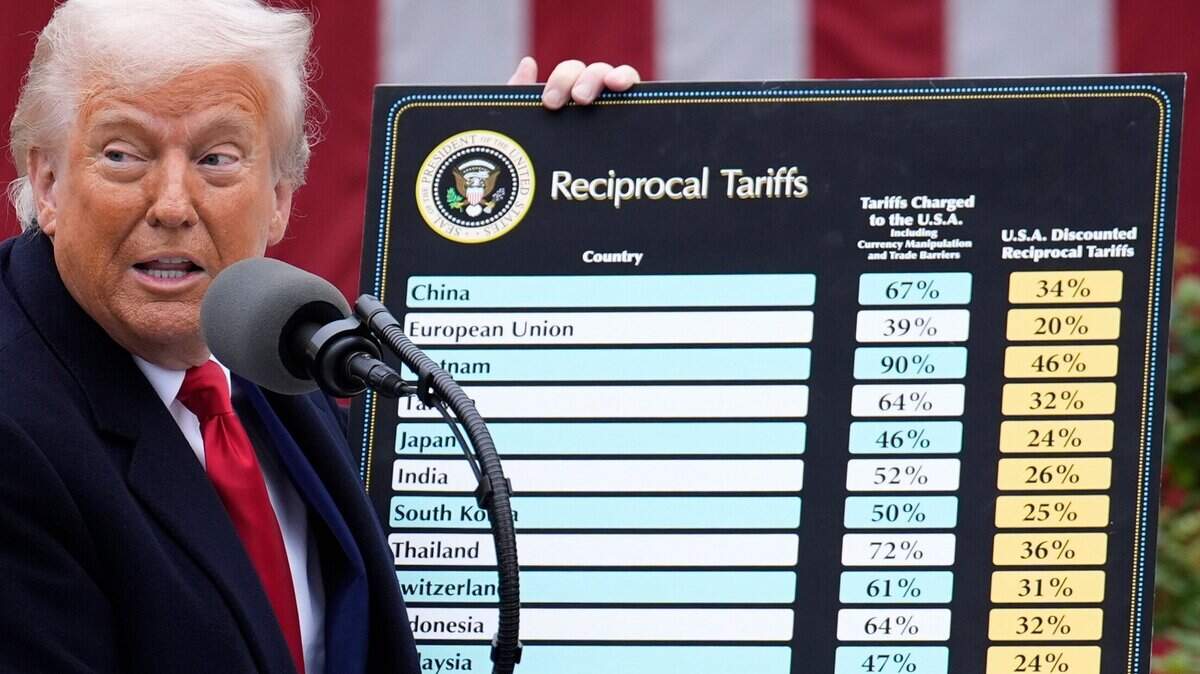
Everything was set until Trump walked into the White House Rose Garden on April 2 to announce “Liberation Day,” a slew of higher tariffs that he says will free the nation. from being “ripped off” by countries that sell the U.S. more than they buy from it.
For Attindas executives, “Liberation Day” launched a hectic move to adjust as tariffs spiraled upward. Responding to Trump, China raised its tariff on U.S. goods and Trump countered by raising the tariff on China goods to 145%.
For Attindas, the cost of bringing the manufacturing line in from China had more than doubled, making the move unaffordable.
“We had a major fire drill. All hands on deck,” said David Struhs, a senior vice president at the company. “We were examining everything that had to be accomplished to hold this together during a period of unprecedented uncertainty around tariffs.”
The company considered having the machinery shipped to its plant in Spain to avoid the tariff, a move that would render its Greenville plant renovations unnecessary, forfeit the government incentives and make its product more expensive for its U.S. costumers.
“Our frustration was that there’s all this talk about manufacturing (in the U.S.), but in order to do that you have to have the machinery and to have the machinery you have to import it,” Struhs said.
The company avoids getting involved in politics, but the situation called for lobbying. Attindas executives met with the staffs of Rep. Greg Murphy, whose district includes Greenville, and Sen. Thom Tillis.
Struhs also sought relief in a letter to Treasury Secretary Scott Bessent that said, “Our company has been working for years to install a state-of-the-art manufacturing line in our North Carolina plant … Unfortunately, today’s tariffs make it uneconomical to ship this line to the U.S.” The letter concluded with an italicized appeal, “Will you please urgently and personally intervene with the President to avoid this unintended consequence?”
Similar appeals and China’s new tariffs apparently persuaded Trump to back off his trade war with the world’s second-largest economic power. He reduced the 145% tariff on China goods to 30%.
The lower tariff means Attindas will still have to spend $1.35 million on top of shipping costs to bring the machinery to Greenville.
The company plans to go ahead, but Trump has added another complication. The lower tariff is only set for 90 days and could increase again. With supply lines from China backed up by the initial standoff on trade, it will be a scramble to get the machinery to the U.S. within that 90-day window. Expediting the shipment may require paying surcharges.
The company’s experience with Trump and his tariffs highlights a contradiction. The president says he is raising tariffs to revitalize U.S. manufacturing, but, as in Attindas’ case, higher tariffs can actually be a barrier to allowing that.
Struhs said his company, like many in the U.S. that serve a global market, would welcome more clarity and consistency in Trump’s tariff policies. “If we knew what the rules were for the long term, then we could plan accordingly,” he said.
That wish is unlikely to be fulfilled as Trump continues to import uncertainty and export chaos.
This story was originally published May 15, 2025 at 6:00 AM.