
North Carolina Republicans are leaning in to Trump-flavored politics | Opinion
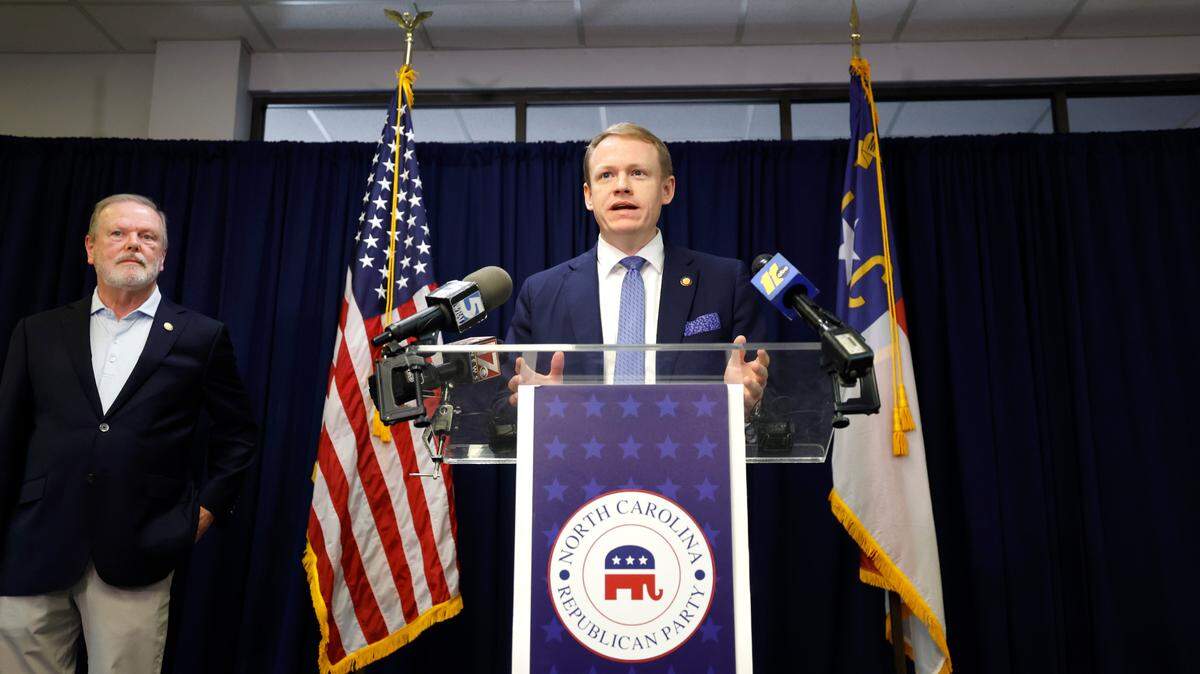
If you want to understand how North Carolina politics is changing, Speaker Destin Hall’s X account is a good place to start.
The top Republican in the state House doesn’t just post about budgets and committees. His team crafts memes mocking DEI programs, blasting Democrats over “woke” ideology and promoting policies lifted straight from President Donald Trump’s stump speeches.
It’s a shift in tone — but more importantly, in strategy.
North Carolina Republicans aren’t just navigating national politics anymore. They’re leaning into it, on purpose. From the top down, they’re aligning with the national GOP brand, especially its Trump-flavored populism.
In many ways, this is what voters in North Carolina are asking for. That makes it smart politics, and it’s delivered plenty of good results. But it raises a deeper question: If every state starts to look and sound like Washington, what do we lose along the way?
How we got here
Party labels used to be a lot more flexible. A Southern Democrat didn’t sound like a New York Democrat. A California Republican had little in common with one from the Carolinas. At times, figures like President Franklin Roosevelt could hold a party together. But at other times, you’d get George Wallace and George McGovern sharing the same stage.
Politicians have always tacked toward or away from the top of the ticket when it suited them. But this moment is different. National polarization is locked in — and now it’s reshaping state politics, too.
Across the country, local and national politics are blending. Gubernatorial races in New York, California and Florida now serve as proxy battles for the presidency.
North Carolina isn’t leading that trend, but it’s catching up.
Democrats got there first. When Marc Basnight and Tony Rand backed Barack Obama in 2008, it marked a turning point. Blue Dog Democrats like Heath Shuler disappeared. Their replacements embraced national issues: abortion, corporate taxes, resistance politics.
Republicans, for a while, took a different path. After winning the General Assembly in 2010, they moved fast — cutting taxes, reforming education, passing voter ID. The agenda was clear, but the identity was still adolescent. The party felt like a teenager with a new license: powerful, impulsive, still figuring things out.
They didn’t reject Trump, but they didn’t build around him either. That’s changed.
The new GOP brand
Trump’s political comeback — and continued strength in rural North Carolina — has only reinforced that shift. Especially in a state without a high-profile Republican governor setting the tone.
Senate leader Phil Berger, long known for his focus on taxes and education, now opens campaign videos with: “We’re fighting for President Donald Trump’s agenda.” He’s pushing a “Border Protection Act,” ICE enforcement mandates, a $3,000 law enforcement bonus and Trump-style efficiency reforms. His primary challenger? Trump loyalist and Rockingham County Sheriff Sam Page.
Hall’s first budget included Trump’s tip-tax exemption. His messaging mirrors national themes, casting legislative debates as part of a broader cultural battle. This isn’t just borrowing from Trump. It’s a structural realignment.
What we gain, and what we risk
Republicans are now making the case that national donors should view North Carolina the way Democrats have since 2008: as a front line in the national fight. Trump has won the state three times. But in each of those years, voters also elected a Democrat for governor. Some Republicans see that as a branding problem — and nationalization as the fix.
It’s a tempting theory. But it oversimplifies how voters think.
Most people don’t vote in state races purely on national loyalty. They trust familiar names. They weigh competence. Knowing where you stand on Trump or Biden doesn’t always decide how you feel about your state senator.
Turning every race into a national referendum might help with fundraising. It might clarify internal identity. But it also brings tradeoffs.
North Carolina’s political distinctiveness — the kind that once allowed voters to send both Jesse Helms and Terry Sanford to Washington — is getting harder to maintain. Shuler couldn’t win a primary today. A Republican who doesn’t echo Trump may not survive one either.
North Carolina Republicans are building a stronger party — more focused, more disciplined, more aligned with the national brand. That may bring money, attention and wins.
But as the party grows into the Trump era, it’s worth asking what gets lost when every race starts to look the same.