
Trump’s ‘Big Beautiful Bill’ is also one of the most unequal | Opinion
The Urban Institute reports: ”Wealth inequality is higher in the United States than in almost any other developed country and has risen for much of the past 60 years.” The Urban Institute study adds:
“In the past 60 years, America witnessed a massive transfer of wealth from the middle class to the wealthiest families. In 1963, the wealthiest families had 36 times the wealth of families in the middle of the wealth distribution. By 2022, they had 71 times the wealth of families in the middle.”

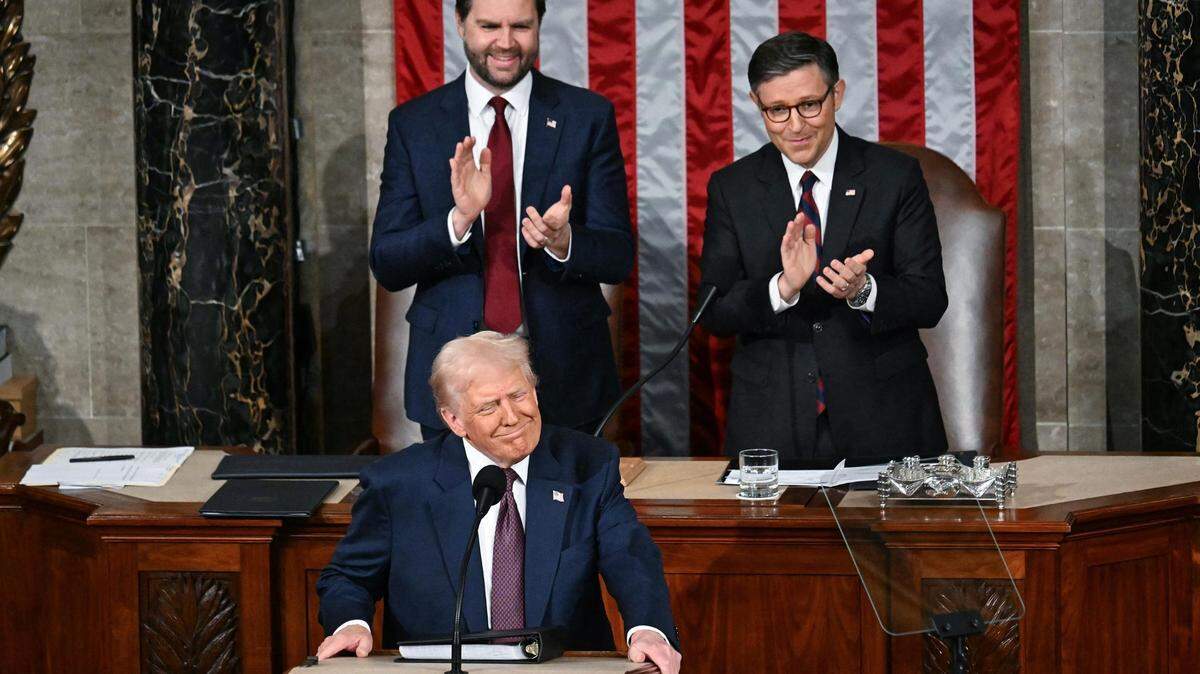
No wonder Donald Trump and Speaker Mike Johnson decided it was time to enact a “Big Beautiful Bill” which, in Republican Sen. Josh Hawley’s words, represents “reverse class warfare.” “It’s taxing the poor to give to the rich.” And that’s Josh Hawley.
The Congressional Budget Office indicates that Trump’s tax law will cut over $715 billion in health care spending for poor people – principally from Medicaid. Nearly 13.7 million people will lose health care coverage. Funding for nursing homes will be slashed. Experts report that the bill raises the national debt so profoundly that it will trigger $500 billion worth of cuts from Medicare. It’s a relief that the president has promised almost daily not to cut Medicare and Medicaid. But, then, who would ever believe the president? Even he doesn’t expect you to.
Three hundred billion dollars will be cut from the food stamp program (SNAP) – the largest reduction in American history. The Center for Law and Social Policy found that 11 million impoverished folks, including many millions of kids, will lose food assistance. The United Nations has already referred to the United States as the world’s great “outlier” in accepting grotesque levels of child poverty and child hunger. I wonder what category is worse than “outlier?”
University of California-Berkeley’s Robert Reich, who studies economic policies, indicates that, figuring in both benefits cuts and tax cuts, folks making between $17,000 and $51,000 will lose $700 a year under the House bill. It will cost those making under $17,000 over a thousand bucks. But Trump’s friends in the top 0.1% of earners will rake in a cool $390,000 a year. Now that’s working-class populism.
The bill has one of the largest price tags in history. It will add $5.2 trillion to the U.S. debt and increase the budget deficit by $600 billion in the next fiscal year. Looking it over, Moody’s downgraded America’s credit rating.
Trump explained “this is arguably the most significant piece of legislation that will ever be signed in the History of our Country!” Most have given that title to the 1964 Civil Rights Act. But I doubt Trump knows what that is.
Speaker Johnson proclaimed: “it’s finally morning in America again.” This is, he boasts, “generational, truly nation shaping legislation.” But sadly, tragically, immorally, there is nothing whatsoever “nation changing” about the Trump bill. What could be more traditional, more constant, more “as ever” than a giant law, as Hawley puts it, “taxing the poor to give to the rich.” It is our jam. It is the only constant of the modern Republican Party.
I still find it hard to understand why the richest, most unequal nation in the world – economist Thomas Piketty says the most unequal nation in human history – can’t be satisfied with its prodigious inequality. Why every season is it necessary to press for more?
Does the Declaration of Independence get it wrong? Is inequality the actual work of America?
This story was originally published May 27, 2025 at 10:43 AM.