
ICE raids forge a potentially potent bond between immigrant and native US workers | Opinion
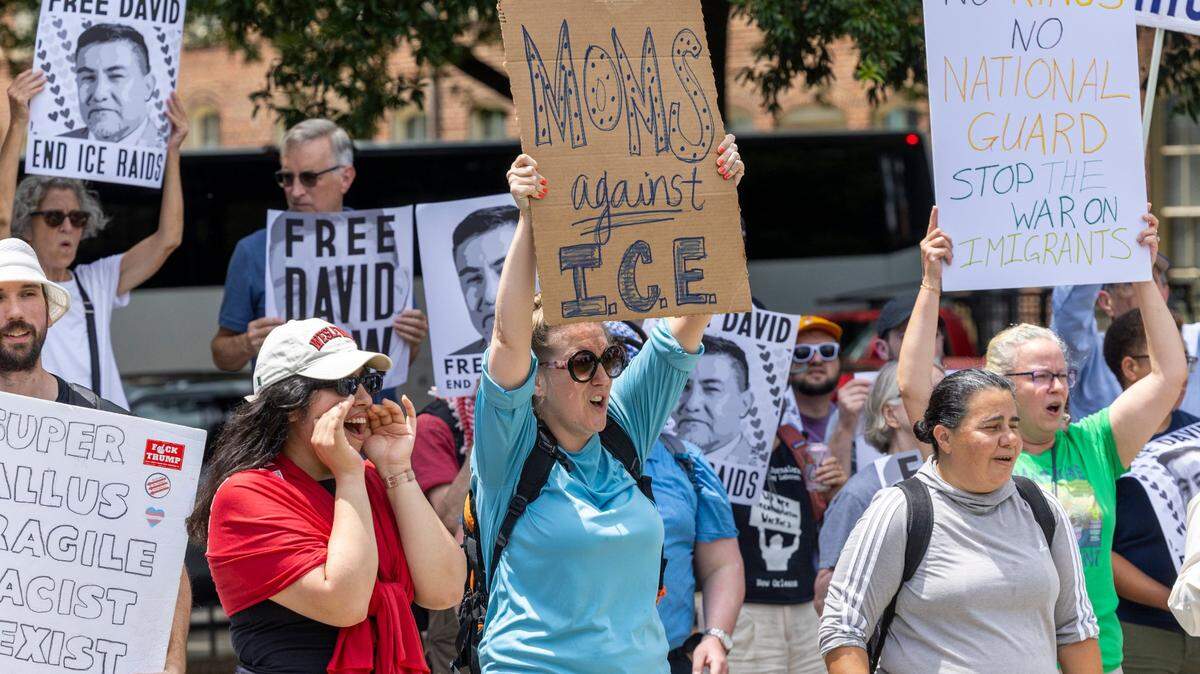
As people gathered in Los Angeles Monday to protest President Trump’s crackdown on undocumented immigrants, others gathered at Raleigh’s Moore Square in a show of solidarity.
What was striking about the Raleigh event was the joining of worker rights with immigrant rights. The event was organized by the Union of Southern Services Workers in response to the arrest of David Huerta, president of the Service Employees International Union in California. Huerta was injured and arrested by federal officers on Friday during an immigration enforcement action outside a Los Angeles-area Home Depot. He was released Monday.
Nikki Marín Baena, co-founder of Siembra NC, a Latino advocacy organization in North Carolina, attended the Raleigh gathering and was impressed by the range of people there. “It was very heartening to see all these people who are not immigrants care about what is happening,” she said. “And not only care, but connect it to their own struggles.”
One of those who connected with the immigrants’ cause is TaShira Smith, a 34-year-old African American from Durham and a member of the Union of Southern Services Workers. Smith, a concessions worker, said she feels a bond with all minorities who often do hard and low-paying work.
“Us Black and brown workers are the heart and soul of these corporations,” she said. “If you do away with them or us, then how would you run your corporation?”
Smith continued, “These businesses could not run without us. So pay us, and stop harassing people who don’t need to be harassed.”
It’s telling that the Los Angeles protests began when Immigration, Customs and Enforcement (ICE) officers moved to arrest not known or suspected criminals, but rather a group of day laborers looking for work outside a Home Depot.
The circumstance shows how the Trump administration’s stepped up arrests and deportation of immigrants also removes necessary workers. Apart from the moral and legal issues of immigration, the crackdown may soon affect the labor supply and the economy.
A May jobs survey by NFIB, an advocacy group for small and independent business owners, showed a continuing shortage of workers. About half the businesses responding had openings, mostly in construction, transportation and manufacturing.
Gregg Thompson, NFIB’s state director for North Carolina, said in a news release, “Our members say they want to hire and grow their businesses, but there just aren’t enough qualified job applicants.”
A recent Wall Street Journal editorial included an analysis that found that in the first four months since Trump took office, the nation’s immigrant population has been shrinking at a rate of 193,000 people a month. “Fewer immigrants mean fewer workers to fill job openings, so there will be a cost in future growth from the Trump Administration’s border closure and deportation roundups,” the editorial said.
Marín Baena said the type of raids seen in Los Angeles and elsewhere have not yet hit North Carolina, but there is a rising fear among Latinos. Her group’s hot line received 293 calls last week amid “a spike in rumors about ICE sightings.”
“The rumors themselves can keep people from going to work or taking their kids to school,” she said.
Smith has seen that fear among her co-workers and three Latino families that moved out of her apartment complex abruptly.
“They’re scared, terrified. And I don’t blame them,“ she said. “They come thinking they are going to get a better life and now they are not sure what to do.”
Creating fear may be the aim of the immigrant raids, but it’s also creating a sense of unity among essential workers. If they choose, they could show by their absence how important they are to the economy.