
A disputed report exposes the NC auditor’s flawed approach to his job | Opinion
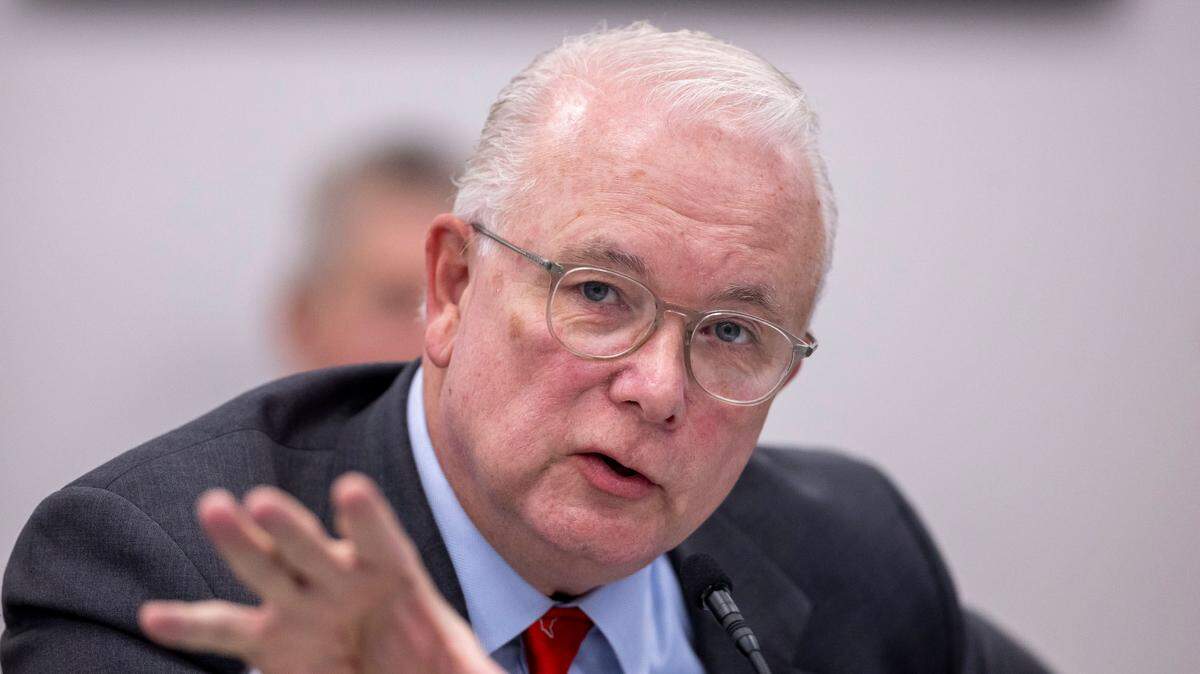
State Auditor Dave Boliek’s June 4 “rapid response special report” grabbed attention.
It said that a state-run community care station in Swannanoa that provided restrooms, shower facilities and laundry services for victims of Hurricane Helene had spent money so prodigiously that the average daily operating cost was $145,217. It estimated that the cost per load of laundry was $220.
The report said, “The total estimated cost of the Community Care Station was $27.4 million over the 189 days it was open.”
In addition to the center’s average daily cost, the report said that general workers at the center were paid $87.30 an hour and managers earned $145.50 an hour on top of a $215 per diem.
But state Emergency Management officials say those surprising costs are inaccurate. In touting his supposed laundry expose’, Boliek got caught in his own spin cycle.
Ray Gronberg described the situation last week in his newsletter, the North Carolina Tribune. He quoted Matt Calabria, executive director of the Governor’s Recovery Office for Western North Carolina, who said the auditor’s report conflated the staffing costs of the Swannanoa center with other care centers across the hurricane-stricken region.
“Although you might have been given the impression that the staffing costs provided were for one site, as we understand it, the costs were actually for numerous points of distribution and functions throughout western North Carolina, not just for the one site,” Calabria said.
The auditor’s report said the staffing costs were not included in calculating the average daily cost of the center.
But Brian Haines, a spokesman for the Division of Emergency Management, said the report’s calculation about the cost of laundry “is not accurate” because it conflated laundry costs with the costs “a host of services.”
Officials in Gov. Josh Stein’s administration are also miffed by the notion of the auditor issuing these rapid response reports in his first year in office. Unlike actual state audits, these quick takes are not required to include a response from the targeted agency. In the community care center case, the Division of Emergency Management was not given the opportunity to review the report prior to it being published.
Indeed, the report includes a footnote that says it is not “in accordance with generally accepted government auditing standards.” If it were, the report on the care center may have been less dramatic. As it is, it looks like a Republican auditor trying to embarrass a Democratic governor.
Nonetheless, the auditor’s office is not conceding any inaccuracy and said it plans to do more rapid response reports.
“While new to North Carolina, these types of special reports are common practice for other state auditor offices,” said spokesperson Randy Brechbiel. “We will continue to issue these reports in an efficient and timely manner, bringing transparency to all levels of government across North Carolina.”
In one respect, it’s encouraging to see Boliek bring new energy to the auditor’s office and seek more resources for its operations. Under longtime auditor Beth Wood and during the brief tenure of Jessica Holmes, who was appointed to the post after Wood resigned in late 2023, the office was too low key and uncovered few major problems.
But Boliek has undercut his role as a reformer by being openly partisan.
A new state law passed by the Republican-controlled legislature transferred the appointment power for the State Board of Elections from the governor to the auditor. A split three-judge panel ruled in April that the law is unconstitutional, but an appeals court allowed it to take effect on May 1, pending the outcome of appeals.
Boliek joined in this dubious legal situation. When Stein asked the state Supreme Court to rule quickly on the legality of the new law, Boliek asked the court to reject the governor’s request.
The fight over the law’s legality is between the governor and Republican legislative leaders. Boliek shouldn’t be active in the case. As a supposedly even-handed reviewer of government operations he should let the legal process run its course and then abide by the result.
Instead, he has encouraged the power grab and taken a severe partisan turn with his new and still legally uncertain appointment authority. Boliek appointed a five-member State Board of Elections with a majority of three from his party, just as governors have traditionally done. But Boliek’s choices included a former state senator who engineered gerrymandered maps while in the Senate and the former president of the Civitas Institute, a conservative think tank.
The board’s new Republican majority then fired the highly regarded state director of elections and replaced her with a former counsel to the state House Speaker, whose main qualification appears to be his ties to Republican legislative leaders who have a notorious record of gerrymandering.
State and local governments spend massive amounts. No doubt some of it involves waste and fraud. To find it, North Carolina needs an auditor who is a fair-minded watchdog. Instead, it has one who’s eager to be a partisan player.
Correction: An earlier version of this column indicated that the auditor’s report said that high staff pay contributed to the daily operating cost at the Swannanoa care center. Staff pay was not included in the calculation.
This story was originally published June 15, 2025 at 4:30 AM.