
In North Carolina, Democrats have an identity crisis | Opinion
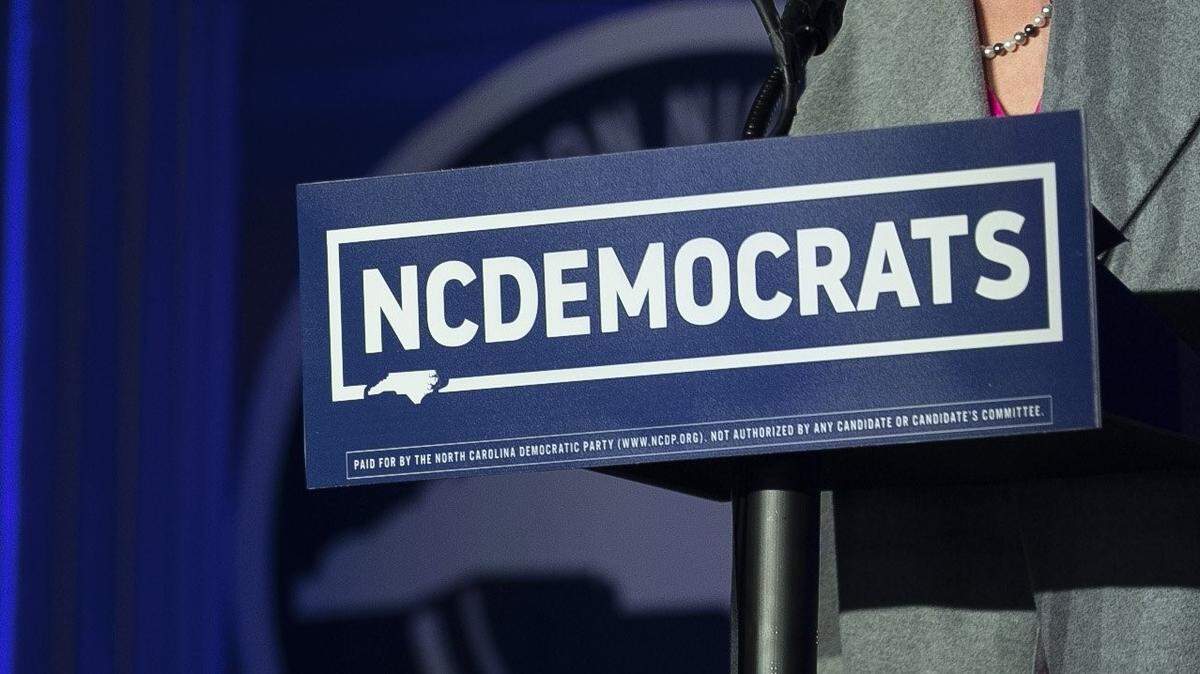
On a Monday evening, Democratic leaders were in Martin County talking to voters about hospital closures and health care deserts.
By that Sunday, they were back in Raleigh hosting a drag brunch — scheduled for the same hour most of those rural voters were in church.

It’s a revealing snapshot of the North Carolina Democratic Party in 2025. Here and nationally, Democrats are in a quiet identity crisis.
They want to win back rural voters who’ve swung hard toward Republicans. But they’re also tethered to a base that demands loud affirmation on social issues, many of which feel alien, or even antagonistic, to those same rural voters.
Can Democrats do both? Can they be two things at once?
Walking and chewing gum
I asked that question to Anderson Clayton, the 27-year-old chair of the N.C. Democratic Party. She, of course, says yes.
“I think that there is a way to walk and chew gum at the same time,” she told me. It’s a telling metaphor. It acknowledges the tension but insists both goals can coexist.
Clayton, elected two years ago, campaigned on reconnecting with rural voters. She grew up in Person County and believes Democrats have mistakenly ceded ground to the GOP.
The Martin County town hall in Williamston was part of the party’s “Rural Listening Tour,” a summer-long push into places like Clinton, Trenton, Jacksonville and Edenton. These are areas that once voted blue, but grow redder each cycle.
Martin County is particularly emblematic. Situated between Rocky Mount and the Albemarle Sound, it was a Democratic stronghold as recently as 2012. Today, Democrats still outnumber Republicans two-to-one on the rolls. But Trump has carried it three times in a row, and Republicans now practically sweep local races.
“We haven’t just lost rural voters,” Clayton said. “We’ve lost rural Democrats.”
Some are skeptical. Others, disillusioned. Many no longer recognize the party they grew up in. That’s what the listening tour aims to fix.
“We show up, we have a conversation, and we keep coming back,” Clayton said. “Can we show people that Democrats are not these folks out of Washington, D.C., that Fox News and Republicans have painted a picture about?”
But that’s harder when the state party is doing the painting, too.
A few days after that town hall, Democrats promoted a Sunday morning drag brunch featuring a Durham-based “trans masc drag king” who recently posted about “stomping on all the fascist faces.”
In theory, rural voters might tolerate drag brunches in Raleigh if they believe Democrats are also fighting for their hospitals and roads. But when both messages land in the same week, the cultural one tends to stick. And no number of town halls may be enough to reset that impression.
A party split by symbolism
National Democrats are grappling with the same dilemma. After their bruising 2024 losses, many are asking whether cultural overreach helped cost them the election.
Trump didn’t just campaign on the economy: He spent $200 million portraying Democrats as culturally extreme. “Kamala is for they/them. President Trump is for you,” one of his most effective lines went.
Democrats mostly stayed quiet. Now some, like California Gov. Gavin Newsom and Massachusetts Rep. Seth Moulton, are calling for moderation on hot-button topics like transgender athletes in youth sports.
In North Carolina, that debate is playing out in real time. Earlier this week, Senate Republicans passed a bill codifying a binary definition of sex and limiting gender-related accommodations in schools and prisons. Just four Democrats voted no — all from safe urban districts. The rest refused to vote at all. I reached out to several rural Democrats to discuss it, and none responded.
All that silence is telling. Rural and suburban Democrats know their voters may be open to Medicaid expansion or school investment — but not the cultural identity the party increasingly projects.
Clayton’s tightrope
Clayton isn’t backing down.
“If someone’s looking for a party chair who’s going to back down on standing with the LGBTQ population, they’re looking for the wrong girl,” she said. “Our party’s got an obligation to stand up for people that are being attacked.”
But she also knows what resonates in places like Jacksonville and Trenton: jobs, health care and trust.
I can’t help but think Democrats will find it impossible to campaign as two different brands. They can’t be rural and urban, populist and progressive, quietly pragmatic and loudly performative all at once.
It’s getting harder to live one political identity in downtown Durham and another in Duplin County. Social media collapses the distance, and voters see everything.
If Democrats want to win back the places they once owned, they’ll need more than listening tours. They’ll need message discipline.
Otherwise, voters will keep deciding for them which version of the party is real — and which is just passing through.
This story was originally published June 29, 2025 at 5:00 AM.