
I see the devastation distracted driving causes. Two concrete ways to stop it | Opinion
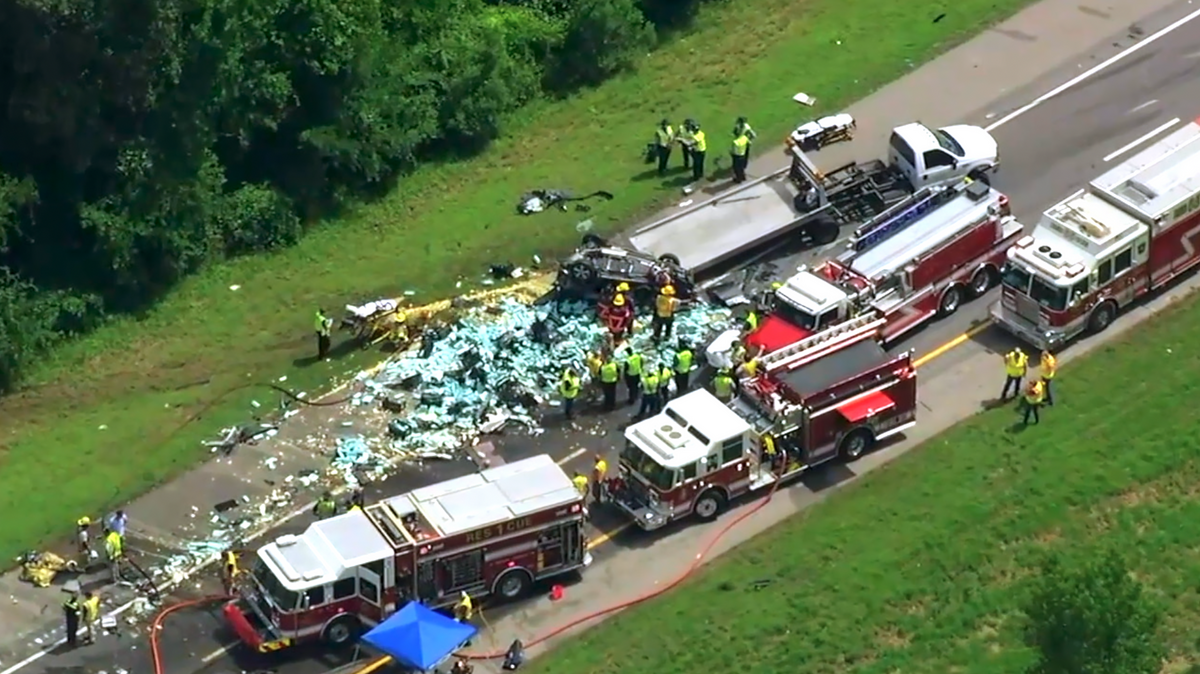
Last year, an 18-wheeler plowed into slowed traffic on Interstate 95 near Wilson, North Carolina. The collision unleashed a deadly chain reaction that killed five people. The National Transportation Safety Board recently confirmed what many suspected: the truck driver was on his phone.
This wasn’t a freak accident. It was a foreseeable, preventable tragedy. And it should serve as a wake-up call to lawmakers, corporations and every person who gets behind the wheel.
As a personal injury attorney, my colleagues and I have represented too many families shattered by distracted driving. But there’s something particularly chilling about distracted truck drivers. An 80,000-pound vehicle doesn’t just crash — it devastates and destroys. When the pilots of these giant rigs drive distracted, the consequences can be catastrophic. And yet, our legal system is struggling to meet this moment.
The truck driver now faces five counts of misdemeanor death by vehicle. Let that sink in. Five lives lost, and the charges carry a maximum sentence that’s disturbingly light. For grieving families, that’s not justice. And for future would-be offenders, it’s hardly a deterrent.
We need to do better by every person who gets on an American roadway. That means pushing for stiffer criminal penalties when commercial drivers cause death through distraction. Driving an 18-wheeler requires heightened responsibility, and the law should reflect that.
But it’s not only about the driver. When someone dies in a distracted driving crash, we must ask a harder question: Who else allowed this to happen?
In many cases, the trucking company may share the blame. Did they cut corners on training? Turn a blind eye to risky behavior? Push drivers to meet impossible delivery schedules, incentivizing them to multitask behind the wheel? Civil lawsuits are often the only way to hold these companies accountable and prevent repeating the same deadly mistakes.
In one prominent North Carolina case, a trucker, while talking on his cell phone, rear-ended a driver. A subsequent lawsuit ended when a Triad-based manufacturing company settled, not only paying $3.75 million but also banning on-the-road phone use among its drivers. Cases like this show civil lawsuits can deliver justice and systemic change. And they must remain an available recourse when criminal penalties alone fall short.
This kind of accountability matters because it changes behavior. And behavior needs to change. Which brings me to one more party that’s been far too quiet in this conversation: Big Tech.
Tech companies have long had the tools to prevent distracted driving. Apple, for instance, holds a patent on technology that could disable texting while driving. Yet, as The New York Times reported, the feature has never been widely implemented. The National Transportation Safety Board has urged mobile phone makers to do more with little response. When will we hold Silicon Valley to standards of safety and accountability?
As far back as 2008, Apple applied for a patent on technology that could disable texting while a phone was in a moving vehicle. Yet, for years, these tools weren’t implemented. Even now, most anti-distraction features are optional and easily overridden.
Why aren’t these features mandatory? Why aren’t they standard on all phones? Why haven’t tech companies acted more aggressively, especially knowing the death toll?
If a manufacturer knew its product could cause fatal harm, and failed to implement basic safety protections, would we let them off the hook? Of course not. So why do we give phone makers a pass?
It’s time to rethink liability. Tech companies should be held responsible — legally and morally — for sitting on life-saving tools. Courts have begun exploring this idea, and so should legislators.
None of this will bring back the five lives lost near Wilson. But we can honor them and countless others by refusing to treat distracted driving as an inevitable byproduct of modern life. It’s not. It’s a choice. And it’s time we demanded accountability from everyone making that choice possible.
Jeremy Maddox is an attorney at The Law Offices of James Scott Farrin, one of North Carolina’s largest plaintiffs’ law firms.
This story was originally published August 21, 2025 at 7:00 AM.