
Do you know what Sept. 17 is? Trump and his cohort are certainly violating its spirit | Opinion
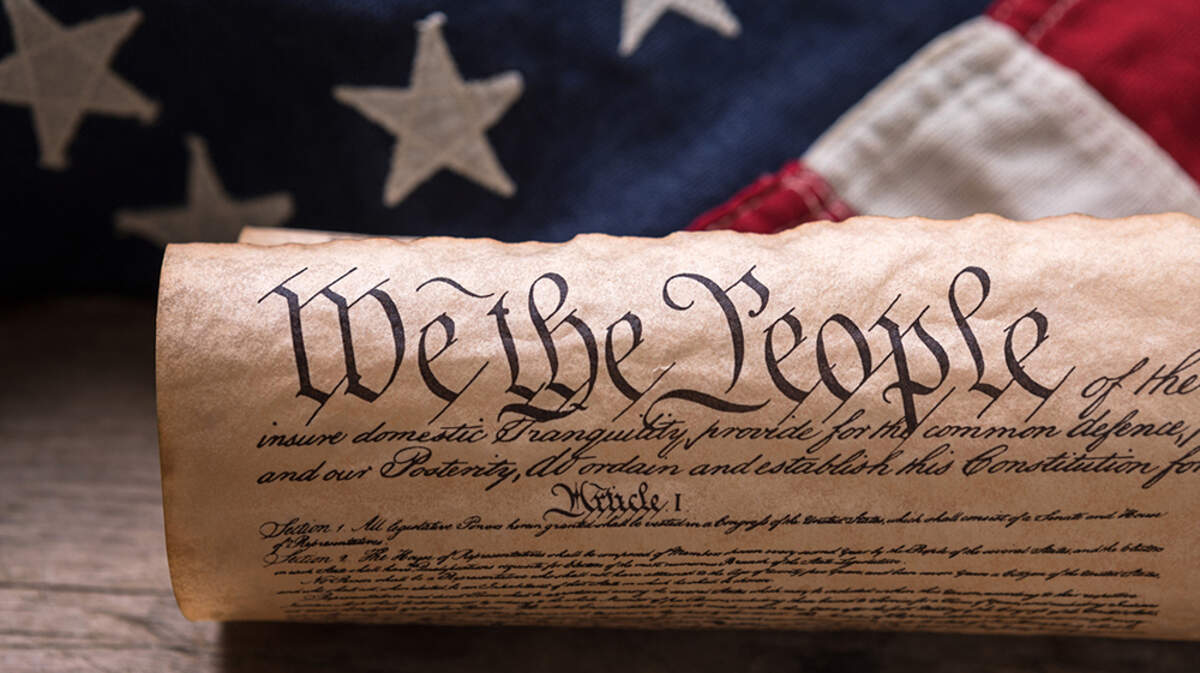
Wednesday, September 17 is Constitution Day in the United States. Ponder that. There is even a Department of Education regulation requiring that “Each educational institution that receives Federal funds for a fiscal year is required to hold an educational program about the U.S. Constitution for its students on September 17.” To my knowledge, it has not yet been rescinded.
The website of the United States Senate declares that in 2004 Sen. Robert C. Byrd of West Virginia sponsored legislation designating Sept. 17 as Constitution Day, “requiring public schools and government offices to provide educational programs to promote a better understanding of the Constitution.”

It reports further that Byrd launched the Senate’s first Constitution Day celebration in 2005 with a speech in the historic Senate Caucus Room asserting:
“Just as the birth of our nation depended on the quality, knowledge and experience of the men (Byrd’s words) who gave it life, its continued vitality depends on . . . the personal commitment of each and every one of us to learn, to understand, and to preserve the governing principles that are set forth so clearly and powerfully in the text of our remarkable Constitution.”
But the Senate website goes further:
“Written in 1787, ratified in 1788, and in operation since 1789, the United States Constitution is the world’s longest surviving written charter of government. Its first three words – “We The People” – affirm that the government of the United States exists to serve its citizens. For over two centuries the Constitution has remained in force because its framers wisely separated and balanced governmental powers to safeguard the interests of majority rule and minority rights, of liberty and equality, and of the federal and state governments.”
The Senate document then gets more specific.
“The United States enjoys a representative form of government, shaped by three separate branches as established in the Constitution:
“Article I states that ‘All legislative Powers herein granted shall be vested in a Congress of the United States, which shall consist of a Senate and a House of Representatives.’
“Article II states that ‘The executive Power shall be vested in a President of the United States of America.’
“Article III provides for a ‘judicial Power of the United States.’
“A system of checks and balances, which the Constitution also sets forth, limits the powers of each branch.”
These words, I’ll concede, seem almost foreign in our times. Quaint. Passé. Hardly compatible with Project 2025. Breathtakingly at odds with the behavior of the United States Senate or the House. Hardly in tune with the Roberts Court’s astonishing subservience. Impossible to harmonize with masked ICE agents sweeping folks off the streets and National Guard troops occupying our cities. Maybe we’ll leave off the celebration this year.
The site sums up:
“More than two centuries after its ratification, the United States Constitution remains a vital and living document, strengthened by amendments, serving as both guide and protector of U.S. citizens and their elected officials. It has survived civil war, economic depressions, assassinations, and even terrorist attacks, to remain a source of wisdom and inspiration.”
The Senate website doesn’t tell us, of course, that we’ll survive this. Maybe Donald Trump, John Roberts and John Thune will ask that it be scrubbed, modernized, whitewashed. Like the Smithsonian.
Contributing columnist Gene Nichol is a professor of law at the University of North Carolina-Chapel Hill.