
After Kirk’s slaying, a UNC class weighs how to debate without danger | Opinion
AI-generated summary reviewed by our newsroom.
- Professor launched a course on media threats before Charlie Kirk's campus killing.
- Students voiced concern over online polarization and lack of policy discourse.
- Kreiss stressed social media amplifies division but reflects deeper political trends.
Daniel Kreiss, a journalism professor at the University of North Carolina at Chapel Hill, created a course in the spring that turned out to be a prediction and, perhaps, a remedy. He titled it: “Navigating threats to media and expressive freedom.”
The title resonates particularly with what has happened since the Sept. 10 killing of conservative activist Charlie Kirk at a Utah university. Some who turned to social media to condemn Kirk’s views or mock his death have been fired, expelled or suspended after being called out by Kirk’s supporters.
On Tuesday, Kreiss put that turmoil and tension before 35 students enrolled in his presciently titled course. It wasn’t a time to teach. It was a time to talk about political talk.
The class includes students of diverse backgrounds and political views, Kreiss said, and many were unhappy with the vitriol that characterizes political expression, especially on social media.
“A lot of people expressed frustration with the lack of substantive political discourse, with the lack of leadership, with the lack of empathy, with the lack of real, hard policy conversations in a substantive way,” Kreiss said.
The class helped fill that gap. “I was most heartened by the fact that we all sat in a room together and we talked for an hour and 10 minutes,” he said.
The students disagreed about what norms should govern political speech, especially in an online environment that promotes extreme and combative statements. But there was agreement that after Kirk’s killing there is a need for a more temperate approach.
“We have to respect one another enough to be able to listen as well as to be able to make an argument that’s honestly felt, that’s not meant to coerce someone, or misrepresent things. These are all the things that are missing from social media,” Kreiss said.
Why people risk backlash by posting on sharply divisive issues is more about seeking connection than confrontation, Kreiss said.
“A lot of posting on social media is done for social reasons,” he said. “It’s about expressing community with a very particular audience in mind. One of the ways that you signal your affiliation with a particular group is by adding your voice on big issues of the day or big moments of the day.”
Kreiss said Utah Gov. Spencer Cox, a Republican, “connected with a lot of people” who are discouraged by how social media drives division. After Kirk was fatally shot as he debated students at Utah Valley University, Cox told Utah’s college students, “Right now, it may feel like rage is the only language in our politics, but you have the power to choose differently. Every person you meet is more than a party, or more than a label, more than a post online. Everyone deserves dignity and respect.”
But Kreiss said political polarization and the potential for violence are generated by more than social media and the hunger for likes and clicks and the reinforcing effects of algorithms that feed social media users only views they support.
“It would be easier if we could solve all our problems by solving our platform problems,” he said. “But most of the research is pretty clear on this. What’s happening on social media is not taking place in a vacuum.”
Kreiss said politicians cater to what is getting or will get a strong response on social media, and the interaction shapes both online debate and real-world political actions.
“It’s this sort of symbiotic relationship where this politics of attention is feeding off each other and it’s really hard to get out of that cycle once we’re in it,” he said.
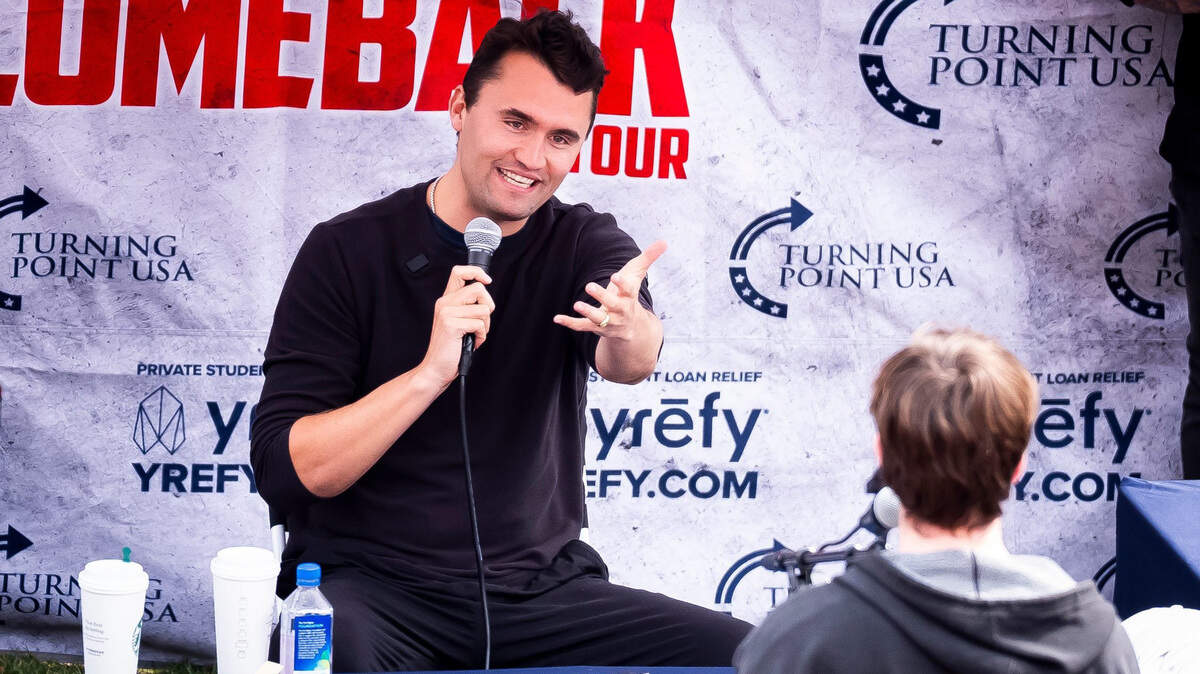
Kirk’s supporters say he practiced the kind of open debate that could help bridge political divides. His critics say he was more interested in holding up liberal students to ridicule, policing the speech of liberal professors and profiting handsomely from it.
But either way, Kirk was right to take his debates to college campuses, where he gave students a test of their own beliefs. Now, they are debating how to debate.
After seeing his students deeply engage in how to get past rancor to reach understanding, Kreiss said, “It gives me hope that it’s possible.”
Associate opinion editor Ned Barnett can be reached at 919-404-7583, or nbarnett@newsobserver.com
This story was originally published September 18, 2025 at 10:31 AM.