
In NC, it’s all quiet on the public corruption front. That’s worrisome. | Opinion
AI-generated summary reviewed by our newsroom.
- State oversight and reporting reveal problems, but prosecutions remain rare.
- Anonymous donations, legislative secrecy and budget opacity expand corruption risk.
- Declining local journalism and weakened enforcement leave misconduct unchecked.
State Auditor Dave Boliek’s office recently issued a news release headlined: “$32.99 Stuffed Flounder, Fast and Loose Spending by Elizabeth City Officials Uncovered in Investigative Report.”
It was another in the first term auditor’s new-sheriff-in-town approach to scrutinizing state and local spending — right down to what city officials had for dinner. He’s looked into inefficiencies at the Division of Motor Vehicles, questioned spending on Hurricane Helene relief and cited delays in food stamp payments.
But what’s remarkable in North Carolina these days is how much is not being investigated. It’s not that there isn’t plenty to look into.
The News & Observer’s Dan Kane has led a Secrecy & Power series that has revealed potential public corruption without a response from oversight agencies. Election law watchdog Bob Hall also has detailed what appear to be major problems with campaign contributions. The State Board of Elections, the Wake County District attorney, the U.S. Attorney for the Eastern District and others should be interested in these revelations. Maybe they are investigating behind the scenes, but for now North Carolina is officially scandal free.
That wasn’t always the case. The state had regular episodes of investigations into current or former public officials.
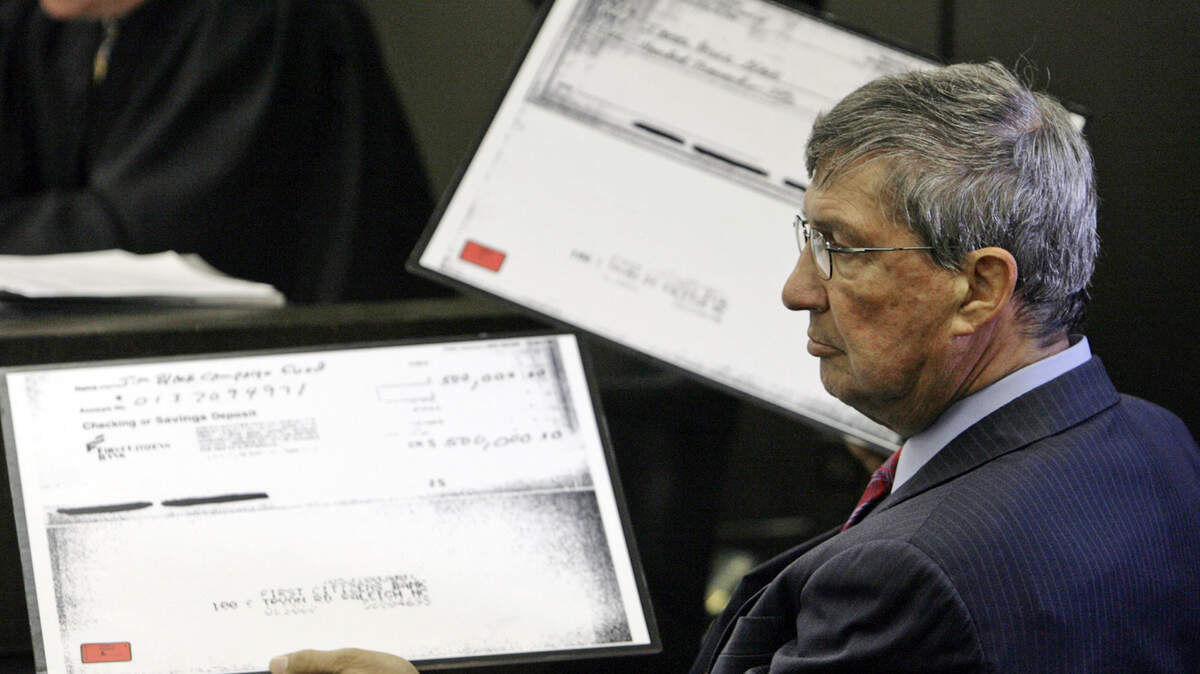
In 2003, Meg Scott Phipps, the former state commissioner of agriculture, was found guilty of perjury and obstruction of justice charges and soon after pled guilty to three more federal charges. In 2007, former House Speaker Jim Black, a Mecklenburg County Democrat, was sentenced to 63 months in prison for accepting money in exchange for legislation. In 2019, Republican Robin Hayes, a former congressman and former head of the state Republican Party, pleaded guilty to lying to FBI agents investigating an attempt to bribe the state insurance commissioner.
Sometimes the pursuit of public corruption charges was so aggressive it seemed excessive. In 2010, former Gov. Mike Easley, a Democrat, was convicted of a felony after he agreed not to contest a charge that he filed a false campaign finance report.
And there was the federal trial of former Sen. John Edwards. He faced campaign finance fraud charges related to his hiding of an extramarital affair during his 2008 run for the Democratic presidential nomination. He was acquitted on one count and a mistrial was declared on five other charges. Edwards was not retried.
Since then, there hasn’t been much. Have all of North Carolina’s political actors turned pure?
Bob Phillips, executive director of Common Cause North Carolina and a longtime observer of the General Assembly, doesn’t think so. He said it’s more likely that public corruption has actually grown with the increase in anonymous, unlimited political contributions and more legislative secrecy. The state budget bill is shaped with virtually no public review and no transparency about which lawmaker is inserting provisions on policy changes and allocations. Republican lawmakers have exempted members of the General Assembly from public records laws.
“It’s just impossible for things that aren’t proper to be avoided when there’s that much money out there,” Phillips said. “It’s all about one thing — influencing the process, buying access. Nothing is different from when Jim Black was speaker. In fact, it’s worse with the amount of money coming into the system.”
If so, why aren’t we seeing more cases of public corruption?
One reason may be the changes in the media. There are fewer reporters scrutinizing government officials. And when they do, the reporting tends to dissipate in a fractured media environment. Local newspapers do not set the public agenda as they once did.
Another reason is that the public appears to have grown numb to scandal. Offenses that triggered a powerful response during the Watergate era now are accepted, particularly if it involves a member of one’s political tribe. President Donald Trump’s open enrichment of himself and his family while in office is Exhibit One.
Travis Fain, a former state government reporter at WRAL-TV who regularly broke stories about questionable actions by public officials, said he gave up reporting and became a communications consultant to increase his income, but also because his revelations brought little response from people other than those who closely follow government news. Other media outlets, stretched for reporting resources, often wouldn’t pick up or follow-up what he brought to light.
“That’s why I left journalism. I just felt like enough people weren’t paying attention or didn’t care,” he said. “It was like, ‘Why am I doing this if people don’t care?’ ”
Ultimately, it’s not journalism that holds people to account. Journalists can shine the light, but then institutions and agencies need to act.
That’s not happening much anymore. The U.S. Justice Department’s Public Integrity Section has been significantly reduced and inspector generals across the federal government have been fired. At the state level, oversight agencies appear less inclined to discipline officials or pursue public corruption cases.
It’s fine that Auditor Boliek is looking into wasteful spending and inefficient operations. But in a time when politics is flooded by money, the government is growing less transparent and public officials have become less accountable, there’s reason to worry why more serious misdeeds are not being investigated and prosecuted. It’s not, as Kane and Hall have shown, because there is nothing there.
Associate opinion editor Ned Barnett can be reached at 919-404-7385, or nbarnett@newsobserver.com
This story was originally published November 9, 2025 at 4:30 AM.