
This NC Republican is smartly and quietly adding billions to a key state fund | Opinion
AI-generated summary reviewed by our newsroom.
- Briner shifted cash into stocks and loans, raising nine-month investment returns to 11%.
- He restored use of Wall Street managers after Folwell cut them, improving performance.
- Briner seeks partial legislative aid and premium hikes to stabilize State Health Plan.
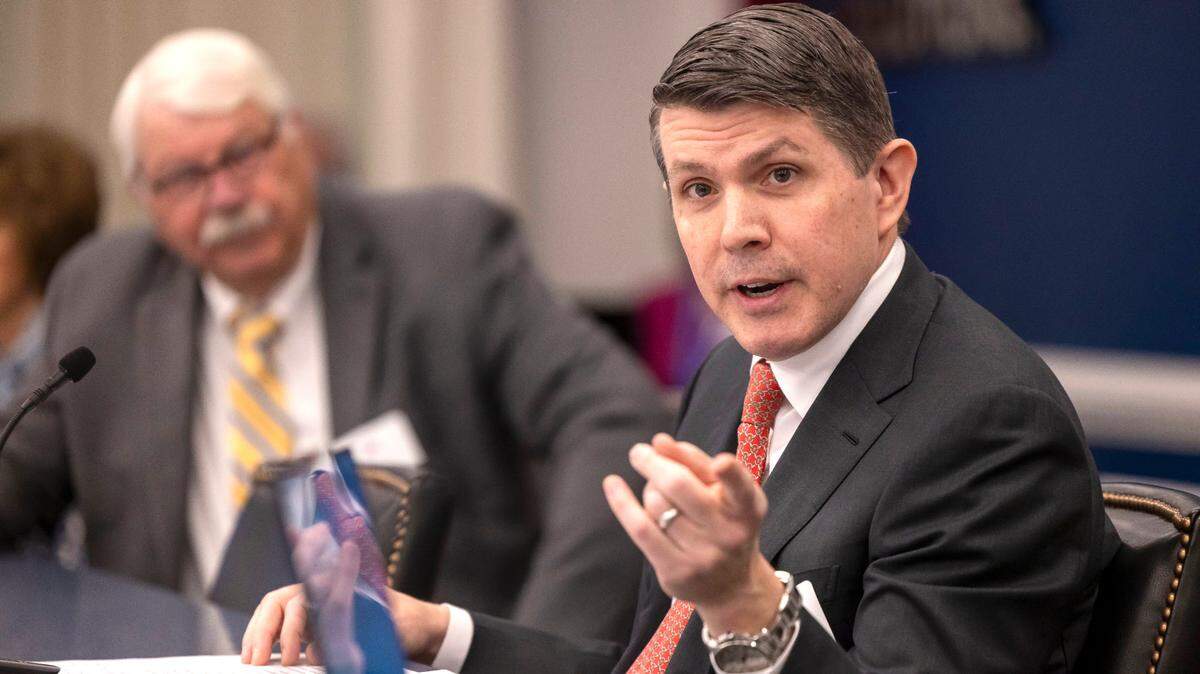
Brad Briner is off to a strong start as state treasurer, and the state is better for it.
The 48-year-old Republican is 10 months into his first term and already producing big gains in the state’s pension investments while also stabilizing the underfunded State Health Plan.
Briner, who took public office after managing investment assets for billionaire Mike Bloomberg, is surprised by how rewarding he’s found public work. In addition to boosting the state’s investment returns and pushing health care providers to hold down costs, he found $170 million in cash sitting in an overlooked line item. The first Friday of the month he issues a newsletter “Finance Friday” that guides North Carolinians on personal finance. “I can’t tell you how much fun this is for me,” he said.
It didn’t start that way. Shortly after his election, he attended a briefing on the State Health Plan and learned it was expected to be $507 million in the red in 2026. He said, “I sat there for half a day thinking, ‘What have I gotten myself into?’ “
Briner, who graduated from UNC-Chapel Hill as a Morehead Scholar and received an MBA from Harvard Business School, thrives on problem-solving, but he’s not keen on the politics that comes with his first elected office. “I like the work that I do,” he said. “Do I like the politics that surround every issue? Not all of it, no.”
Briner’s predecessor, Dale Folwell, a former Republican state lawmaker who served two four-year terms as treasurer, had a personal taste for risk — he was a former motorcycle racer — but he managed state investments with extreme caution. He cut contracts with outside money managers and put an unusually large share of available investment funds into cash and bonds.
As a result, North Carolina missed out on a booming stock market. Under Folwell, the state’s five-year return through 2022 — 5.7% — ranked last in the nation. What enabled that approach was that North Carolina was one of only three states where the treasurer could dictate investment plans as a sole fiduciary.
Briner backed a state law that will turn investment decisions over to a five-member board chaired by the treasurer starting in January. In the meantime, he has taken much of the cash that Folwell had squirreled away for fear of a stock downturn and put it into stocks and loans. The change has paid off. The nine-month return on the state’s $139 billion pension fund has jumped to 11%, growing by more than $5 billion in the last quarter alone.
“I will tell you the portfolio today is not more risky than the one we found,” Briner said, “but it is earning a lot more money.”
It’s something of a role reversal for a Republican to be increasing state resources after more than decade of Republican lawmakers relentlessly cutting taxes and underfunding state services, but Briner said he is committed to “moving the needle” for North Carolina.
The treasurer’s work would be less complicated without also being responsible for the State Health Plan, a responsibility that most states assign to other offices.
Briner’s approach to stabilizing the plan is to ask the legislature for only a portion of the shortfall and to try to make up the rest by raising the plan’s premiums and by urging the State Health Plan administrator, Aetna, to press health care providers to accept lower reimbursement rates.
“We set up a situation where people have to compete for our business,” he said. “They have to get more efficient if they want to win the competition.”
Wesley Harris, a former Democratic state lawmaker who ran against Briner for treasurer, welcomes the higher investment returns, but he said the new treasurer hasn’t done as well with the State Health Plan.
Harris said Briner should have asked his Republican counterparts in the legislature to fully fund the plan. Instead, he said, the treasurer opted to raise premiums on “workers whose raises have not kept pace with inflation the past few years yet are now expected to pay a higher portion of their paycheck on health care.”
If he can keep revving investment returns and fix what seemed to be unfixable problems with the State Health Plan, Briner may have a political future beyond being state treasurer. But for now he’s focused on boosting the people’s investments, not his own political stock.
Associate opinion editor Ned Barnett can be reached at 919-404-7583, or nbarnett@newsobserver.com