
Republican NC election officials are already making it harder to vote in 2026 | Opinion
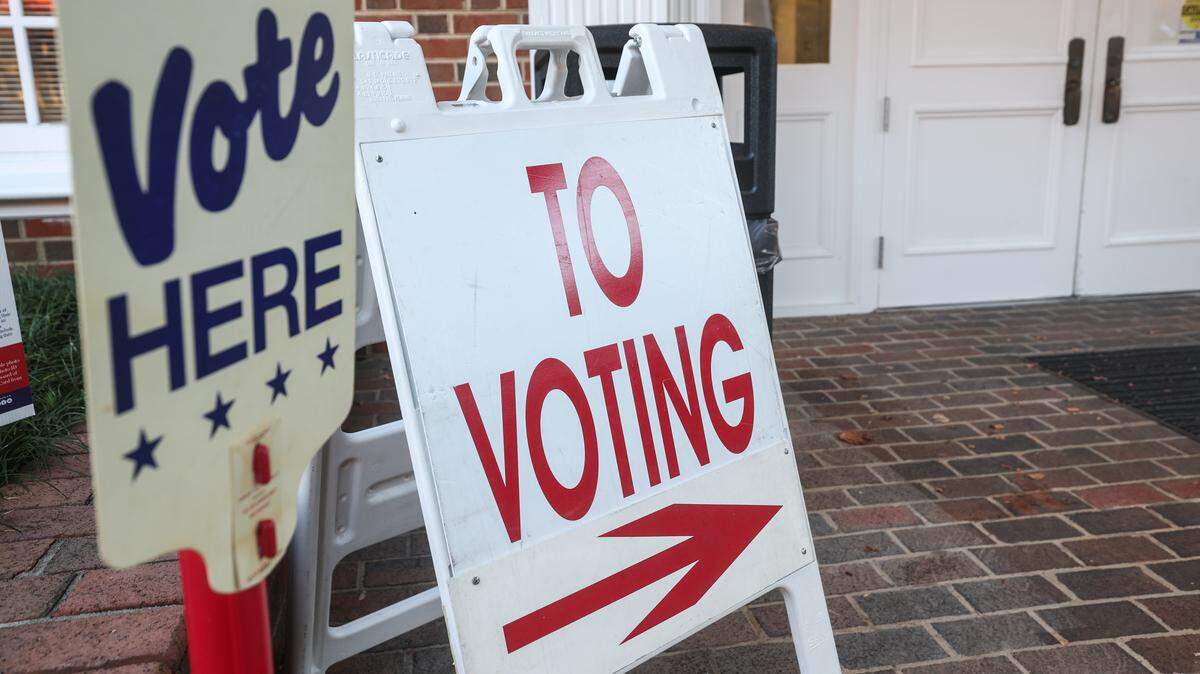
I was unsurprised to read that newly-Republicanized county election boards have begun taking steps to make it more difficult for students to vote.
In Jackson County, a new 3-2 Republican majority moved to eliminate a polling site at Western Carolina University that had been used for more than a decade. Chris Cooper, a WCU political science professor, published a report finding the site served an outsized proportion of young and diverse voters. Cooper found that, in 2024, the WCU polling site had the youngest average voter age of any in the state. No wonder it was time to do it in.
In Guilford County, Republican board members rejected a proposal to include early voting sites at UNC-Greensboro and North Carolina A&T. Board chair Eugene Lester explained: “Voting is a privilege … (it) requires citizens to actually take some action, to do some things to discharge a duty – and it may require some work on the citizens’ part.”
Some might find the “privilege” talk surprising. We generally think of a “right” to vote. It’s hard to tell, I’d concede, what Lester meant by it. We’re pretty well settled on the notion that once a state affords a right to vote, it must be applied in a way that complies with the rigors of the equal protection clause. Lester seemed to hint that North Carolina can sort of make it rough on some voters – require some work out of them. If so, that’s not how the Supreme Court would put it.
One of the most famous voting rights cases in our history was Harper v. Virginia (1966), invalidating a state poll tax. There, the justices wrote:
“Long ago, in Yick Wo v Hopkins (1886) this Court referred to ‘the franchise of voting as a fundamental political right, preservative of all rights. Undoubtedly, the right of suffrage is fundamental in a free and democratic society. Any alleged infringement must be carefully and meticulously scrutinized. (That) is the clear and strong command of our Constitution’s Equal Protection Clause. This is an essential part of the concept of a government of laws, and not men. This is at the heart of Lincoln’s vision of government of the people, by the people, and for the people.”
Not privilege talk.
It can no longer be a surprise, in North Carolina, to hear Republicans gloat about making it harder to vote. For at least much of the last half-century, that would have been deemed unseemly — anti-democratic, un-American, rejectionist of the aspirations of pluralist constitutional democracy. But, apparently, no longer.
Republicans have become so wedded to the degradations of gerrymandering, ballot access manipulation, biased ID requirements, false elector slates, and cash register politics that electoral cheating is now a central component — perhaps the central component — of their domestic political agenda. It’s perhaps to be expected, therefore, that Republican election officials would announce a mission to demand “some work” out of their adversaries, if they want to vote. I have little doubt that the same folks bristle at the foundational words of Harper v. Virginia. I’m also curious whether Republican clubs on North Carolina campuses support steps toward the disenfranchisement of their fellow students.
Of course, lots of us cheer now things that we never before thought would meet with American approval. The targeted, unilateral killing of purported drug smugglers on the high seas; the race-based seizure of Latino women and men from our streets, schools, churches, and workplaces; the secret shipment of residents to foreign torture chambers without even a hint of due process, the use of the pardon power to overcome and eliminate the obligations of an independent system of laws.
Who knew what we would become.
Contributing columnist Gene Nichol is a professor of law at the University of North Carolina-Chapel Hill.