
Trump’s policies could slow North Carolina’s rapid population growth | Opinion
AI-generated summary reviewed by our newsroom.
- Demographers expect North Carolina growth to continue in 2026 but slow.
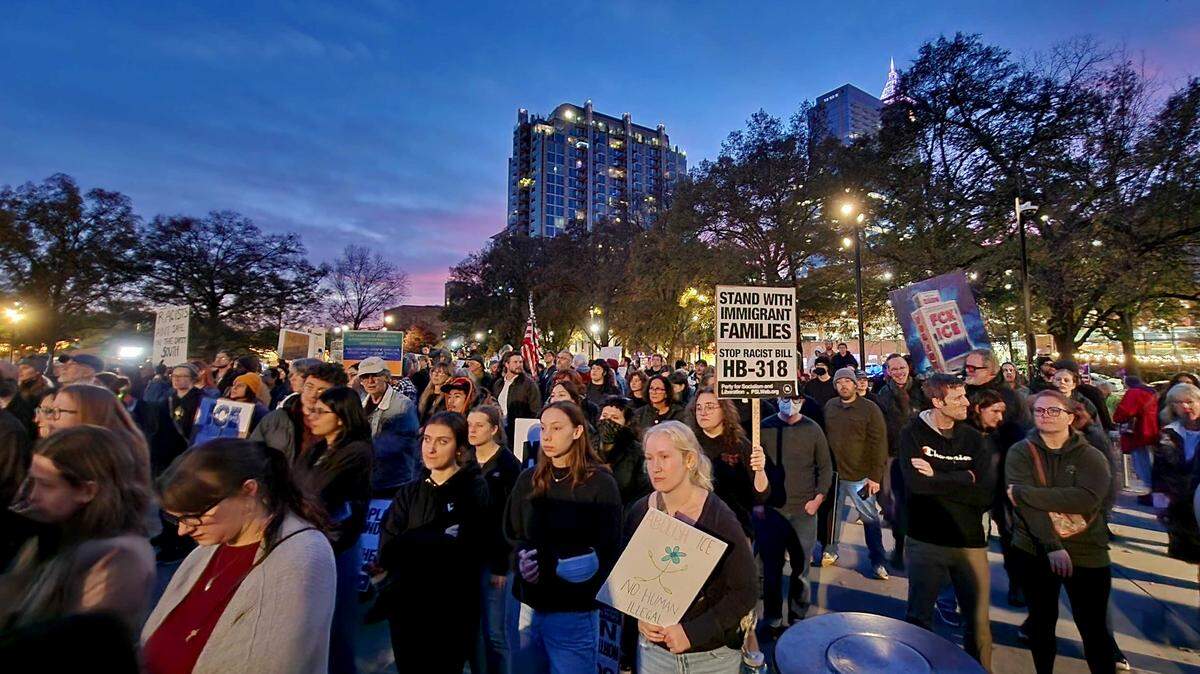
- Federal deportations and reduced legal immigration will lower foreign inflows.
- Decline in foreign born residents may hasten aging and shrink school rolls.
For those who track population patterns in North Carolina, predicting what the new year will bring was easy – just say there will be yet another year of rapid growth.
But as 2026 dawns, demographers’ crystal balls have grown cloudy. More growth is expected, but the Trump administration’s tariff and immigration policies likely will lower the state’s familiar trend lines. Just how much is still unknown.
Adding to the uncertainty is a lack of data about what happened in 2025. The federal government’s 43-day shutdown in the fall and cuts in the federal workforce have delayed the arrival of year-end Census reports on state populations. Those numbers won’t be in until later in January.
Still, it’s likely that the Trump administration’s crackdown on undocumented immigrants and the tightening of legal immigration will affect North Carolina’s growth through foreign immigration. At the same time, the effect of President Donald Trump’s tariffs on inflation and worries about affordability may slow movement within the U.S.
“The big challenge is what has been happening at the federal government level,” said State Demographer Michael Cline.
Cline expects that 2026 will see the state’s population — now just over 11 million — continue to rise, but at a lower rate. Since 2020, the state has added 605,000 people, the fourth-largest population gain in the nation.
Natural births have had little impact on that growth. About 95 percent has come from people moving into North Carolina from foreign countries or other states.
That pattern, Cline said, is “highly dependent on the international level on federal policy and on the domestic level on economic issues. That’s why I expect to see slower growth than in the last couple of years, not a loss, but just a slowing of that growth rate.”
Nathan Dollar, director of Carolina Demography at UNC-Chapel Hill, said federal immigration policies will affect North Carolina’s growth, but the extent is unknown.
“We have some demographic uncertainty right now because of immigration policies,” he said. “We’ve seen a rapid decline in the foreign-born population in the U.S. and, the data indicate, in North Carolina as well.”
The U.S. Department of Homeland Security announced on Dec. 10 that more than 600,000 undocumented immigrants have been deported since January 2025 and another 1.9 million have left the U.S. on their own.
Another factor impacting North Carolina’s population could come for the cuts in federal funding for scientific research. That could reduce the number of international students coming the state’s universities and the number of foreign scientists and tech workers employed in the Research Triangle.
Foreign-born residents are an important part of North Carolina’s growth and its economy. They account for 9.2% of the state’s population and make up 12.2% of the state’s labor force, according to U.S. Census figures.
According to Carolina Demography, about one in 10 North Carolina residents are foreign-born. The main country of origin is Mexico, followed by India. Among the 1 million foreign-born residents, almost half are naturalized citizens, some non-citizens are here legally and about 450,000 are undocumented.
While the Trump administration is trying to purge undocumented immigrants and reduce legal immigration, reducing the foreign-born population — a group that skews younger — will accelerate North Carolina’s aging pattern.
Cline said that even under current conditions there will be more people in North Carolina who are over 65 than those who are under 18 by 2032. Now that tipping point may arrive sooner.
Some rural school districts are already seeing a decline in their student populations, Dollar said.
“North Carolina’s population has been growing at a pretty steady clip. The big X-factor is whether we will continue to see that growth moving forward,” he said. “The decline in the foreign-born immigrants could have significant demographic implications.”
Associate opinion editor Ned Barnett can be reached at 919-404-7583, or nbarnett@newsobserver.com