
Can the GOP convince NC that Roy Cooper isn’t a moderate? | Opinion
“Moderate” might just be the most elastic word in politics.
When you hear it, your mind automatically goes to “centrist” — someone who takes a practical, common-sense approach that reflects the average voter. Someone who works across the aisle and lands somewhere in the middle on hot-button issues. But in today’s politics, that version of moderation barely exists.
Instead, the word “moderate” now mostly refers to a politician’s tone. It’s used to describe someone who’s calm, measured, and doesn’t make voters nervous. The policies don’t have to be middle-of-the-road. The candidate just has to sound like they are.
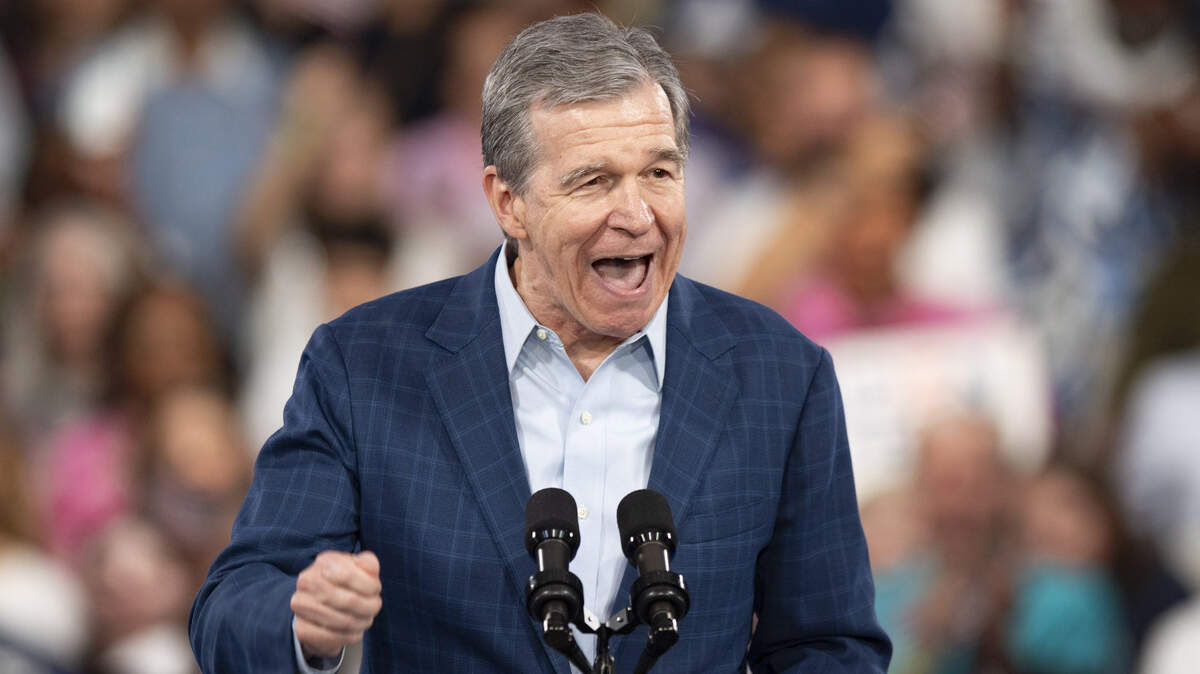
That’s former Gov. Roy Cooper. For decades, he’s built a political brand on steadiness, and it’s worked. North Carolina voters hear him and think “moderate,” whether the record matches or not.
If Republicans want any shot at keeping North Carolina’s Senate seat red, they’ll have to break that association. You can already see the lines getting workshopped in real time.
“My opponent, Roy Cooper, is a card-carrying member of that woke mob,” Republican frontrunner Michael Whatley said in a NewsMax interview. Arkansas U.S. Sen. Tom Cotton launched an ad campaign calling Cooper “dangerously soft on crime.”
The Republican strategists who host the popular Ruthless podcast made the case most bluntly: “There is no such thing as a moderate Democrat. He is case in point,” former Mitch McConnell aide Josh Holmes said. “He runs as, ‘Oh shucks, just one of the guys here in rural North Carolina, understanding your roots and everything.’ And he governs like a lunatic. An absolute lunatic.”
There’s plenty of truth in the underlying point. But in North Carolina, it’s still a tough sell.
The GOP’s argument is clearer than it sounds
You’d be hard-pressed to argue that Cooper governed moderately. He didn’t.
He kept the state under emergency powers for nearly 900 days. He built bureaucracies that collapsed under pressure. He blocked bills that would require sheriffs to turn violent criminals in the country illegally over to ICE. He vetoed just about every budget that included teacher pay raises, then tried to take credit for working with Republicans on those raises. He ousted moderates in his own party who didn’t follow orders. He centralized power, avoided blame, and aligned closely with national Democrats when it counted.
None of that is moderate. But I’m not the one Republicans have to persuade.
The voters who decide statewide races don’t experience Cooper as ideological. They experience him as familiar and safe. That’s why national Republicans aren’t just calling him liberal. They’re trying to discredit the whole category of “moderate Democrat” as a campaign tactic that doesn’t survive real governing power.
They point to what’s happening just over the border.
Abigail Spanberger was elected governor of Virginia with a message of affordability and pragmatism. But in the first weeks of her term, Democratic lawmakers introduced more than 50 new taxes and fees — on deliveries, gym memberships, dog walking, home repairs and more.
Some of those proposals won’t pass. The point is the pattern. Candidates campaign as moderates, and then their party governs like it has a mandate for everything it couldn’t say out loud during the campaign.
Republicans are betting the same is true for Cooper. In an era where Washington rewards loyalty over balance, even the Democrats who sound different tend to vote the same, and the pressures only grow stronger the higher you rise. When Chuck Schumer needs a 51st vote, does Cooper fall in line?
His record suggests he will. But Cooper’s brand has never been about what he’d do in a 50-50 Senate. It’s been about projecting steadiness so voters never feel the need to ask that question.
So, can Republicans convince them?
That’s the wall Republicans keep running into. Voters who’ve seen Cooper lead the state — or at least appear to — aren’t looking to revise what they think they know. They aren’t comparing platforms. They’re comparing vibes. And when Republicans roll out nationalized messaging to say Cooper is part of some leftist cabal, it doesn’t make him look worse. It makes his critics look frantic.
That’s the irony here. The more Republicans try to insist that Cooper is a radical, the more they reinforce his “moderate” brand by contrast. In trying to puncture the illusion, they sometimes make it stronger.
So, can Republicans convince them? Probably not. Cooper’s moderation is a myth, but it’s one voters feel comfortable with. That’s what makes it durable.
It’s also why Cooper’s strategy is pretty simple: Keep his head down and let the reputation carry him. He doesn’t need to win the debate over whether he’s moderate.
He just needs to make sure voters never feel a reason to revisit what they already believe.
Contributing columnist Andrew Dunn is the publisher of the Longleaf Politics newsletter, which offers thoughtful analysis of North Carolina politics and policy from a conservative perspective. He can be reached at andrew@longleafpol.com.