
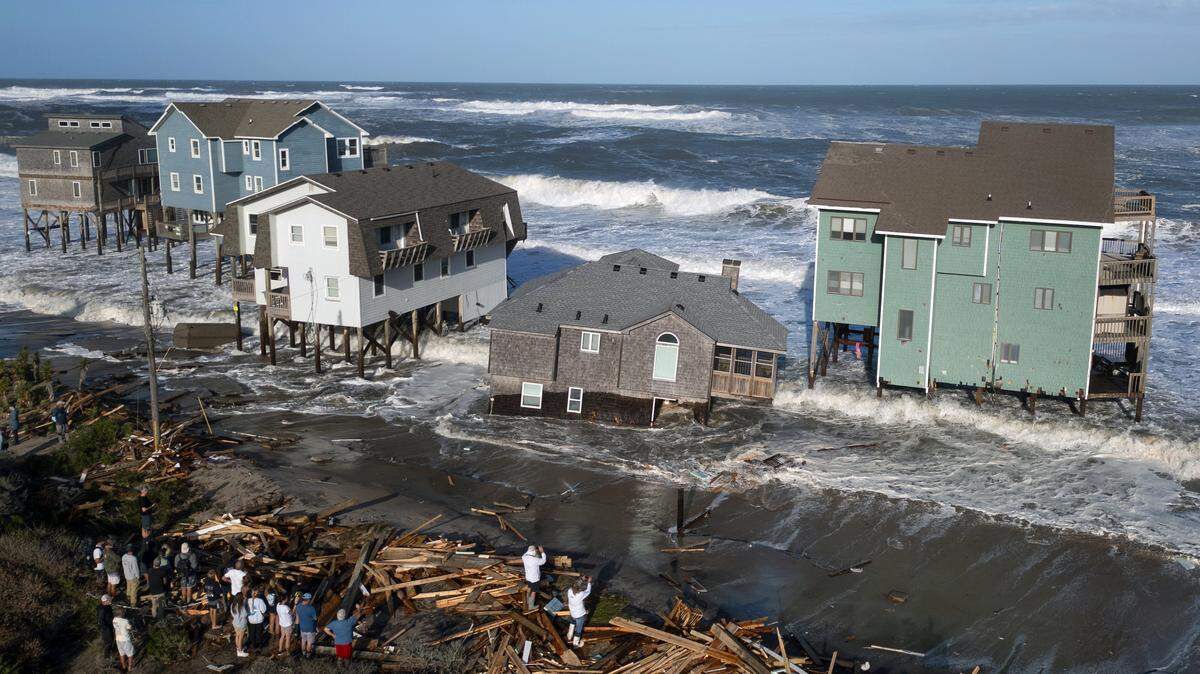
As houses fall into the sea, NC needs to change how it manages its coastline | Opinion
AI-generated summary reviewed by our newsroom.
- Public funds have protected private beachfronts, shifting costs to taxpayers.
- State should bar new oceanfront construction via permanent shoreline buffers.
- Insurers must reflect real coastal risk so owners bear rebuilding costs.
I have had partial ownership of several beach homes in Brunswick County, and for decades I watched as coastal geologist Orin Pilkey’s words came true “build too close to the ocean and, sooner or later, the ocean wins.”
I have seen that truth firsthand.
At Holden Beach in the late 1980s, I watched street after street disappear into the Atlantic Ocean.. Houses that looked permanent one summer were gone the next. Our own second-row home survived only because of publicly funded dune-replacement projects—efforts that protected private property with public dollars.
Cheap insurance made this kind of coastal living possible then, and it still does today. If you choose to build within reach of ocean waves, you should pay the real cost of that decision. That means very high insurance premiums — or even a required bond to cover the damage your property will cause when it inevitably ends up in the surf.
For years, the federal government helped pay to relocate vulnerable oceanfront homes, but no longer. Insurers spread their losses by raising rates on all North Carolinians. When I first visited the Outer Banks in the 1950s, most houses were set well back from the water. Today, homes crowd right up against the dunes, often directly in known hazard zones.
The result is predictable: build bigger houses, obtain subsidized insurance, watch them get damaged or destroyed, and then expect taxpayers and governments to help clean up the mess. Local governments, eager for property-tax revenue, continue approving construction in places that should be left alone.
North Carolina can do better.
We need to rethink how we manage our coastline. Just as the federal government created the Blue Ridge Parkway to protect a treasured landscape, we should establish permanent public buffers along vulnerable shorelines — areas where new construction is simply not allowed. Planning decisions should be guided by realistic 100- and 1,000-year flood maps, not by short-term real-estate profits.
This is not socialism. It is stewardship. Governments have long used eminent domain to protect resources for the common good. Our oceanfront — one of North Carolina’s greatest shared treasures — deserves the same protection.
I have also watched how public access to the beach quietly disappears. At Holden Beach, small easements were once set aside so second-row homeowners could reach the ocean. Over time, those access points were claimed as private by the second-row homes. Today, much of Holden feels like a gated community with an ocean view. Sunset Beach has steadily reduced public parking so that only residents can easily reach the water.
By law, the shoreline up to the high-tide line belongs to the public. Yet more and more it is treated as the private backyard of those fortunate enough to own beachfront property.
I admit my own role in this mindset. Years ago, I posted “No Trespassing” signs on our small second row walkway to the ocean and told passersby they had no right to use it. When I later moved to Oak Island, I saw a better model — ample parking and public access at nearly every street end.
The trend is clear: bit by bit, ordinary North Carolinians are being pushed away from their own coast. Meanwhile, taxpayers are asked to subsidize risky development and pay for the aftermath when storms inevitably strike.
If we continue on this path, the costs will only grow. Those who build in harm’s way must bear the full financial responsibility for their decisions. Insurance should reflect real risk. And more of our shoreline should be protected as public land, preserved for future generations rather than sacrificed to speculative development.
Hurricane Hazel wiped out most homes on Holden Beach, Oak Island, and all the way to Myrtle Beach in 1954. The coast has never been permanent—and pretending otherwise is expensive folly.
North Carolina’s beaches are not merely investment opportunities. They are part of our shared heritage and natural identity. This land was made for all of us, not just for those who can afford an oceanfront deed. It is time our policies reflected that simple truth.
Jarles Alberg of Raleigh is an independent general contractor. He has owned beach houses on Holden Beach and Oak Island.