The Rev. Jesse Jackson knew well that we are all better than our worst moments | Opinion
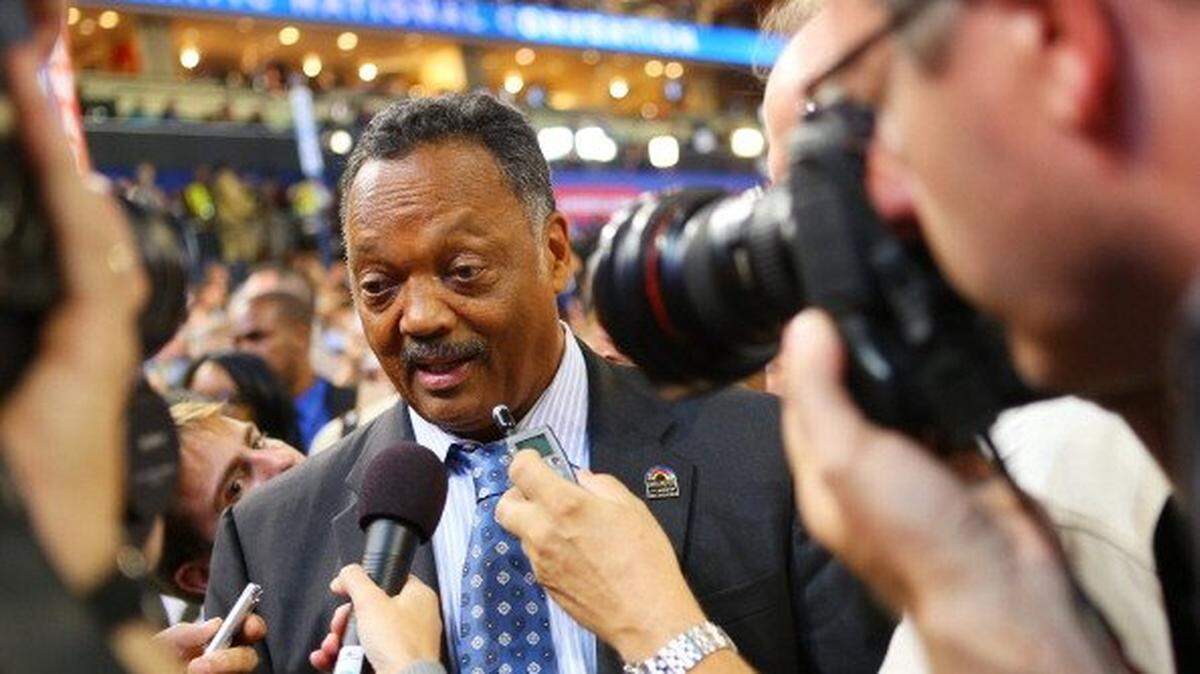
In his later years, the Rev. Jesse Jackson was a man who saw the world in all its complexity. As I learned in conversations with him about politics and civil rights issues as the editor of his occasional columns for USA Today, his passion for justice burned bright even as he saw the gray in shadows it cast.
One lesson he had learned well is to wait for the facts to come out. When Michael Brown was killed by police in Ferguson, Missouri, during Barack Obama’s presidency, that’s exactly what Jackson said. He told me that our passion for justice should focus on what had gone wrong in the community of Ferguson, the poverty, the overpolicing, the violence and drug use among Black Americans.
What happened to Brown was in question, but the injustice in Ferguson was not. There were plenty of facts to show that.
He was right. Months later, a Black president oversaw an investigation that found Brown’s civil rights were not violated. But the reality of the injustices Jackson saw in Ferguson were never in doubt.
I’d like to think that Jackson didn’t participate in the rush to justice about Michael Brown is because he too had faced a rush to justice.
In January of 1984, Jackson referred to New York as “Hymietown” in a conversation with a journalist he thought was private. He compounded the error by first lying about the antisemitic comment and then attributing the furor to a Jewish conspiracy. His relationship with Louis Farrakhan, leader of the Nation of Islam, fueled the charges of anti-Jewish hate.
Jackson’s political opponents in the Democratic and Republican parties wanted nothing more than to make the one incident in a decadeslong civil rights career define him. Jackson said no, apologized in a New Hampshire synagogue and marched on.
His mistake forgiven
By the time it came for his second presidential run in 1988, nearly 7 million votes and 11 primary wins showed he was back in his party’s mainstream with his mistake forgiven.
It is the forgiveness that let Jackson go on to pave the way for America’s first Black president, free dozens of unjustly held political prisoners and provide decades more sober leadership for more than just Black Americans, that I fear is totally gone from our politics.
Now with a resurgence of a nuance-free partisan press, the instant judgment of social media and a 24-7 news cycle, there is no space for a mistake to fade and a more complex picture to emerge.
We have even made the manufacture of hateful incidents a part of the process.
Gavin Newsom
On Monday, when Republican Texas Sen. Ted Cruz called California Democratic Gov. Gavin Newsom “historically illiterate” for apparently being unaware that President Dwight Eisenhower federalized the National Guard to enforce civil rights law, Newsom tried to turn the statement into an issue of his disability.
“Ted Cruz calling a dyslexic person illiterate is a new low, even for him,” posted the governor on X, as if Cruz was saying he couldn’t read, an unacceptable slur against someone with a disability.
How sad that in a time when President Donald Trump spews an outrage a minute that the governor of the nation’s largest state and a leading contender to replace him would have to make up something to be offended about.
In this toxic political environment, I don’t think Jackson could survive using that Jewish slur today. And that is a tragedy.
As Rev. Jackson knew well, all God’s children are flawed, sinners. Forgiveness isn’t a weakness we show our opponents, as today’s bipartisan political creed declares, it is the grace we all need and deserve. We are all better than our worst moments.
David Mastio is a national columnist for The Kansas City Star and McClatchy.
This story was originally published February 18, 2026 at 9:51 AM with the headline "The Rev. Jesse Jackson knew well that we are all better than our worst moments | Opinion."