
Pittsboro’s giant development is in turmoil. Here’s how it could go better | Opinion
AI-generated summary reviewed by our newsroom.
- Pittsboro annexed more than 7,000 acres for Chatham Park in 2014.
- Split commission vote and lawsuit say next-phase plans lacked public detail.
- Editorial urges a regional governing board to oversee large Triangle developments.
In Chatham County, a small town became a big one overnight.
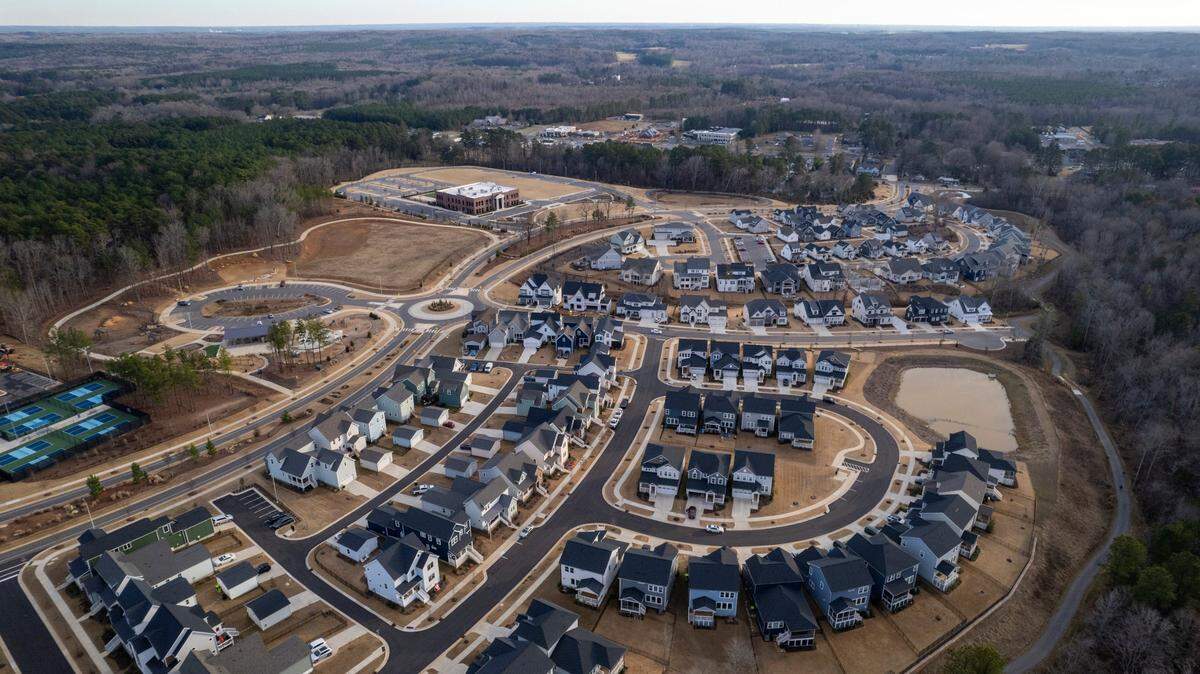
It happened a decade ago, when Pittsboro, approved a master plan for the massive Chatham Park development. When complete, the 7,000-plus acre development of homes and businesses could increase Pittsboro’s population by more than 60,000 residents.
The mismatch between the small town of about 5,000 and the state’s largest real estate development offers a striking example of how the Triangle is growing without strong regional controls.
Chatham Park, now taking shape along U.S. 15-501 and U.S. 64, just west of Jordan Lake, is putting pressure on the region’s infrastructure, services and environment, but its development is being overseen by members of Pittsboro’s town commission. There’s already concerns about stormwater runoff and loss of the tree canopy that could affect water quality.
Under a better approach, a regional governing board with the power to approve and shape large developments would bring resources and expertise to determining how major developments fit into the Triangle’s long-range goals. The Central Pines Regional Council, formerly the Triangle J Council of Governments, helps local governments plan, but it doesn’t oversee development. Minnesota’s Metropolitan Council, a policymaking agency that directs planning for the Twin Cities, is a good model.
It’s ironic that the growth in the Triangle was ignited by a state and regional planning effort that created Research Triangle Park. Now it’s driven by towns, cities and counties acting on their own and sometimes at cross purposes.
A Balkanized approach can leave municipalities struggling to keep up with the task of balancing the interests of big developments and the interests of their communities. That, unfortunately, is what’s happening with Chatham Park.
A master plan for the development calls for close community communication and involvement as the project’s huge real estate footprint fills in by stages. Much of Chatham Park’s 2,000-acre northern phase is in place, but plans for the 5,000-acre southern phase are meeting opposition.
The town commission in a split vote rejected a unanimous planning commission opinion that Chatham Park’s next steps have not been presented in enough detail. Meanwhile, three environmental advocacy groups have sued Pittsboro saying the town is not abiding by its commitment to public involvement in decisions about the development.
The lawsuit contends that the town commission “shifted the real land-use decisions to a later administrative process that strips away political accountability.”
Lenore Yarger, a member of Chatham Climate Action, one of the groups suing the town, said the developer, the Preston Development Company, “submitted a plan that pushed everything through at once without the detail of a small area plan.”
Yarger said that approach leaves many decisions to be worked out between the town’s staff and the developer. “I don’t think just a few staff members can do that in a way that reflects the values of the community,” she said.
The lawsuit is not about blocking the development, it’s about guiding it in an environmentally sensitive area near the Haw River and Jordan Lake, a source of drinking water for Wake County.
“We recognize it’s happening, but we would like to see it done the way it was originally approved,” Yarger said.
Other plaintiffs in the case are 7 Directions of Service, an Indigenous-led organization focused on environmental justice, and Haw River Assembly, a group that supports protections for the Haw River watershed and Jordan Lake.
Caitlin Murphy, Pittsboro’s communications director, said the town would not comment on pending litigation, but added that “Pittsboro remains committed to transparency, fairness, and responsible stewardship, and we trust the legal process to resolve this matter appropriately.”
Megan Kimball, an attorney with the Southern Environmental Law Center, which is representing the advocacy groups, said, “This lawsuit isn’t anti-growth. It’s just about making sure it’s done the right way.”
The way it’s being done in Pittsboro is vague, incomplete and confusing. “They are sort of making it up as they go along,” Kimball said.
Unfortunately, that’s true of more than just Pittsboro and its giant development. What’s happening there offers a lesson to the Triangle: A broader approach to planning is needed so the fast-growing region knows — and can shape — where it’s going.
Associate opinion editor Ned Barnett can be reached at 919-404-7583, or nbarnett@newsobserver.com