
NC lawmakers could strangle local governments with property tax measure | Opinion
AI-generated summary reviewed by our newsroom.
- Republican lawmakers propose constitutional cap on local property tax revenue.
- State spending cuts forced local governments to raise property taxes for services.
- City leaders warn revenue cap would weaken services and favor wealthy homeowners.
Republican state lawmakers say they’re so concerned about homeowners facing property tax increases that they may offer a constitutional amendment to limit the local levies.
That’s like an arsonist showing up at a home he torched and offering to fight the fire with gasoline.
One reason property taxes have spiked is because the Republican-controlled legislature has spent more than a decade limiting state spending to allow for relentless state tax cuts. Now it wants to spread that austerity to local governments.
State Rep. Phil Rubin, a Wake County Democrat, said, “A cap on property taxes could be disastrous given the abject underfunding from the state, even for things it is expected to fund, like school operations. It could cause a collapse of essential services not just in Wake but in rural counties, too.”
Allowing for inflation, North Carolina’s general fund is now a billion dollars less than it was before the Great Recession of 2008, according to the nonprofit NC Budget & Tax Center. And that’s not even accounting for the increased demand for services created by population growth since then.
Without adequate state support, local governments have had to raise more revenue to maintain basic services and school quality. Those costs are increasing faster than general inflation. In just the last five years, the N.C. League of Municipalities reports, the cost of road resurfacing has increased 80%, entry-level police salaries are up 33%, and the price of a fire truck has jumped by 50%.
Meanwhile, President Donald Trump’s One Big Beautiful Bill is passing on millions of dollars in administrative costs for Medicaid and food assistance to county governments.
Yet some Republicans claim property taxes are going up because local governments are reckless spenders. House Speaker Destin Hall, R-Caldwell, said in a press release: “Families are getting ripped off as some, but by no means all, local governments rake in billions more than inflation and population growth warrant.”
Rep. Erin Paré, a Wake County Republican who should know better as a representative of the state’s most populous county, is pushing the notion that an amendment is needed to empower the legislature to cap annual property tax revenue.
Paré, a co-chair of the House Select Committee on Property Tax Reduction, said, “We really owe people a sense of predictability of what they’re going to be looking at as far as their personal budgets, their household budgets.”
What the legislature owes people is adequate funding for public schools and help with fast-rising local costs. Instead, Republicans want to force the same hardships on local governments that they’ve imposed on a state government where low pay has caused high employee vacancies, the courts are struggling to operate, health, environmental and safety inspections are reduced and the Division of Motor Vehicles is plagued by long service delays.
There’s already a statewide maximum limit of $1.50 per $100 of assessed value on property tax rate increases. Now Republicans want to limit the revenue that even stable rates can generate as residential and commercial property values increase.
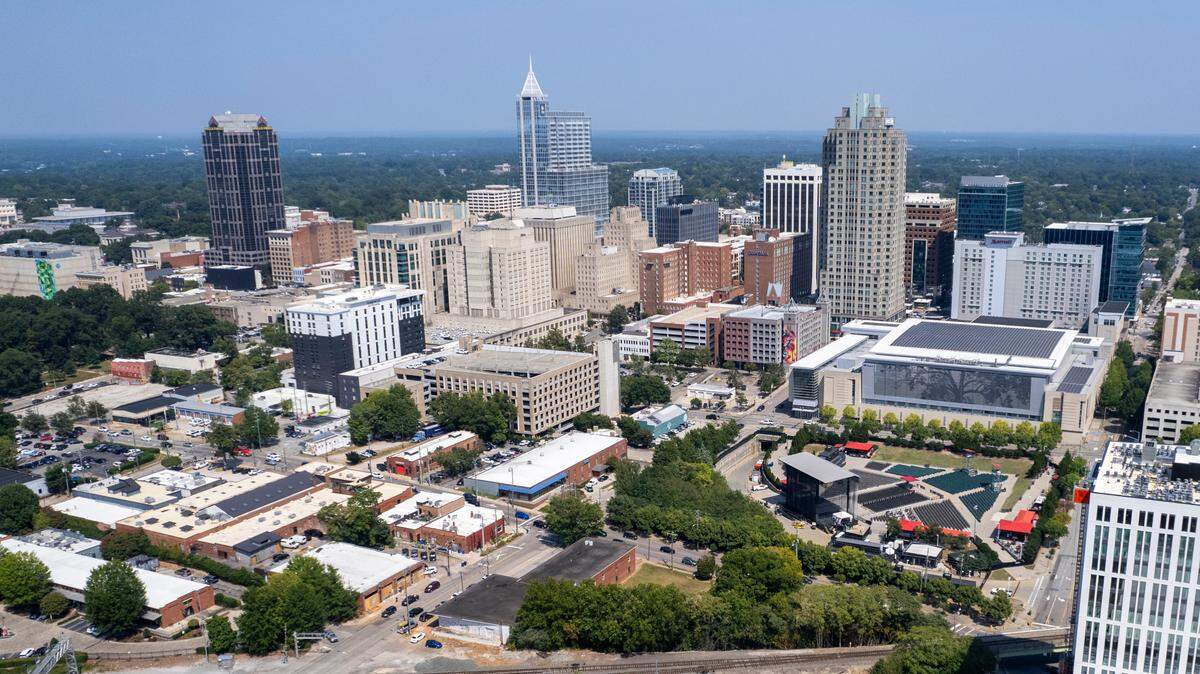
Raleigh Mayor Janet Cowell said a possible cap on that revenue represents “an essential threat to the cities.”
Cities only have three sources of revenue: property taxes, a local sales tax and fees for water and other services. A cap on property tax revenue, Cowell said, would “essentially change the fundamentals of municipalities across North Carolina.” She said people might vote to limit property taxes, but they are “not thinking, ‘When I call an ambulance, nobody may come.’ ”
Cowell, a former state senator and state treasurer, noted that North Carolina, unlike states such as California, generally doesn’t govern by ballot propositions. Instead, it relies on elected officials to set major policies. That should be the case here.
There’s no need to put a constitutional amendment on the ballot for property tax relief. The legislature can help right now by closing property tax loopholes and expanding property tax breaks for homeowners on fixed incomes. Capping property tax revenue, by contrast, would benefit the wealthy more than those of modest incomes and weaken local governments’ ability to help their neediest residents.
What Republicans are considering is putting a proposal before voters at a time when rising home values are increasing tax bills. It’s a red meat offering that would drive Republican turnout in a midterm election where the Republicans’ large legislative majorities will be at risk.
Police and firefighter groups, county sheriffs, local elected officials and public school advocates should move to stop this drastic and cynical proposal that would hobble local governments, including the cities that drive North Carolina’s growth.
Associate opinion editor Ned Barnett can be reached at 919-404-7583, or nbarnett@newsobserver.com
This story was originally published March 24, 2026 at 8:04 AM.